
Fire Folklore
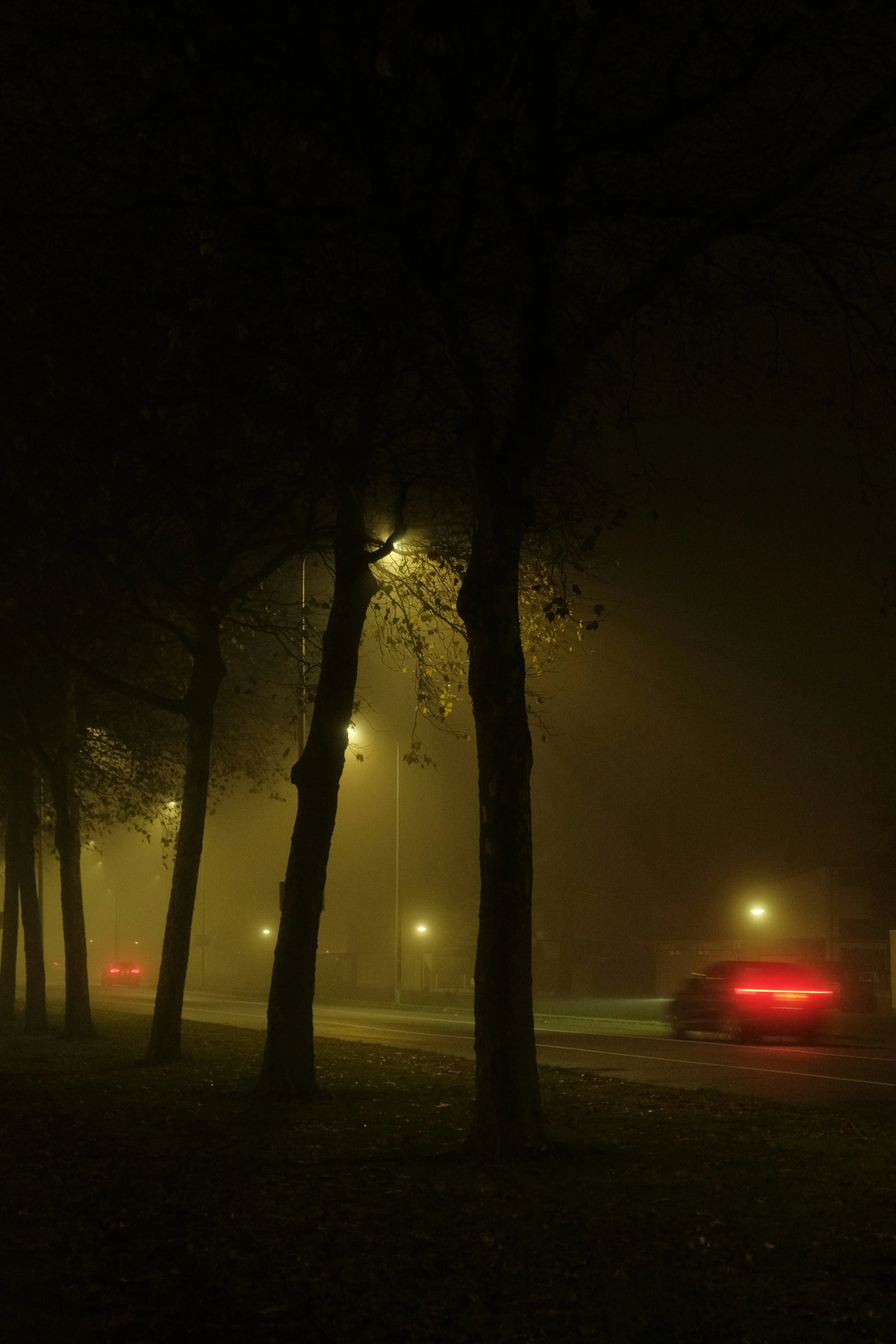
Roadside Distraction
Stella Wood can tell something is wrong the night she breaks down in the woods, but can’t quite pin what went wrong.
By: Hannah Bertalot, Creative Writing Editor
“Oh, shoot…”
Stella pulled over as her check engine light turned on. She popped the hood, grabbed a flashlight out of her door compartment, then paused as she noticed the baton that she kept with her in case of emergencies. Usually, she’d leave it there and wouldn’t pay it any mind, but tonight didn’t feel right. Of course, she could just be paranoid, but it never felt good when a car breaks down in the woods after dark. It always felt creepier.
Stella wasn’t afraid of the dark, nor was she particularly superstitious, but there were a lot of stories of people going missing in this area, and there were a lot of stories of people seeing animals, and a lot of stories about things that didn’t look like animals on the side of the road. It was just common sense to be cautious, in her opinion.
She took the baton with her when she got out, then tucked it under her arm as she looked over the engine. Stella didn’t immediately see anything wrong, so she tried to start the ignition again, but found that it stuttered and refused to start.
“Of all times, why now?” She complained as she walked back to look at the engine again. She knew that whatever little knowledge she had about cars wouldn’t help her here, so she mentally resigned herself to finding an alternative route into town. Stella slammed the hood back down, then got back into the driver’s seat. She flicked on the hazard lights and pulled out her phone.
Naturally, it was dead. What was this, the opening scene of some cheesy horror flick?
Stella breathed a deep sigh as she racked her brain for alternatives. She certainly wouldn’t walk all that way in the dark, but she wasn’t inclined to sit here and wait until morning either.
She could always hitchhike… but she wasn’t about to actively seek out the easiest way to end up as another headline on the local newspaper.
Then again… what were the odds of something bad actually happening to her? It’s not like the stories of people going missing were more common here than any other place- it didn’t actually happen all that often, that was just all that people ever heard about in the Lone Pine area since so little happened in this town. No, maybe it wasn’t the most ideal option, but it beat being out in the woods by herself all night.
Reluctantly, she got out of her old Volkswagen and stood on the shoulder of the road, watching for oncoming traffic. Headlights appeared in the distance, and she flashed her flashlight at it repeatedly.
The vehicle came, then zipped past her, completely ignoring her predicament. Stella ran her hand through her hair, then sighed in frustration. Twenty minutes passed before she saw another vehicle. This time, she stepped onto the edge of the lane, more urgently flashing her flashlight at them. Thankfully, pulled in front of her car and stopped. A woman got out of the short truck, then waved to Stella.
“Howdy, break down?” She asked. Her fingers drummed on the hood.
“Yeah, my check engine light came on, but I don’t really know what to do with that.”
“Bah, I don’t either. Need a ride into town? Where are ya headed?”
“The little diner in Lone Pine is fine, I can call my brother from there.” Stella answered.
“Righty’ then, hop on in!”
“Hang on a moment, I still need to lock up…”
“Take ya time!” The woman then sauntered back over to the driver seat, and hopped in.
Stella hurriedly shoved her baton into her purse, then grabbed her keys and her phone. She tried one last time to power it on, but the screen flashed a disdainful little red battery at her once again before it turned off. She frowned, but shoved it into her purse regardless. Stella shot a precursory glance around the front seat before she’d decided that she had everything that she needed, then locked the door.
As she walked up the passenger side, she noticed that the exterior of the vehicle was extremely filthy, caked in mud along the running boards and a layer of dust higher up. Based on the accent that she’d heard from the woman, she assumed that she must have been a rancher, or farmer, or something. The truck fit the profession, she figured.
Similarly, the truck smelled dusty when she stepped inside. There wasn’t really an escape from the sneezing-fit inducing scent, though. She pulled the door shut, and the woman barely waited for the doors to lock before they started back on the road again.
“So, missy,” The woman started, “We’ll be ridin’ together for a little bit, why dontcha tell me about yourself?”
Stella paused as she thought carefully about what she wanted to say. Enough to not come off as awkward, but not too much as to paint a target on her back. Usually small talk wasn’t so hard, but when she had to think so much about it, it really killed the flow of what could have been conversation.
“Not the talkative type then, are ya? Well, I don’t mind.” The woman amended with an easy tone.
She turned the dial on the radio, and a grating static played over the silence instead. The southernly woman hummed along to a melody that Stella couldn’t hear, seemingly unbothered by Stella’s stiffness.
For a long time, they both stayed like that- and Stella could only be relieved that she didn’t try to force the conversation.
Even if that made her feel a little less uneasy, she couldn’t help but notice other minutiae that kept her from dismissing her worries completely. With a brief glance over her shoulder into the backseat of the truck, she could faintly see a monkey wrench stained a dark color that didn’t really match the shade of any type of oil or other machinery fluids that she could think of- a dark-reddish brown. She tried not to overthink the odd location, either, but the manner in which it sat- weirdly within reach of the woman next to her, but laying like it had been frantically tossed there.
Don’t be stupid, Stella. This is a nice woman, she’s not about to murder you.
As pleasant as it would be to listen to that thought, the way her stomach twisted violently at the thought of letting her guard down caused her to quickly push that thought away. It would be a better idea to pay attention, just in case. She wasn’t about to be murdered, but it would be a good idea to keep an eye out for deer, because that’s good practice to do as a passenger, and if she hitched a free ride into town, the least she could do was help make sure they both arrived there safely, especially with the abundance of animals out on this road at night.
The drive continued in a conflicted silence, as one woman hummed along to radio static, and another who struggled not to lose her nerves as it felt like her instincts fought to reason with her in her head.
Stella stared out the window, her eyes trained on the trees as they all passed in dark blurs. Every shadow looked like a moose, or a bear, or a deer, now that she thought about it. She couldn’t be certain that any of them really were, but she astutely watched in what felt like an increasingly unlikely case that one would run out onto the road as they passed by.
“Get out.”
Her focus was so deadset on the sides of the road that when it was eventually disrupted by the sound of a voice as it spoke up in a raspy whisper through the radio static, she nearly jumped out of her seat.
“Woah there! I wouldn’t have asked ya anything if I’d known you’d be so jumpy!” The woman exclaimed as she cast a sideways glance at Stella. Had the woman said something? She didn’t hear it.
“Oh, no, sorry, I was just watching for deer. Um, what did you say?”
“I was only asking whatcha name was, missy.”
“Oh. I’m Stella. Stella Wood.” She answered. Stella hoped she didn’t sound half as nervous as she felt.
“Stella Wood? That seems fittin’!” The woman chuckled as she shot Stella a cheeky grin.
“Fitting?. . .” She queried.
“Well, bein’ that I picked you up in the woods, and all, y’know?” She explained, her demeanor unruffled by Stella’s stiff response.
“Oh, yeah, heh. Wood. Woods.” Stella chuckled stiffly, “So what’s your name, then?”
“Awh, I’m Annabelle, but you can just call me Belle, miss.” She answered as she waved her hand in an easy motion. “Ya don’t really seem to be the Lone Pine type, so what brings you here into town?”
To her overwrought, paranoid brain, that was the million dollar question that thoroughly convinced her that she was about to die. She tensely grabbed the seat, her hand halfway to the door handle like she wanted to rip open the door with the truck in motion.
“Woah, calm down there, little missy! Y’get so worked up, I’d think you were plannin’ somethin’ terrible!” Annabelle jabbed playfully. “Jus’ a question, calm down.”
That’s right. Just a question, it’s fine.
“Hah, sorry. Um, I’m just… there to visit my brother’s family.” She lied. From what she knew, if a murderer knew that someone would be expecting her, then they were less likely to actually go through with it.
“Family, hmm?” She inquired rhetorically. “That’s a good thing to have, family nearby. We’d best be gettin’ you to ‘em pretty quick then, yeah? You plannin’ on meeting them at the diner?”
Stella nodded quickly, as she settled into a comfortable lie with her fictitious family.
“Yeah, super thrilled to meet me. I haven’t seen my brother in a while, either, so I look forward to catching up with him as well.”
“. . .Good to hear, good to hear. . .” She mumbled. Annabelle then turned the radio a little louder, so the static was a little too loud to maintain a proper conversation. Stella was unsettled, the way that the noise didn’t seem to bother Annabelle at all, despite the way that it grated on her own ears. They both let the chat die off after that, like that was all the information that she really needed to glean from Stella. With that, her attention once again wandered back over to the window, and she started to scan the side of the road again. Though at this rate, she let her gaze wander a little more than she had previously, as she continued to look around the interior of the truck. She tried not to let herself get hung up on minute details anymore, but one thing that she noticed she just couldn’t rationalize.
The door handle was removed.
Stella quietly inhaled, then slowly exhaled. She didn’t want to draw too much attention to herself again, but she knew she couldn’t stay here any longer.
“Hey, do you mind if I roll down the window? It’s pretty warm in here.” She asked as calmly as possible.
Annabelle shrugged, “I don’ mind, go ahead.”
Stella weighed internally the stupidity of jumping out of a moving vehicle to staying inside with someone who screamed horror movie antagonist, and hesitated once again. Really, was she overreacting? She knew herself, and she knew that in the past, she had done a lot of irrational things based purely on being scared. The radio had its mind made up on the matter, though.
“Jump.”
Just then, on the edge of the road, she saw the silhouette of what vaguely seemed human shaped, but wrong. The reflective sheen of a deer crossing sign caught her eye as the figure waved it like a flag, and in the corner of her eye, she saw Annabelle reach for the monkey wrench in the back seat. The truck suddenly swerved to the side, and Stella lunged out the window.
The cold night air bit at her arms as she soared out the window and rolled down into the ditch.
She heard the crunch of metal, but didn’t stop to look as she forced herself to crawl towards what she hoped was Lone Pine.
She didn’t know what was happening on the road, but she didn’t want to risk Annabelle coming after her.
It was hours after the sun came up that Stella finally arrived at the diner in Lone Pine. It was quiet to begin with, but a hush fell over the few patrons in their booths as she stumbled in. There was no doubt she looked a mess, but she paid no mind as she leaned against the counter.
“Just. . . can I have a coffee, please?” She mumbled.
The waitress didn’t comment as she set the radio next to her, tuned to the local news.
“Last night, there was a car crash on Lone Pine Highway. In the vehicle, wanted felon Annabelle Hendricson was found, along with her associated murder weapon, an old monkey wrench. In the vehicle, supposed victim Stella Wood’s purse and identification was found. A few miles further up the road, an abandoned vehicle was found, but Stella has yet to be found, dead or alive. Authorities are actively looking for her at this time, and appreciate any potential leads that citizens might have.”
Stella ignored the cup of coffee that was set in front of her, far more stunned by the fact that she was still here.
She was right.
Catch the Murmur
It’ll do just about anything to be useful again….
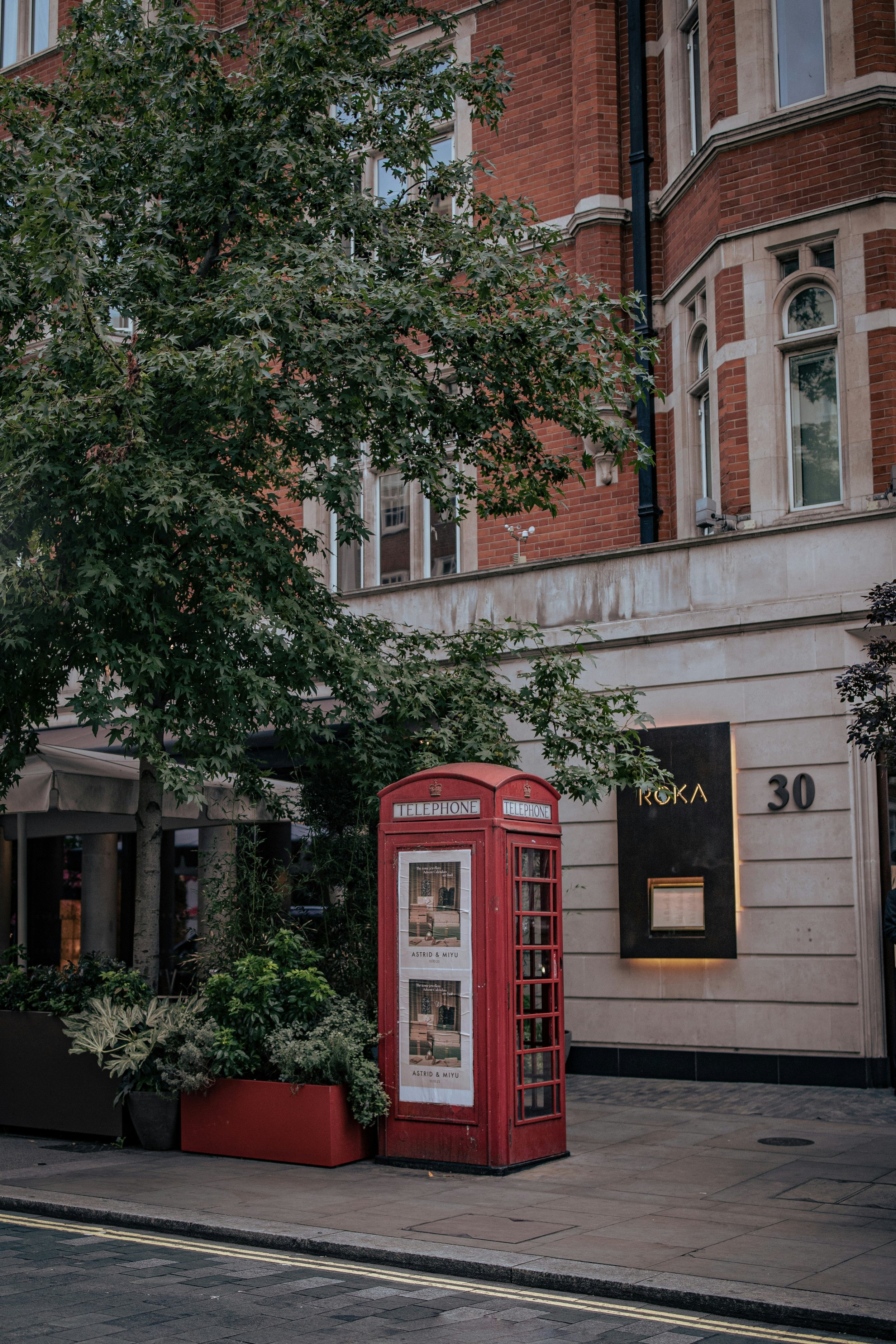
Image courtesy of Nadine. E on Unsplash.
By: Hannah Bertalot, Creative Writing Editor
Everyday, I catch the murmurs of every secret, every discussion, every event, and every tragedy. I listen to every confession, and every breakup, and I’ve helped people when they decided they needed to run away from home. Within the walls of the payphone kiosk, people are simultaneously the most united and the most separated they have ever been from one another.
I can’t count how many times people have run to me when they were in distress, and I don’t think I want to. It’s easy to shelter everyone and anyone, wind or rain, day or night, summer or winter, since I’m always, inevitably, perpetually there.
While I can say that I’m always there for others, and I know that people are grateful for my services every time I’m needed, I still feel lonely and discarded. When no one’s around, it’s not like there’s anything I can turn to to pass the time other than recite all the gossip I overhear to myself.
Outside of when I’m needed, which seems to be less lately, as people have turned to handheld devices to rely on, I receive little acknowledgement. It’s like everything I’ve done for everyone has been forgotten.
With the advent of mobile phones, it feels like I’ve become obsolete, and I haven’t been able to help anyone for days. Without work, I’m left without much to do, and I can only watch the everyday activities of passersby as they go about their days. Businessmen discussing their work on the phone as they power walk to their destinations, or children on their way to and from school, or ladies pushing strollers and talking with their friends, but none ever looked my way for help.
Spring came, then passed. Daylight encroached on the early morning hours and the late nights, and people still passed me by without a second glance.
Summer had begun, and the months had gotten incredibly hot and dry. In their downtimes, children spent their time on the streets on their bikes, or on foot, or on scooters. I’ve always enjoyed watching them at play, with all of the mischief and games and pranks that they’d get up to.
It was a day just like any other late July afternoon. Children raced by on bikes, though this time they stopped at the ice cream parlor rather than at the park across the street. I enjoyed watching them play, as that was one of the few things that I could do now. Every moment that I had to watch as I fell into further neglect was agonizing, as I had heard in passing a few days earlier that the city was considering decommissioning all the payphone booths due to becoming obsolete. I’ve never wished disaster on anyone before, but I was desperate for someone to need me so I wouldn’t be decommissioned. I couldn’t imagine how painful it would be to sit on the sidewalk forever and fall into further neglect- or worse, be vandalized, as I have seen several vending machines that were never refilled or checked on fall victim to.
A group of young adults loitered nearby at the park. They leaned against the trees with cigarettes hanging out of their mouths, thin streams of smoke swirling into the air and dissipating far above their heads. They had spent the majority of the afternoon there, though I couldn’t quite pick up on what it was that they were talking about.
As the day crept on, and the sun descended toward the distant horizon, the young adults broke up, some dropped their cigarettes on the ground and stomped them out, others tossed them into trash bins, but all of them made a quick departure.
I watched as they all left, then hours passed as kids rode home and it finally began to get truly dark.
I had only just started to settle into the loneliness of nighttime when a smell intruded on the air, acrid and sharp and unpleasant.
Smoke once again rose from the park, but this time it wasn’t contained and only capable of damaging the lungs- it slowly spread over the grass. A low, red flame licked at the blades, and gradually climbed up the trees and spread from the canopy of one tree to the others. Before long, the small trail of smoke had grown to a pungent river, but no one was nearby to call for help.
Thankfully, a couple strolled out of a nearby restaurant, and they called out in surprise at the growing flames.
The woman rushed back into the restaurant, while the man ran up to me and opened my door. He dialed up the police, and quickly started to murmur into the receiver. His tone was frantic and rushed, but he stood within my glass walls and helplessly stared at the growing inferno.
Once he had confirmation that the fire department was on its way, he hung up the phone, and paced the sidewalk. The woman he was with returned not long after, this time she was armed with a fire extinguisher. The man simply shook his head at her, and stopped her from running in to attempt to extinguish it. It had quickly outgrown the capabilities of a fire extinguisher.
Several others had come out, and watched with me as the fire department arrived, armed with powerful hoses. With the assistance of the fire hydrant on the corner, it only took a few minutes for the fire to be controlled and choked out.
While the park catching fire and burning down would have been a shame, I think I could care less. I was reassured that I was not yet obsolete, and I got to work another day.
L’esperienza Italiana
By Kenley Stevens, Staff Writer
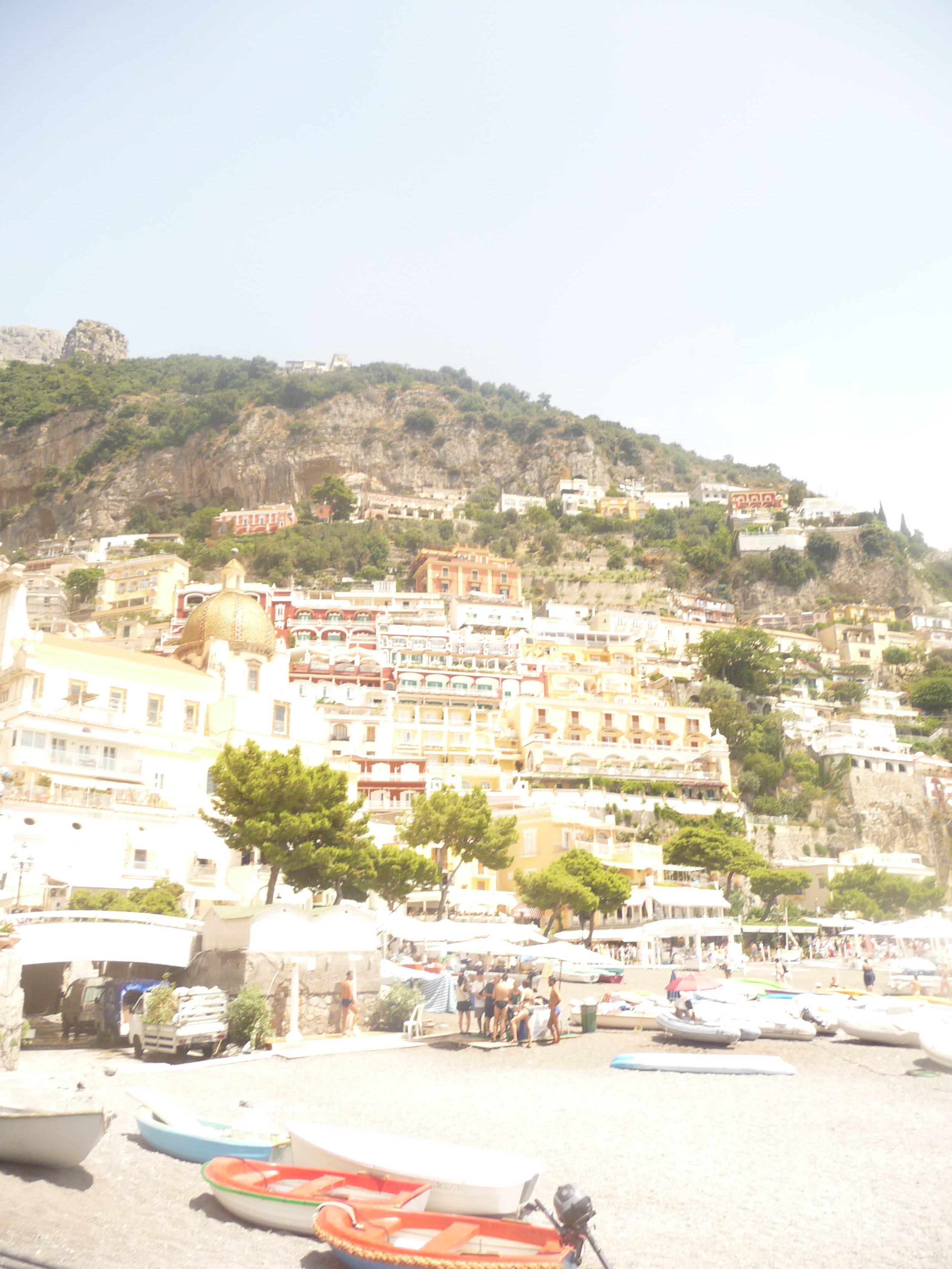
As we stood on the corner waiting for our shuttle, I felt the warmth of the sun radiating off my skin from the swim in the Tyrrhenian Sea. The boardwalks were lined with classic yellow and green striped booths. The backdrop included abrupt cliffs, and when studied, windows and staircases sprinkled the cliff. They were ancient and no longer in use. The stone steps were a ledge, only inches wide; a product of many years overlooking the sea. Sprouting from these protrusions were emerald vines and vibrant flowers. At the base of the cliff were gaping caves filled with caverns that often held reverie. The water was like seaglass, clear but a rich blue in color; increasingly more cerulean as the sand dropped from view. The dock was striped with rows of yellow tanning chairs, almost all of them occupied by leathery locals and mildly decent italians.
The bright afternoon uv still hung around me as we waited for our car to take us to an Italian farm, a special excursion. The bench we sat on felt dangerous as clown cars flew around the roundabout in front of us, passing where Americans wouldn't and honking a fraction as much. Vespas weaved where water would not even pass. A car sped slightly past us, hit the curb, and abruptly stopped. I was praying that our shuttle would come as soon as humanly possible. Italians had very little tolerance for obstacles on their route. I looked around, partly to prepare myself for more incoming vehicles, and partly to search desperately for the one that would be our ticket out of here. Just as a promising new fiat abarth rolled towards us, a man emerged from the car that had hit the curb. Chattering like he was in some sort of argument with himself, he turned to face us. His elbows rested on the roof of the tiny car. He stopped quarreling with the removal of his airpod and ended what we deduced was a call with his wife. I had a feeling this was a regular occurrence for him, and had no doubt the bickering would resume whenever he was ready.
The man was obviously a native italian. He was about my height, but what he lacked in altitude, he made up for in chesthair. He gave us an exasperated look that said whoever he had been chatting with had spent all his patience. He motioned for us to get in the car while we stood, uncertain what he meant. His impatience was palpable.
“Andiamos, andiamos!” I do not think a single one of us wanted to push his patience and good heart further. We quickly shuffled into the fiat. It squatted, its foreign suspension not used to American builds. The man had returned his airpod back to his ear.. I am not fluent, but his rapid speech seemed to be more in self defense rather than offense.
“Reeta! Reeta! Ascoltami, Reeta! Ascoltami!” The fiat hiccuped and sped off, throwing our heads back and our mouths silent. We drove for a few minutes, experiencing the sights of residential Italy; stone walls, linens hanging from suspended lines running from apartment to apartment. This was nothing like North America. All of these structures dated back centuries, even the most meager of housing was historical. It was incredible. Vines trailed down the plaster of some buildings, around and over the uniquely shaped windows. Some tranquil residents who had toiled all their lives, likely leaving this community only an occasion or two, sat unperturbed on their balconies, overlooking the timeless city of Sorrento.
The cobblestone streets were historic, but so was the excellent suspension on our driver’s car. The turbulence was unmatched. We were rolling down one of these streets, accelerating and braking constantly, but maintaining a speed I doubted this car could handle. We were nearing the end of the path. There was a walking alley ahead and a few side streets to turn down. The farm will be just around the corner, I thought. There was only a hundred feet to the end. We were not slowing down. Fifty feet. Italians do not concern themselves with gradual braking. Ten. We flew into the narrow pathway between the towering stone walls. I had originally believed it was a walking alley for sauntering pedestrians. It was not. The walls were inches from the sides of the car. Our speed only climbed. The alley curved and I could not believe there was enough room for any sort of rotation of the wheels. All the time, the squatty Italian man squawked at his wife. His muscle memory took command as he performed the improbable feat of denying the laws of physics.
After the seemingly endless car ride from the depths of Sheol, we arrived at the farm. As I stepped out of the fiat, the Italians immediately began to insist on serving me food. My ghastly expression and lack of pigmentation, for them, translated to desperate malnourishment. Any Italian problem is easily solved, and that solution has either been baked or fermented.
After a hearty snack that doubled what we in the U.S. call a,’daily caloric intake’, we began the tour of the farm. The property was sloped down a lush hill, and the path had mild switchbacks that held each section of the compound. There were copious olive trees beginning at the henhouses and spreading across the vast hillside. Mario and Luigi, a set of rotund pigs, sprawled in the mud beneath the boughs. As we veered left, rows of asymmetrical squashes and fruits awaited harvest. Some rows that were less developed had colorful blooms that ranged from fuschia to chartreuse. Around the next bend, one solitary cow had smears of hazel fur in his white hide and a matching star centered on his skull. He bawled at the presence of visitors, eager for the possibility of a treat. The last section of the farm held Italy's speciality- lemons. There were groves upon groves of deep green branches bearing golden lemons. We were each allowed one. When the peel was scratched, a sugary citrus scent radiated off of them. We strolled for a long stretch under the leaves, absorbing the sweet scent.
We returned to the top of the hill, and the tour was nearly completed. The guide informed us we had one more stop and then we would get to taste all of the ingredients we saw in various classic Italian dishes prepared by the family. The dirt path transitioned into cobblestone. We halted in front of a round, wooden door painted the color of the shallow Tyrrhenian sea. Our guide, Georgio, informed us that we were about to enter the cellar. A European cellar sounds magical. It is where the best products materialize: wines and cheeses, salami and sourdough. But when I stepped inside, all my senses were smothered. The stench attacked my nostrils.
Hanging from the stone ceiling were hunks of green and brown mold. The furry growth climbed up the chain the shape was hung from. The suspended figures were unrecognizable, but that could have been due to the copious amounts of brain cells I was sacrificing every second I stayed in there. This was unbearable. I could feel the vomit climbing up my throat.
“Andiamos! Is time to taste!” exclaimed Georgio. He marched out of the cellar, unaffected. We wasted no time exciting the stifling space. I could not shake the tang that had seeped into my nose and my skin. There was no way I was going to put anything in my mouth that had seen the darkness of the repulsive pocket of death.
I suffered through the gorgeous meal laid before us, conscious of every bite I choked down. Now, I sit overlooking the bay of Sorrento. The sun set softly, cushioned by layers of pink and yellow. After my two showers and relentless scrubbing, an attempt to be rid of the smell, I accepted that it would haunt me. But when you swallow prosecco, you can not smell a thing.
Deer
By: Tommy Sitz, Staff Writer
I grab my rifle out of the gun safe. It is the last piece of equipment necessary for the day ahead. Alex and I climb into his truck and pull out of our driveway to head to Gabe’s house.
“I hope we see something today,” I say as we pull out of the driveway. We haven’t had much luck so far this year, but I have high hopes for today.
“I think we will. I have a good feeling about this spot,” he answers. We pull off our road and head into town to Gabe’s house. It’s 5:00 a.m., two and a half hours before shooting light. The plan is to be at the trailhead by six, so we have plenty of time to hike in before light. The date is November third, and the last weekend of deer season. There has been cold weather for the past week, so the deer migration should be in full swing.
We arrive at Gabe’s house, and he throws his pack into the bed of the truck, then hops into the cab with a thermos of hot chocolate.
“You ready?” Alex asks Gabe as he shuts the door.
“Of course,” answers Gabe. We leave Gabe’s house and drive west out of town. As we pass the last buildings on the edge of town, I think about what could happen today. What if we see a huge buck? What if we see nothing? These thoughts race through my mind as the country music plays on the truck’s radio.
I wake up to a bump in the dirt road driving up to the trailhead. The road is surrounded by green pine trees, along with the occasional stand of aspens that are holding nearly no leaves. We pull into the empty trailhead parking lot. All three of us sigh in relief, thankful that we are the only ones here. I get out of the truck and open the back door to my gear. All three of us grab our bino harnesses and buckle the straps around our chests. My rifle sits in a black case on the backseat floor, where I unbuckle the case and grab it. This rifle was a Christmas present from my parents when I was twelve, and it is one of my favorite belongings. It has been with me on many adventures and has harvested multiple animals.
Along with my rifle, I grab my pack and prop it against the side of the truck. Alex and Gabe walk to me with their packs on, ready to go.
“You ready?” asks Gabe, in a demanding tone.
“Bro, calm down,” I reply, annoyed with his remark. I throw my heavy pack onto my back, and we begin the hike. Complete silence fills the drainage, and the only light comes from our headlights. In silence, we continue up the creek bottom, listening carefully for any sounds of an animal, specifically a grizzly bear. Hiking up in silence while in the dark is dangerous in grizzly country. There could be a bear anywhere, and if we run into one, particularly a mom with cubs, this day will have a bad ending.
The trail takes us up the side of the hill, then back down to where it crosses a small creek. Once across the creek, it is only a short climb to the top of the ridge where we can glass for the day.
One at a time, we jump across the narrow creek and head up the trail. The steep, tree-surrounded trail gives way to a massive expanse of open land as we crest the ridge. It is a huge drainage, where we can see everything for miles. We are happy at the sight, knowing we can watch most of the land today for deer. We head up the ridge to a draw of burnt timber where we have found deer before. They like to hang out in old burnt timber areas because of the new growth. After a burn, the fire takes out all the old, dead vegetation and makes nutrient-rich soil that plants can easily grow in. Deer like these areas because the new plants provide great feed for them.
We make it to a high point above the draw that provides a good vantage point for glassing. I sit just below the point, and Alex and Gabe follow, not wanting to skyline ourselves as we sit and glass. Mule deer have good eyesight, not like that of a pronghorn, but still exceptional. I attach my binoculars to my tripod and start glassing. The draw is black and white, with many burnt trees and a thin blanket of snow on the ground. The sun is now coming up, illuminating the far parts of the drainage. We can see the river that runs through the bottom, the river that carved out this vast drainage. Millions of years ago, this land was underwater. Seas covered the land, and marine animals lived in them. Now it is high mountains, with the only water being frozen snow and an insignificant creek in the bottom. Nine thousand feet above sea level, the only animals here are no longer marine.
“There’s a group of six does in the bottom,” I say, spotting the first animals of the day. They are all bedded down close to each other, but no sign of a buck.
“We should keep an eye on those. The bucks will be looking for does right now,” Gabe answers. It is the middle of the rut, or mating season, for mule deer. Bucks during this time are very active and also very distracted. This makes it easier for a hunter to spot a deer, since they likely will not be bedded all day, and also makes it easier to sneak up on them. The bucks and does will be together, meaning if you spot a group of deer, it has a higher chance of having a buck in it, compared to when the bucks and does are divided.
I refocus on glassing and continue to scan the draw. The draw ends about a mile away at the bottom, near where I had spotted the does. The does are just above the river, where they have plentiful vegetation and water. I look at the does again to make sure that it is truly only does. This time, I count seven, but still no bucks. I slowly begin to glass the draw from the bottom up, knowing that mule deer can be extremely hard to spot in the burnt timber with their gray bodies and white butts. Usually, in snow, it is fairly easy, or easier, to pick out the dark gray bodies. But in the burnt timber, there are many dark spots, making it hard to find the right one.
I pause from my glassing and look at the sunrise in all its glory. The reds, pinks, and oranges fill the sky and paint the surrounding clouds. It is beautiful, and I pause to just stare at it for a moment. How lucky I am, I think to myself as I stare. I continue to watch the sunrise until the vibrant colors start to fade, and the big yellow ball gets bigger, making it the only color left.
“Wow,” Alex says, who must have also been looking at the sunrise.
Early morning is the best time of day to spot deer. They are usually more active in the morning and evenings, but I especially like the mornings. I’m not sure if they are more active in the mornings, but finding something in the morning gives you ample time to make a plan and stalk the deer for the rest of the day. If you spot something in the morning, it is likely you will have enough time to make it to the animal. Also, you have a chance of not packing out in the dark in grizzly bear country.
“There’s a nice buck,” Gabe announces.
“Where?” I reply, wanting to see it for myself
“That big rock on top of the opposite ridge, go straight down from it.”
“That is a nice one,” Alex comments, also spotting the deer.
“I still don’t see it,” I say, frustrated with my eyes.
“Tommy, maybe you need your eyes checked,” snickers Gabe, thinking he might be the funniest guy in the world.
“Shut your mouth, I see it now,” I reply, finally spotting the deer. I study it through my binoculars and see its set of antlers. It appears to be big, but I put the spotting scope onto the tripod to get a better look. He is alone, no does or other bucks. This surprises me, given he appears to be a mature deer. At this time in the mating season, I would expect that all the mature bucks would have found a group of does.
“Wow, he’s big,” I say, seeing the buck through the spotting scope. I move from under the tripod to let Alex and Gabe have a look.
“Ya, he’s a dandy,” Alex comments, agreeing with me. We decide we should get after him right away and start hiking towards the opposite ridge of the draw he is in. If we get on the far side of the ridge, the buck will not see us. Once we get close enough, we will pop back over the ridge and have around a 300-yard shot.
We crest the ridge to where the buck cannot see us and head down the hill. Burnt logs that fell in the fire cover the ground and leave black char marks on our boots. They make our descent slower than we would like it to be, but still, we make our way along at a steady pace. We are now about halfway to where we want to pop over, and have 400 yards to go. I am starting to get a little nervous knowing I could be about to take the shot. The thought of feeling a big set of antlers goes through my mind, along with having more wild game meat in the freezer. My heart pounds faster than it should be, and I try to take deep breaths to slow it down.
We make it to the part of the ridge we want to go over, and my hands are now shaking. I climb to the top of the ridge and look over. The buck is right where we last saw him. Perfect. I motion for Alex and Gabe to come up next to me. They too slowly climb up and sit to my right as I ready my gun. We are on a spot where the ridge plateaus, so I have a flat area to shoot off of. With my gun just in front of me, I lie down and pull it to my cheek. With my face against the stock, I look through the scope and find the deer. Once on target, I fully zoom my scope in. I can now very clearly see the buck's huge rack of antlers. He is a four by four with a small kicker on his right antler. I take a few deep breaths to slow my heart rate down.
“You ready?” I say to Alex and Gabe.
“Yup,” they reply in unison. I slowly squeeze the trigger. Here we go. The buck of a lifetime. Click. I forgot to rack a bullet. Well, I guess it was a good practice shot. This time I rack a bullet and restitute myself on the gun. I take a couple of deep breaths. Again, I start to slowly pull on the trigger. I can see the crosshairs lined up with the deer's vitals. It would be incredibly nice to have the rest of the day to deal with this deer. Bang!
The gun goes off. I look up to see if I hit the deer. It is running away straight up the hill where I shot him from. He appears to be uninjured.
“You missed just above him,” Alex says.
“No,” I groan, extremely frustrated with where my shot hit, “There’s no way I missed. That buck was huge.” I cannot believe it. That is one of the biggest bucks I have ever seen. I watch the buck crest the far ridge, still sprinting away.
“Ya, that sucks,” Alex comments, sharing my disappointment.
“Man, I felt steady, I don’t know what happened,” I reply, confused as to why I missed.
“He’s gone, I don’t think we’ll have another shot at him,” Gabe says, “Maybe we’ll see another one.”
We did not see another one.
The Night Sky
Photo Courtesy: Pexels
The Night Sky
By: Matthieu McCarty, Staff Writer
The stars were wrong that night.
I had been hiking farther than I intended, and the stillness took me all at once.
The ground was sufficient; I chose to pitch camp.
I did only what was necessary, nothing more.
Dinner was appreciated, although not satisfying.
With my mind at ease and the tent waiting for me, I chose to stargaze for some time.
The campfire was light enough for where I could see the close trees, never further.
Their shadows had moved.
A branch snapped.
Maybe close, maybe far, forcing me to glance up. Though I knew nothing awaited me.
The stars were out now, but more alive than they should have been. Attempting to trace them with my own eyes only caused confusion. The wind was back, maybe imaginative, but present. It was operating in such an odd rhythm.
I did not move. Nor did I wonder of it.
These stars, the longer I looked at these stars, the more I questioned. I was drifting into a consciousness of my own design.
Up until now, the river nearby had been flowing.
Out of view, but not hidden from my ears.
It stopped. Why?
Perhaps it had always been still, undiffering.
Choosing not to investigate without finding a reason, I lay back down.
By this point, the fire had died out.
While my mind had an urge to refuel it, saying it was for safety, my muscles would not move off the hammock.
I never looked back at the tent, choosing to stay here.
The night no longer felt like it was moving along in time, for it simply remained present.
Although at some point the river did stop flowing, the wind ceased, the shadows quit moving.
And I think I stopped breathing.
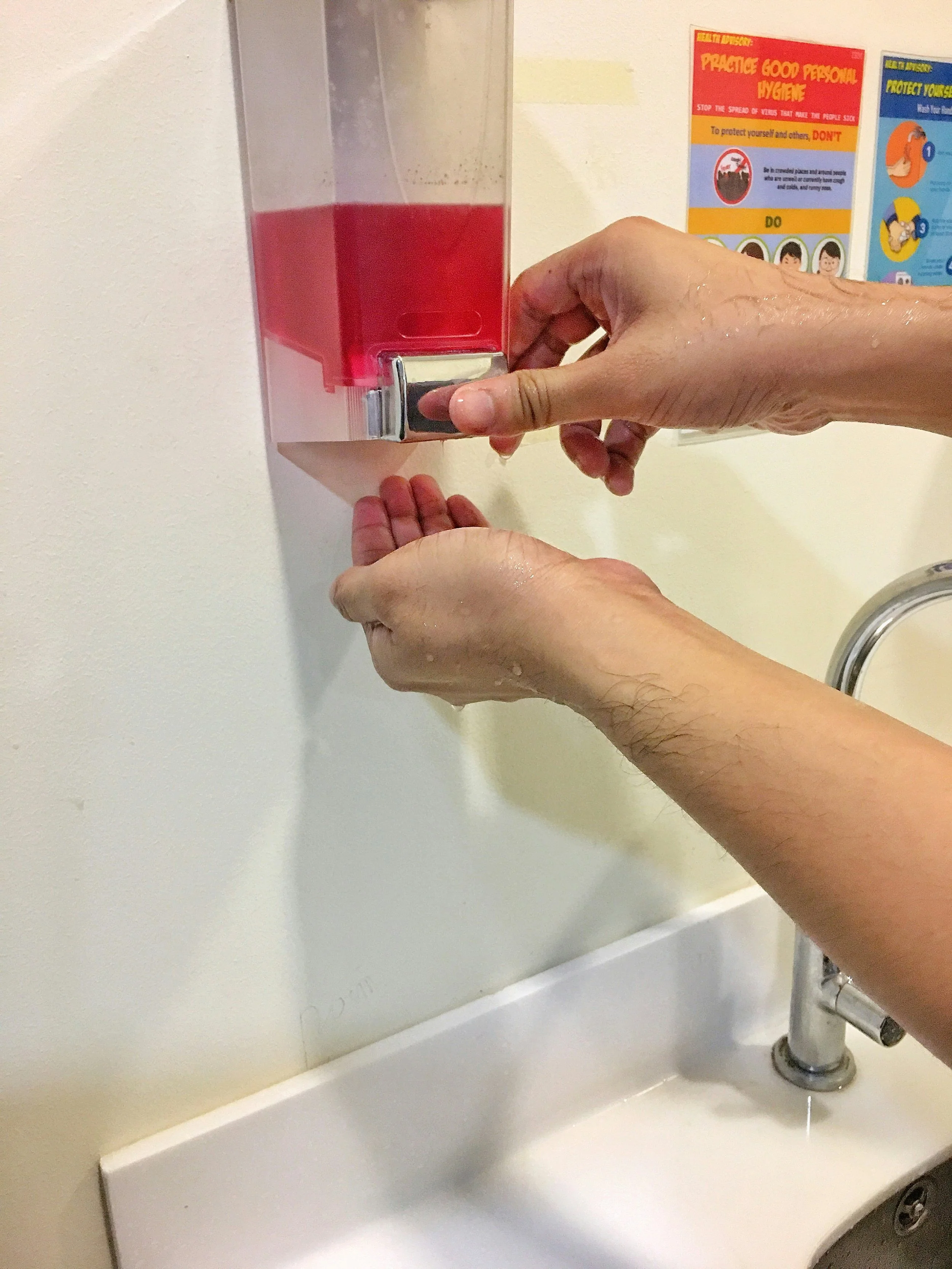
Soap Dispenser Views the World
Funny yet serious, dealing with hardships.
Image courtesy of Kristine Wook on Unsplash
By: Kinsey Jones (Staff writer)
I sit and watch as the world goes by. Nothing to do but keep others from getting sick. They always say “use soap and water to wash your hands but make sure you always scrub for 30 seconds”. I feel used, every time someone needs to wash their hands they push me down taking away my energy and spirit. Little by little taking what was not supposed to be theirs. They take until I can’t breathe anymore. But at least I get to hear the interesting conversations, right? I sit and listen to the girls talk about cheating boyfriends who secretly gave them a second chance. Then they come back a few weeks later talking about how their boyfriend is cheating again and how they are going to have to confront them. The first time he cheated and they confronted him he sat in silence and had nothing to say to them. But they came a while later and talked about how he apologized and was being all lovey to her again. Of course they are still together and worked everything out.
However, this is not my story. That is for someone else to tell. I sit here watching the world go by, getting used until I have no energy, only to be refilled, and regenerated. I hate not being able to travel around and look at life for what it really is. To travel and view the scenery. I just want to get out of here. I want someone to set me free. I deserve to be set free, but nights get lonely. That’s when I sit in the darkness while nobody’s here hoping I get to leave someday. One day someone will see me as more than just a soap dispenser they can use.
Peak to Prairie
By: Gabe Bree, Equus Editor
Black bears and berries (haiku)
Hills full of berries.
Black bears filling up on them.
Big bears with full bellies.
August Archery (free verse)
The preparation, the patience, the practice.
Smooth, calm breeze, nothing to distract us.
Slow deep breaths, trying to stay trackless.
Perfect purposeful steps, watching for cactus.
The beanie (haiku)
The epic design.
An unmatched amount of steez.
But 50 bucks, no.
A Weird Winter (free verse)
They say the snowpack is almost full.
But I see no snow, I think it's a bunch of bull.
All I have to do is talk to a guy named Uel.
Evening by the river (free verse)
The sun falling in slow motion, creeping to the horizon.
Cold temps flow into the canyon, and my skin begins to tighten.
A small escape from reality, untouchable by even Verizon.
Moonlight on the River (free verse)
Kyiped out brown lurking in the bank.
Casting to them with a blank.
Playing a prank.
Only a clumsy mouse to thank.
The Fly Over (free verse)
One goose, two goose, three goose, no goose.
I just wish I could drop one like a duce.
I want them so I don't have to pay for produce.
I just want a precious goose.
Endless Bends (free verse)
Standing on the bank, water flows by.
Rivers hold the memory of the land they flow through.
I see old memories of mine as I try not to cry.
Make peace with it as they did with versailles.
Moving upstream, I see into the past, and begin to sigh.
Why can things be like they were? I will try.
It would be heaven, I can't deny.
Dwelling on life will not comply.
I must grow to keep it from being dry.

GIFT-LESS AND FISH-LESS ON CHRISTMAS EVE

Photo by Passy Crawford via Upslope.com.
By Alec Giacoletto, Bonfire Adviser
The flames in the wood stove flickered when Hammel stoked the fire with more logs. Cold winter nights were bearable only by the heat from the cast iron beast, yet no matter how many logs Hammel slung into its belly, the family never quite felt warm. Upstate New York winters wreaked havoc on its residents with bitter cold snaps of sub zero temperatures and heavy, wet lake-effect snow permeating from Lake Ontario to the west. Long, dark, Arctic-like winter days hung a sense of dread and seasonal grief upon the local populace, and for Hammel, a repairman by trade, this winter seemed particularly dark, for as of the week before, the local factory laid him off. It wasn’t his fault. The country’s economy of 1972 didn’t exactly provide prime conditions for a rags-to-riches Cinderella tale to unfold, but he couldn’t help but blame himself.
He looked under the Christmas tree, the one he cut the day after Thanksgiving, and longed for a simpler time. On the day he and his children brought it home, he had no perception of the current sunken feeling in his gut because the idea of losing his job seemed impossible. Hammel recalled the cheers and smiles of his kids when the last stroke of the saw’s blade punched through the final millimeter of bark, and the six-foot-tall idyllic Christmas pine tipped over.
“Timber!” he jokingly shouted with hands cupped around his mouth. The annual tradition marked the beginning of his favorite season. He never made much, but he made just enough for his children to have gifts under the tree and treats in their stockings every Christmas, and seeing the joy in their faces after waking up that morning made the long hours in the factory worth every second. The toys weren’t terribly fancy, nor were they the hottest items in the catalogs, but that didn’t matter. Although his children were young, all 13 and younger, they knew it was the best he could afford, and that meant everything to them.
Yet this Christmas, Hammel felt ignominy. A feeling he let his family down persisted. Logically, the layoff had nothing to do with his job performance because half the factory workers lost their jobs, but it didn’t stop the immense shame he felt when he peered under the tree with no presents and the empty stockings at the base of the wood stove. Wrapped in a blanket, his oldest son laid passed out in the rocking chair as if there were no cares in the world, but for Hammel, there were too many to count, and he hoped that somehow he could shield his children from the wrath of the real world.
The next morning, Christmas Eve, his wife took the youngest children to the local church to help set up for the Christmas pageant that night, so Hammel was left with his oldest in the at-best lukewarm house. His son sat in the same rocking chair he fell asleep in the night before, but this time, he held a baseball magazine and sat wide awake. The two hadn’t spoken about the layoff, and Hammel felt ashamed to look his boy in the eye because he’d be forced to confront his failures as a father. In an effort to avoid confrontation, he told his son, “I’m not feeling too well. I’m gonna lie down and rest before the pageant tonight.” The two were set to meet Hammel’s wife and other children at 6:30 p.m. for the annual event.
“Uh, okay,” replied his son as he peered over the magazine.
Hammel awkwardly smiled, turned and walked away. Then, inspiration struck. I wonder if the boy would go ice fishing with me? Rod and reel tackle fishing was a favorite activity the two shared, but the idea of his son, who would receive no presents for Christmas this year, rejecting his offer presented a terrifying worst case scenario. If the rage his boy felt for him was so great that he rejected a fishing excursion, Hammel feared it may cause permanent damage to his psyche, so he stopped in the hall, paused for a moment, and continued to his room.
Snow flakes drifted down past the frosted window outside his bedroom, and in that moment he imagined future Christmases, ones where his son and he were set to drift further apart. A season once marked with joy and love would erode into formalities and distance. At that moment, Hammel knew he had to take the risk, so he quickly turned and briskly walked back into the living room, stood in front of his son and said, “Grab your things. We’re going ice fishing.”
Surprised, the boy fumbled his words, “Uh, uhm, right now?”
“Yep,” replied Hammel. “Grab your jacket and gloves.”
A sled full of short ice fishing rods, a ladle with a strainer, a tackle box, and two buckets slid from the shed as it crunched over the compact snow over ice from foot traffic. The two lifted the sled into the bed of the squarebody Ford pickup truck before jumping in the cab.
“Here, have some soup or hot chocolate,” recommended Hammel as he handed his son two thermoses full of the warm liquids. Then he handed him a metal lunch box, which was the one he used to take to work everyday. “It’s full of snacks and sandwiches. Eat up.”
“Are you okay, Pop?” asked the boy.
“I’m great, son. Just ready to go fishing.”
“Whatver you say.”
Of course, Hammel wasn’t okay. He failed his family, or so he believed. If he couldn’t provide gifts under the tree, he’d at least give him the best day of fishing he could provide, so they went to his favorite spot for lake trout and walleye.
A stoplight in the village of Sackets Harbor forced Hammel to observe the bustling streets of the small shoreside side town. Carolers chanted gleefully at the corner, and the jingling and jolliness of the town folk could almost be heard as the crowds of people completed last-second shopping for gifts and soon-to-be-had dinners – the best the now unemployed Hammel could do for his wife and kids was frozen whitetail deer meat for the millionth time. Maybe there were a few cans of green beans left, but there wasn’t a single grain of rice in the house and the next unemployment check wouldn’t come for two weeks. The wreaths on every lamp post and lights strung between buildings across every street suddenly looked gross. Before his anger could manifest further, the light turned green and he accelerated the truck down the road and off to the fishing spot.
Hammel and his oldest son trudged the ankle deep snow atop the ice. A narrow channel sat between a rocky island and the shore of the bay the two fished, and, due to their years fishing the region in all seasons, the pair knew it was deep enough for lake trout, a deep water predator, to inhabit, and this species (also known as mackinaw or lakers) became the favorite quarry of Hammel and the boy.
After placing tip-ups with cutbait in shallow water for walleye, the two drilled holes in deeper water for lakers. Hammel sat on his bucket, grabbed his four-foot open faced baitcasting rod with a jigging lure, dropped it down the hole until it hit the bottom, and flicked his wrist to initiate action on the artificial bait 60 feet below. His son, a skilled angler for his age, did the same.
Silence resided for over an hour, and then two. Hammel felt scared to initiate a conversation, for he feared it may result in his son scolding him for his irresponsibility and destruction of his childhood, and the boy didn’t seem to be in a talkative mood. He hoped the fishing would pick and ease the tension, but it didn’t. No tip-ups tipped up and no jigging action halted or paused from a strike. At least the snow let up. The sun remained hidden as a soft blanket of low-hanging gray clouds settled in the windless ice-scape. Somewhere to the west, the ice turned to open water because of the lake’s depth of over 800 feet. Folks called Lake Ontario and its siblings “lakes,” yet “inland seas” proved to be more accurate.
The now jobless repairman considered raising conversation with his son, but each time he tried the words were caught in the back of his throat, and he went back to staring menacingly at the ice hole as his rod jigged up and down. Similar to the decision to turn around and ask his son to ice fish earlier that day, he gathered the courage to address the family’s situation. Afterall, the boy would be a man soon.
“Son,” he said. “I need t-” his words ceased when the son’s rod bent straight toward the hole and his drag system screamed like the sound of an endless zipper.
“P-p-pop! I got one!” exclaimed the boy.
Hammel reeled up his line to avoid a tangle and ran over the hole to coach his son. “You got it! Keep ‘em tight! Don’t horse ‘em!”
The fight went on and the 13-year-old fought the evidently large fish with maturity and focus beyond his years. Each pump and reel up was met with ferocious pull and run down, but the son kept fighting and the dad kept coaching. Hammel smiled ear to ear just enough for his son to take notice. The two made eye contact and laughed.
“Let’s reel this puppy up,” said Hammel. The boy nodded and continued the fight. Finally, after 15 minutes, the fish grew tired enough to give ground.
“Any moment now,” Hammel’s son said between upward pulls to a bent rod followed by reeling downward, “we should see him.” He began to pant as the fatigue of the endless fight wore on his body. Hammel leaned over to peer down the hole. “There!” he yelled and pointed. “There! Right down the hole! It’s a monster.” A laker from belly to back as tall as the diameter of the hole swayed below the ice.
“That’s a pig!" shouted the wide eyed boy. “That’s gotta be a 30 pounder!”
“Psh, it might be a 40 pounder, son,” replied Hammel. “Try to get his head in the hole. I’ll grab his gillplate and pull it up.”
Hands plunged into the frigid water as he reached for the gill slit. As Hammel’s right middle finger grazed its slimy scales, the beast tossed its head, caught the line on the sharp edge of the hole, and sliced straight through it. The rod went straight, the line lost tension, and the two slowly turned and made eye contact with sunken faces of disbelief. Hammel’s heart sank. Not only was he jobless, not only did he ruin Christmas with no gifts, he now ruined a fishing trip with his son – the one sacred thing he had left, but just when his shame began to overwhelm him, his son’s frown turned upside down and his hands launched into the air with a cheer of excitement. “Woo-hoo! That was amazing, Pop!”
In disbelief, he responded, “But I-I lost your fish. I missed it.”
His son stared at him for a moment and paused, “Pop, you didn’t lose him. The line caught the edge of the hole. No one coulda stop it. I was lucky enough to fight and see a fish that big.”
“I almost grabbed him. I nearly had ‘em, son.”
Quicker than a snake on his prey, Hammel’s son embraced him. Caught off guard, he found his hands in the air, so he slowly dropped his palms and patted his back.
The giant lake trout lost at the hole turned out to be the only fish either hooked into that day, but a third party observer wouldn’t know it based on the laughs and lively conversations the father and son duo shared. While dragging the sled back to the truck, the boy turned to his dad and said, “I know you feel guilty about losing your job. I know you feel guilty that we can't afford Christmas gifts this year, but all I ever wanted was for my Pop to be okay.”
Hammel put his right hand on his son’s left shoulder and said, “You’ll never almost lose me again, and we’ll be okay. Now, let’s get to that pageant and tell our fish story.”
“Think anyone will believe us,” asked Hammel’s son.
“Maybe not,” he replied, “but those are the best fish stories.”
The two had better days fishing together down the road, and plenty of Chrismases with an abundance of gifts under the tree with full stockings over the fireplace; however, through the years, Hammel’s son adimately claimed that the Christmas Eve fishing trip of 1972 was his favorite. For as long as they shared the story, the two never wavered on their claims that the lake trout lost at the hole was giant, but they were the only two who would ever know for sure. In their eyes, that’s all that mattered.
Our Dying Mother
By Bella Beachler: Staff Writer
The end of the world is near. Stampedes of animals flee the cities toward the unknown. Birds frantically fly across the darkening sky, abandoning any sense of formation, unlike the evenly spaced drones that zoom across the clouds. The sky is turning black, and the clouds are disappearing. Animals flee the ruined forests, running to future habitats that will benefit their offspring better than the decaying ones they were left with. Marine life dies as toxic electronic waste is dumped into rivers, ponds, lakes, and oceans. The coral reefs are destroyed beyond repair, leaving a habitat haunted by the beauty that once was. The darkened air feels thick, muddled with carbon dioxide and other greenhouse gases as they are slowly released. Our mountains and our landscape have vast pits and holes carved deep into their surfaces, pillaged for precious minerals and metals. Our beautiful forests are no longer, trees giving way for more data centers to keep our addiction fueled. Amounts of drinkable water have diminished; the data centers that generate intelligence have used it all up to cool down their overheating systems. Yet humans forge on, their perception of the world muddled because of the weapons of mass destruction we keep in our pockets.
People wander the streets, never seeing how they've betrayed Mother Nature. They walk in circles, unsure of what to do with themselves until their artificial intelligence thinks for them. They forget how they lived before it was created. Beauty was inescapable, and critical thinking was not something valued beyond comparison. Future generations will be left with nothing: Only empty oceans filled with toxins and a ruined earth destroyed because of greed. They do not feel the air suffocating them or the sharp pains of hunger. They do not feel the inescapable feeling of failure or see the world that will never be the same. They refuse to see anything but the world they once had, then lost. They try their hardest to stay ignorant. The atmosphere will not be able to take this kind of damage for long. It has protected this planet for billions of years, yet within the last one hundred it has come to a breaking point. Oxygen leaks out of its unfixable holes, and humans will soon become extinct. Without our layer of protection, which we have taken for granted, the sun will boil us alive. As the ozone steadily depletes, I feel heat from the unshielded sun encasing my every pore, and heating my insides until they boil. I feel excruciating pain in my eyeballs. They start to po-
-I wake up sweat-soaked and hysterical. I stop panicking and calm myself. I slowly realize the nightmare is not my reality, at least not yet. Relief washes over me as I unplug my phone, shut off my alarm, pull up my most-used app, and shoot ChatGPT a quick prompt: What should I do with my day?
I do not like Toad.
A story about a woman’s graceful walk toward death and the memories that reveal how grief becomes the truest measure of love.
By: Allison Gee, Operations Editor
I held my breath as the breeze tangled my hair. The sky hovered between day and night, neither ready to sleep nor fully awake, a typical November in Nebraska. Tension knotted my stomach as I swallowed hard, walking closer to my Aunt Deb, who sat under the patio of her makeshift home. Even before I opened my mouth, she and I could both feel the weight in the air, the unspoken truth. When I opened my mouth to speak, my voice shook, and in that moment, I knew I needed to be strong.
My Aunt Deb was dying from a stage-four brain tumor we’d named Toad, a cruel disease that altered her mind, but kept her heart strong. Her journey toward death had been remarkably graceful, and I knew my own emotions could offer little to complement it. “I will see you lat-” I began, then stopped, realizing the lie of my own words. Neither of us needed words; the silence said it all. Instead, she reminded me of my beauty, of what I had to offer this world. I leaned in for one final hug, whispering “I love you,” and said goodbye with a shake in my voice. I turned quickly, hiding the tears that threatened to fall. The wind whipped my hair in every direction, yet her last words held me in place, “Allie Sue, go get 'em! This world is yours.”
The first memory I have of my aunt Deb is a scary one. My parents were leaving town for a business trip, entrusting her with the daunting task of watching my three older sisters and me. I remember being terrified; all I wanted was for my mom to come back and tell me I was going to be okay. I did not only cry. . . I screamed. Instead of responding with anger or frustration, aunt Deb sat down beside me with a photo album. Slowly, my sobs quieted and were replaced with curiosity and wonder. She flipped through pictures of my mom and memories that they shared, her voice steady and gentle. By the end of the trip, my aunt Deb had become my best friend. From that moment on, she was my safe place, my guide, my Aunt.
Thirty minutes into the car ride, after saying goodbye, tears still streamed down my face. At first, they were tears of fear, fear of the grief I would carry for her, but they then shifted into tears of gratitude. The crack of sunflower seeds inside my sister's mouth reminds me of the countless road trips I would take with my aunt. I was forced to listen to her Cowboy audiobooks, and I made no effort to hide how little I enjoyed them. Through my parents' divorce, Aunt Deb was always there, offering a laugh, a smile, and a sense of consistency. When we first moved into her house, I was bratty, unhelpful, and bursting with a personality too big for anyone to tame. She let me turn her living room into a dance floor and let me express myself in every way. I grew up alongside her presence, and with the help of her husband, she taught me how to help, taught me how to be grateful, and taught me when appropriate times were to pass gas.
I long to go back to those days: spitting sunflower seeds while listening to audiobooks, eating brats around a campfire, gardening under bright skies, laughing together until our sides hurt, and hearing her sigh with pure happiness. I long to hear her voice one more time, to feel her presence, to hold on forever. But there is a reason God gave us memories instead of a rewind button. A reason these moments, though fleeting, are eternally ours.
I don't understand the world, nor am I meant to, but we can all agree that death is a scary thing and one that is hard to talk about. This world allows for so much heartbreak, and at levels we will never understand. However, I do know that everything in life has an end, and grief is ultimately the true measure of love. Even when her time runs out, I know that I won't lose her; instead, I will meet her in new ways. My aunt Debbie has handled her walk with death as gracefully as one could, and my challenge is for us all to do the same. Be a testament to the love she brought into this world. Walk this life with purpose, and to my Aunt Dufous, I will always be your Alliesue.
Home for the Season
Gibson spends half his time out in the woods, and all his time alone. It’s no way to spend the holiday season, is it?
By: Hannah Bertalot (Creative Writing editor)
It's easy for silence to settle its heavy weight over the air while out in nature. Gibson was familiar with that suffocating feeling of quiet, especially as he hiked through the deep woods often. Many people were put off by the sound of silence, and sought to fill it with music or conversation, but the quiet was a comfort, he found. It got lonely sometimes, especially during the holiday season, but coincidentally, it was then that he went on hikes most frequently. Sometimes it felt like he was looking for something.
Dead leaves crunched underfoot as Gibson trekked further into the woods. He scanned around, eyes searching for a certain plant— today, he was out to gather juniper branches to make wreaths for the holiday season. His gaze snagged on the low growth of creeping juniper, nearly hidden beneath the carpet of dead leaves. He knelt down next to it as he pulled his hatchet off his belt in one smooth motion, then hacked a few of the greener boughs off to take back. Once he was satisfied with his selection, he pulled a rope out of his backpack, then tied it together into a bundle to carry back down the mountain.
Gibson knew that if he didn't get a move on soon, he'd be stuck alone in the dark forest, which was a mess he wasn't keen on tangling with, so he jogged back the way he came. The trip back was inevitably slower than the hike into the woods, as he balanced a heavy and scratchy bundle of juniper on his shoulder. He huffed as he had to pause, dropping the branches onto the ground for a moment to catch his breath. Maybe he had bitten off more than he could chew, taking as much as he did. Gibson looked around briefly. He didn't think much of his surroundings, which were just as blissfully still as they had been the whole time. That is, it was, up until Gibson caught the faint footsteps of a creature behind him. It stopped right after he did, so he heard it, but he had a feeling that it had been following him the whole time.
He whipped around to look— nothing. The forest was still once again. But he knew he wasn't alone now, and the silence no longer soothed him. With the added pressure of escaping whatever was with him out in the woods, he picked up the branches again, then started to run back to his truck.
Whatever was tailing him had given up on being sneaky, and he could hear it as it broke through the growth behind him to catch up. Gibson continued to run, and he prayed that he wouldn't trip over the undergrowth as he charged through the forest. It felt like the distance he had to run to his truck was much farther than the distance he had walked away from it, but nonetheless, he did eventually spot it between the trees. He clumsily fumbled his keys out of his pocket and unlocked the truck before he reached it. He could hear it close on his heels, the sound of paws as they struck the dry forest floor.
Gibson didn't stop as he reached the clearing around the parking lot. But the footsteps chasing him did. He only decided to risk a look behind him as he reached his truck, which was when he was greeted by a dog. His heartbeat— that until now, had been racing in his chest— slowed at the disarming sight of the dog. It was hard to see in the dark, but through the matted fur, mud, and dirt that stained the dog's coat, a vague sense of familiarity struck him.
"…Dice?"
The dog's tail wagged, and it bounded out of the shadows toward Gibson. He tossed the juniper branches aside as he knelt to catch the dog, who torpedoed forwards into his arms. Dice barked and licked at his face, and Gibson couldn't help but laugh as he scooped the dog up.
"Where have you been, boy? I could've sworn something had eaten you up years ago!" He asked, but the only answer Dice gave him was the love he had missed over the years that they had spent apart. Once the sun was well and gone over the peaks of the mountains, Gibson let Dice jump into the passenger seat of the truck. From the dash, he pulled out an old collar— one Gibson never thought he would have used again— and clicked it back around Dice's neck.
Gibson didn't realize he was looking for Dice in the woods, though he was glad that at least he didn't have to hike alone anymore.
A Cowgirl’s Simple Days
A peek into western life through a cowgirl’s eyes
By Ingrid Anderson: Staff Writer
Up in the mountains, where the air is crisp, the rivers and lakes are numbing, and the horses are wild, I feel completely at peace. Where hard work is a way of life and play is earned, my quaint ranch nestled in the Beartooth Mountains is an escape, surrounded by breathtaking beauty. However, beauty is nothing if not earned. Nature can be relentless, and the unforgiving trials I go through when I spend my time in a saddle surely serve to test a cowgirl.
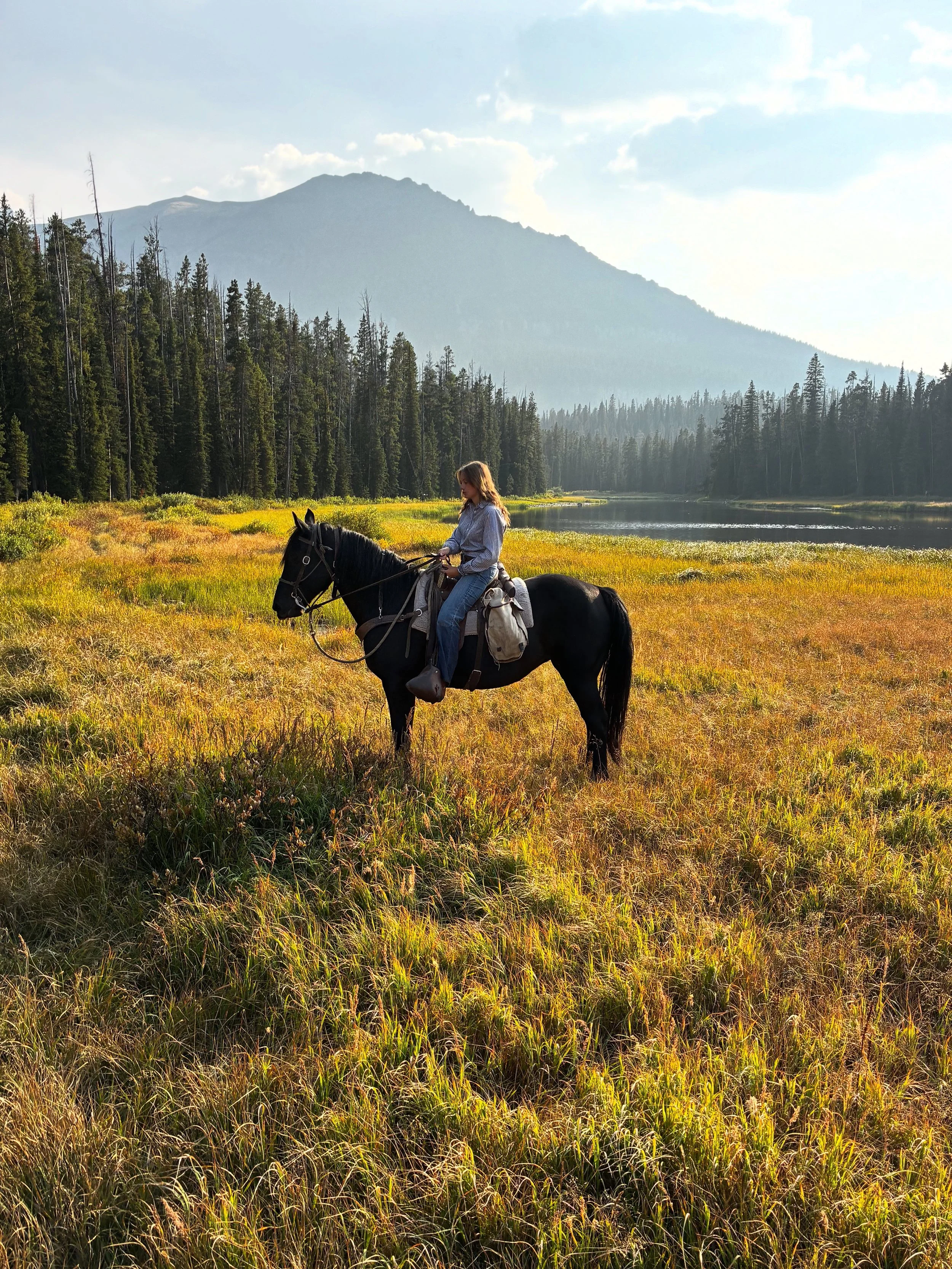
The clock ticks at 5:04 a.m. and I’m already awake. My day starts before the sun has even risen. I tuck my button-down striped shirt into my jeans, slip my boots on under my pants, let down my long, wavy hair, and throw on my battered, brown hat. The mountains do not care how I look, but cowgirls must have a certain amount of class.
“Ha, I’m first to the barn today,” I whisper under my breath; an accomplishment that keeps the ranchers on their toes. I soon saddle up my chosen horse: old Bess. She’s usually a dependable ole’ gal, but she’s awful pissy today. I’ll straighten her out on the trail. My hand runs along the smooth leather of my saddle’s latigo, and I appreciate the saddlemaker’s intricate tooling. I slide my fingers up to the velvety softness of Bess’ muzzle; we admire each other as my rough skin cradles her face. This moment is cut short however, and the rising sun reminds me that I have work to do.
Before long, I find myself out on the trails. My job for the day entails guiding a chipper newlywed couple up into Pebble Creek. These city folk, with their tennis shoes and baseball caps, are always amazed by the Western experience, and I can’t blame them for it. I thank God every day that I get to be on the other end of it.
As the trail winds along, and conversations of work, hobbies, and stories from the couple’s city life drift off into the breeze, I focus on how I can feel the motion of my horse move beneath me. I drink in the pure fresh air that makes my lungs feel cool and the nerves tingle in my nose. The rocks make a perfect clip-clop sound against Bess’s shoes. She’s still acting sensitive today; it's as if every stick on the ground perfectly resembles a snake to her. All is well for nearly twelve miles, as the three of us take in the breathtaking scenery. I now realize that I shouldn’t have jinxed myself.
This perfectly serene and beautiful adventure with my blissfully unaware clients by my side soon turns to chaos. While climbing up a section of steep and rocky terrain, perfectly coiled under a flat granite stone, is a wretched, damn rattlesnake. In a matter of seconds, by some sick twist of nature, old Bess falls back into her once young and wild instincts and takes off bucking. Unbeknownst to me, this old mare still has quite a kick in her. My body is forcibly jolted back and forth, then somehow back again. I squeeze my knees into the side of the stirrups, grip tight on my reins, and pray for the ground not to end up as my next place to lie. The sight in front of me shakes violently as my head whips to the same motion as the horse. I had broke horses before, but then I knew what I was getting myself into. Bess gets a few more bucks in, but soon realizes that her efforts are fruitless; I must not let the horse win.
Shock, concern, but a quiet admiration lie on the faces of my once-chipper clients, whose horses’ hooves thankfully never left the ground.
“We sure got the true wild west experience right there,” the man says.
“And you don’t even have to pay extra,” I respond, trying my best to play off the situation.
He chuckles, and the wife giggles in agreement.
As we head back to the ranch, my hands are dirty, my whole body radiates a sore pain, and the smell of manure lingers on my skin, yet all I can do is smile. My gaze shifts up from the tangled mane of my tired horse, and it’s like I’m seeing it all for the first time again, even though I’ve been up this mountain a million times. I truly believe that I am in the most beautiful place on Earth. The perfectly purple peaks effortlessly scrape the bottom of the clouds; the trees and fields scream their vivid green. Fish jump, birds call, and the water makes its best impression of a perfect mirror. It does not get much better than the sight that presents itself right in front of me.
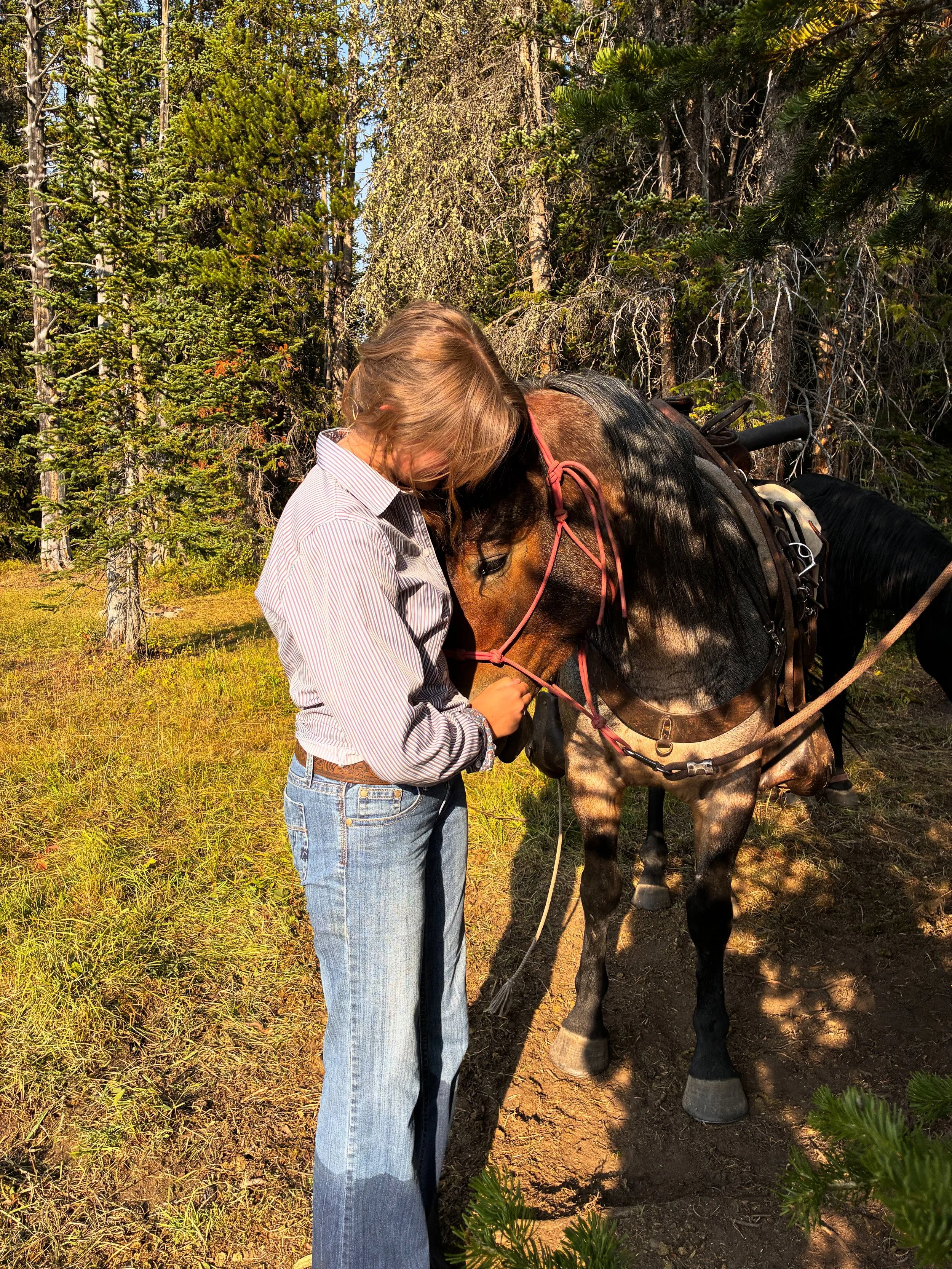
The drudgery pales in comparison to the pure bliss I feel on this mountain, with a horse beneath me. The choices I make here are seldom easy, but I am always up for the challenge. Bliss does not come easily to a cowgirl, but when it does, oh, it simply does. This sweet, beautiful, but arduous life serves me in the only way I need. I know that I am doing exactly what I am supposed to be doing, for I am rewarded with this creation every single day.
Flower Language
Maybe, we should learn a bit more about the symbols around us
Photo by Padre_moovi on Unsplash
By: MJ Whelan, Short Story Editor
No one watches the small details that hosts put into the decorations. As an experienced host, I'm well aware of this. So that's why the flowers my host this evening chose were quite striking. I paid them no mind though, until I saw that our host this evening also had a white chrysanthemum pinned to his chest.
Odd, for a man not in mourning. What use would he have for that pale flower? Life had smiled upon him for his whole existence, so why would he wear the flower of death?
The arrangements caught my gaze due to the striking colors of the main body, and the dark flower that was displayed on top, almost like a crown. People milled about, not even thinking about the deeper meanings behind the symbols around us. A pity really, a lot can be conveyed with "meaningless" symbols and flowers.
"Oh, Mr. Macabrewood!" a shrill voice called out with a hint of mirth. I turned to see who had called my attention away from the flower arrangements.
"Oh, Lady Pearltorch," I took my hat off and gave a small bow, "What use could I be of to you?"
Upon observation, the lady seemed to have enjoyed the champagne a bit too much, if the flush in her cheeks and the odd giggles were anything to go by.
She giggled again, "I was just curious about what all these symbols mean, and I know that you're quite the expert on the subject."
"That I am, my lady," I offered my arm to her which she gladly took as I led her out of the ballroom.
"Very few things have the same meaning across our great world," I droned as I led her into a nearby parlor.
"Oh, how fascinating!"
Lady Pearltorch sat down on a low couch and watched me as I crossed to the mantle and ran my gloved hand over the base of the silver cross displayed there.
"An interesting fact, my lady, while being holy symbols, crosses can also be seen as signs of danger. This is due to their history of being used as painful execution methods for criminals."
"Oh my!" Lady Pearltorch covered her mouth with her hand, "That is interesting, albeit a little dark. What about those flowers Lord Earldark used to decorate the ballroom?"
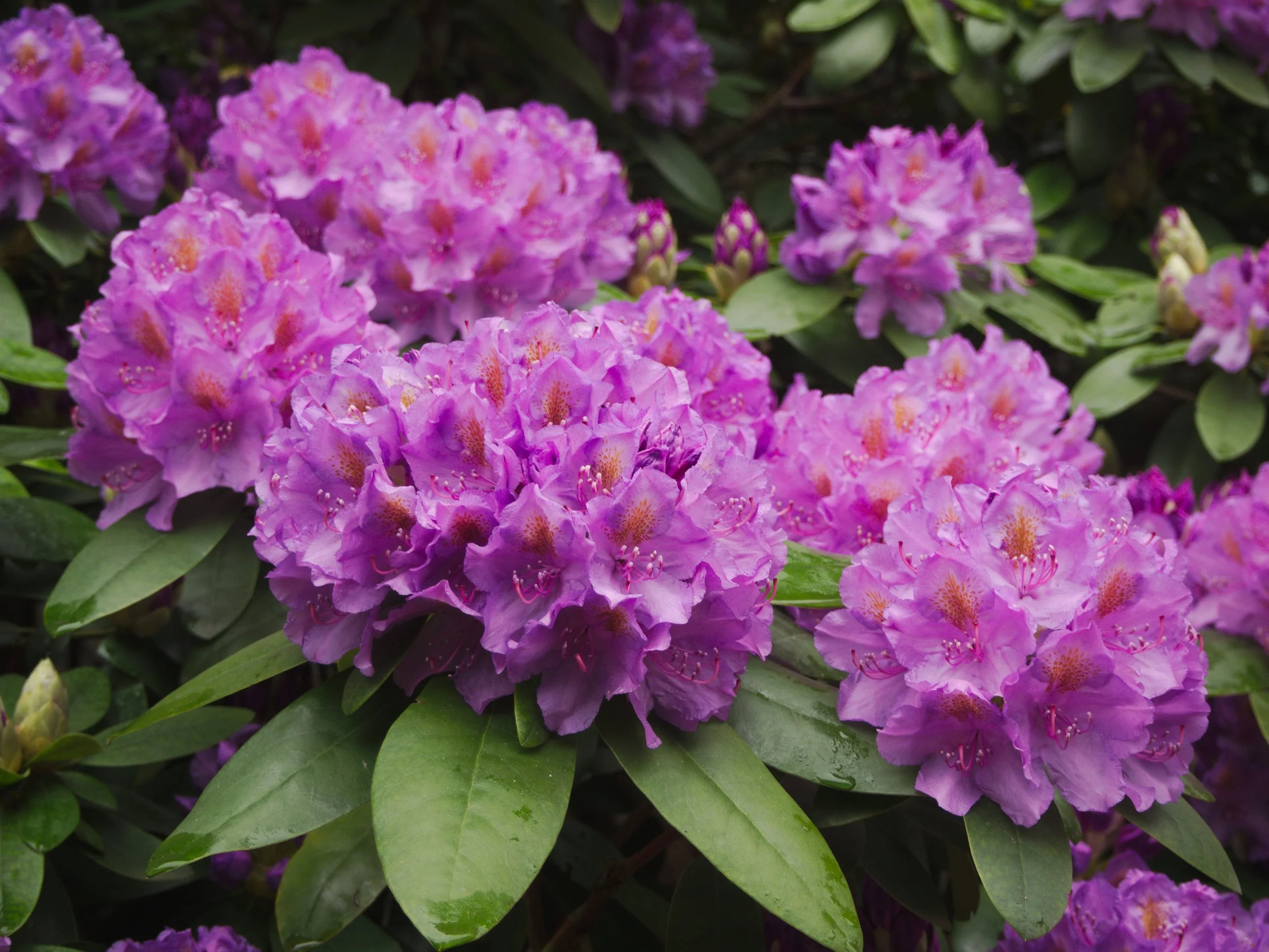
"They are quite the interesting choices," I held up a small foxglove that I had taken from a bouquet, "Foxglove for insincerity, rhododendron for beware, oleander for dangerous beauty, begonia for a warning, and black dahlia's for betrayal."
"How striking and dark-"
Lady Pearltorch stopped as the sound reached them.
"Seems my suspicions with the odd bouquet were correct," I mused as Lady Pearltorch turned pale.
The sound of screams had reached our little parlor.
Halloween Party
Just a Halloween party, or is it. . .
Photo by Denny Müller on Unsplash
By: MJ Whelan, Short Story Editor
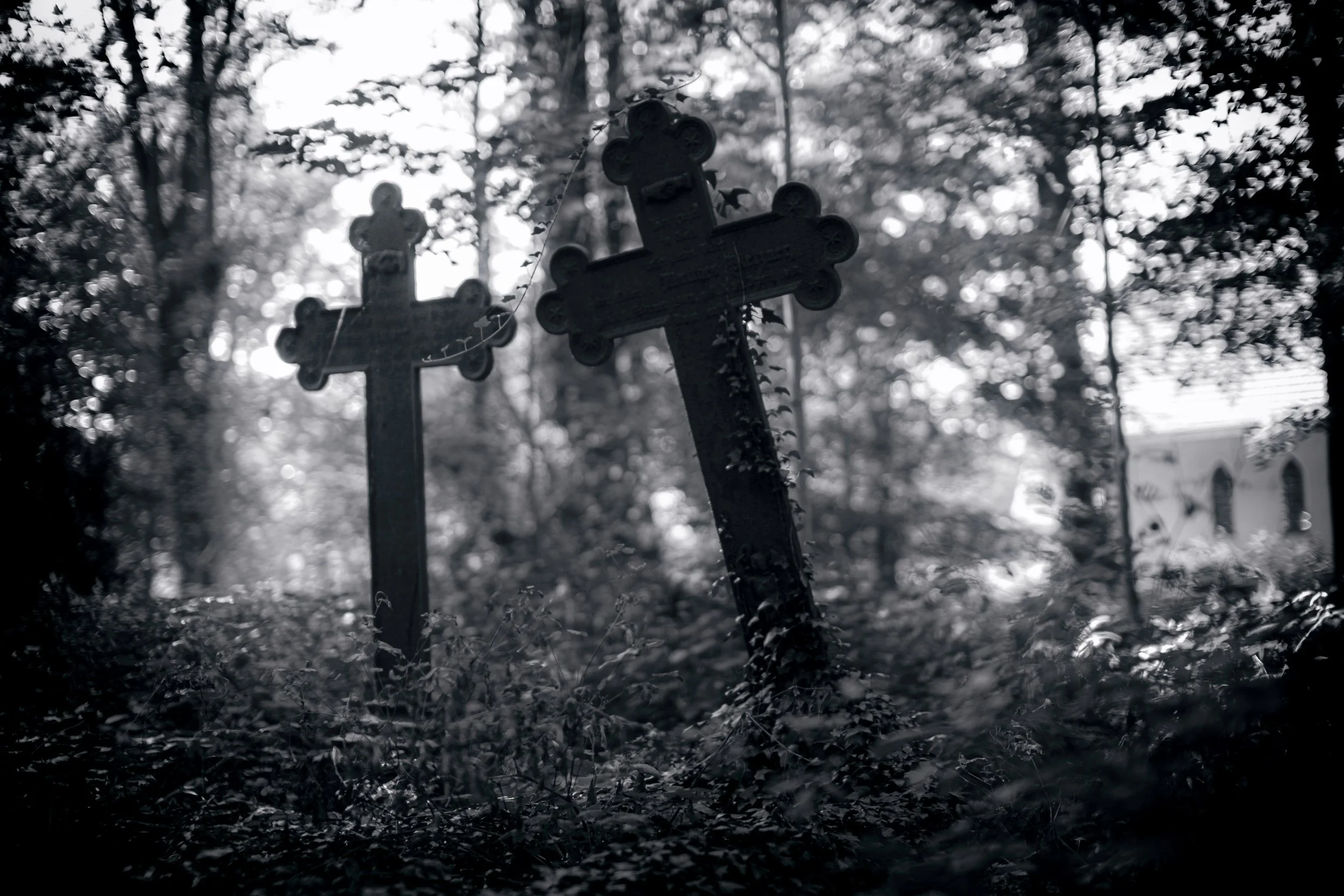
Julie pulled on her bright red sweater and made sure her headphones were secure before leaving the house. Her boots softly clopped against the sidewalk as she walked by brown lawns and trees with no leaves. Bare branches extended into the air like claws trying to pull the clouds down.
"Julie!"
She turned around to see Ian running up to her. He huffed as he caught up and stopped next to her. Julie watched him, sliding her headphones to rest around her neck.
"Hey, Ian," she greeted as she stuck her hands in the pockets of her jeans and waited for him to catch his breath.
"Hey," he straightened up, "Are you going to Sparrow's party tonight?"
"Why would I? I don't go to parties, they're loud and there are lots of people."
"That's the thing, Sparrow only invited the DnD group. So anyone there is one of us or knows the others."
"I'll consider it."
Ian walked next to her, idly chatting about school and a variety of other topics.
"Julie? Julie! Wake up!"
Julie started. Jupiter was staring at her worriedly, and his twin Juniper was shaking her and saying her name.
"Huh, were you saying something?"
"I was asking you if you're going to Sparrow's tonight and if you needed a ride," Jupiter informed her, concern etched into his voice.
"No, I can walk if I decide to go."
"No way in-," Juniper started to say, but was interrupted by the PE teacher's whistle to go back inside. The three of them stood up from where they had sheltered under a large maple tree, red leaves crunching under their shoes.
"Julie! You came!"
Julie was squashed in a hug by the enthusiastic Sparrow.
"Yeah, I did."
Sparrow held her hand and dragged her down the stairs into the basement.
"Guys, guess who came!" Sparrow cheered at the gathered group. There was a round of cheers, and Julie looked to see who all had come.
Ian was sitting next to the arm of the "drab" couch, Jupiter perched on the arm next to him. Juniper had curled up in an armchair and was actively sipping a cup of cider as she idly chatted with Cosmo, who was sitting cross-legged on the floor across from a loveseat.
"Sit, sit," Sparrow chirped as she sat Julie down on the loveseat and promptly sat next to her, "Adella, David, and Grey are on their way. And Grey said they were going to bring some other DnDers from the neighboring town."
"Adella said something about bringing the French exchange student who's staying with her family," Cosmo chimed in.
Julie faintly nodded, and conversation resumed among the people present. Sparrow started leaning against her, resting her head on her shoulder. Julie didn't say anything and let her.
"Let's get this party started!" David shouted as he descended the stairs, "Sparrow's mom had to let me in, no welcome for me?"
"The only people who got Sparrow's personal welcome were Ian because he was here first, and Julie because she's Sparrow's favorite," Cosmo chuckled as David sat next to them.
"I don't have favorites," Sparrow rebutted, but her head was still on Julie's shoulder. Cosmo rolled their eyes and smirked.
"Who's ready party!" Adella shouted as she descended the stairs, a newcomer following close behind.
There was a round of cheers, and Adella stood to the side to introduce the boy that she had brought, "This is Jacques, he's from France!"
"Hello," Jacques greeted the room. There was another round of greetings, and the two sat. Adella sat on the couch, on the side opposite Ian, and Jacques sat in a chair Sparrow had probably stolen from her kitchen.
"Grey should be here soon," Sparrow told Adella.
"They better be!"
"The best for last, as they say!"
Julie turned around to see a grinning Grey, followed by two other people.
"These are my new friends; they can introduce themselves." Grey waved their hand and flopped onto the couch next to Adella.
"Um, hi, I'm Max," the taller of the two told the assembled group with a nod of his head.
"And I'm Beron," the other person followed up with their introduction. The two ended up on the floor, with Max next to David, who kindly scooched over to make room, and Beron next to Juniper's armchair.
"Now, when do the scary stories begin? Or the trip to the graveyard?" David asked with a wide smirk.
"Let everyone get a drink and some snacks first, geez, David," Juniper remarked.
"Yes, help yourselves, there's more upstairs in the kitchen," Sparrow chirped. She had stopped leaning on Julie at some point and was curled up on the arm of the loveseat. Julie had leaned back and was messing with the sleeve of her sweater.
"The fact that you haven't managed to unravel that sweater is a miracle," Juniper remarked. Julie's hand stilled, and she stiffened.
"Leave her alone," Sparrow huffed, "She knows what it can take."
"I can't take this anymore!" David exclaimed before Juniper could retort. "We have to do something! It's a Halloween party, let's do something scary."
"We can't go to the graveyard, it's not dark yet," Cosmo retorted. Julie sighed as the two started debating about when was the appropriate time for going to the graveyard.
"I personally think night is better, what about you?" Sparrow whispered to Julie.
"Night definitely is spookier and more Halloween like," Julie whispered back.
Juniper had gotten up and started playing the Halloween music. That seemed to settle David down, he picked up one of the "ghost" pretzel rods and ate it while sideways glaring at Cosmo who smirked back and blew him a kiss.
"Ewwwww," Grey fake gagged at the two. Cosmo stuck their tongue out at them, and David, temporarily forgetting the prior argument, wrapped his arm around Cosmo's shoulders. Grey faked gagged even louder, spurning a round a laughs around the room.
"You shouldn't have said anything, they're going to be obnoxious just to annoy you now," Ian remarked. Jupiter nodded from where he was still sitting on the arm of the couch.
"Are they actually a thing?" Beron whispered to Juniper, who had flipped so her legs were over the back of the armchair and her head was dangling off the seat.
"I don't think so, Cosmo just responds to hostility with slight flirtatiousness to make people mad and David will play along sometimes, or they'll do that to annoy Grey," Juniper responded, catching a piece of popcorn that Julie threw at her in her mouth.
"It'll be dark in a bit, if we leave now, it'll be dark when we get to the graveyard," Adella chirped after a few hours of talking and bad Halloween karaoke.
"Yes!" David exclaimed. almost jumping but being held down by Cosmo.
"Is that what everyone wants to do?" Sparrow asked, looking around. Everyone either nodded or said that they didn't care.
"Let's go!" David managed to escape Cosmo and spring up. Everyone else followed slower, going upstairs. Sparrow stopped to tell her mom where they were going and everyone pulled on their packets before walking out into the ever darkening evening.
"Remember to be respectful while we're here," Jupiter said to the group as they reached the graveyard.
"Yes, we don't want to be disrespectful to the departed," Sparrow agreed from where she shivered next to Julie. Pressing closet for warmth, Julie wrapped an arm around her to help her warm up.
"Yep, let's go!" David cheered and pushed open the creaky gate. Everyone else filed inside and the wind blew through, causing them all to shiver.
"At least the sunset looks cool through all these dead trees," Juniper huffed.
"Definitely," Grey nodded. Jacques took a photo and Adella chuckled.
"Is that what you usually do, Grey?" Beron asked, Max had stolen his arm and was shivering a lot.
"Something like this, last year we did a horror campaign," Grey answered, strolling leisurely with their hands in their pockets.
"We should play tag or hide and seek," Cosmo suggested.
"We're not little kids, dear Cosmo," Adella said, kicking up leaves.
"Yeah, but those games, in the dark, on Halloween?" David grinned widely, "That would be awesome."
"It does sound fun," Ian commented, having stopped to inspect some flowers growing out of the ground.
"So, are we playing?" Cosmo asked, walking backwards to face the group.
"Sure," Julie answered.
Julie crouched behind a rather large tombstone, Sparrow huddled next to her. Julie had their flashlight, but had turned it off. It had gotten darker, the two of them could barely see a few feet ahead of them.
"This fun," Sparrow whispered, huddling close for warmth.
"Yeah."
They settled into a comfortable silence, waiting for the sound of footsteps crunching on leaves to come close and for them to run from their owner. Until they heard it.
There was a shrill shriek from the opposite side of the graveyard. They both stilled.
"That sounded like Adella," Sparrow whispered, shaking instead of shivering. Julie could only muster a nod as she kept listening.
There were a few flashes from flashlights in other areas, there was also the sound of shoes running on the asphalt path through the center. There was a cut off shriek and the silence.
"It's just David and Adella making a joke, right? He found her and they wanted to scare us," Sparrow whispered, a slight wobble to her voice.
"Yeah, that's it," Julie hollowly agreed, listening for more sounds. It was silent.
A few minutes later, there was the sound of footsteps running on the path again, but they could also hear the labored breathing of their owner. Julie grabbed Sparrow's hand and got ready to pull her away and run.
There was muffled mumbling in a language they didn't understand before a flashlight was shined in their faces. Their hands flew up to protect from going blind.
"Thank God, I found other people," Jacques said.
Julie's eyes adjusted and she looked at the exchange student. His chest was rising and falling heavily as he looked at them.
"Where's Adella?" Sparrow asked him.
"That's what I'm trying to figure out, that was her earlier, right?"
"Yeah," Julie stood up, and brushed leaves off of her, not letting go of Sparrow's hand.
The three of them creeped to the approximate area that the last shriek was heard. Careful not to be too loud and attract attention.
"It was around here," Sparrow whispered, her voice barely audible.
"It was-"
Julie cut herself off and hauled Sparrow behind a tombstone at the sound of crunching leaves, it was fast, like the person was running. Jacques wasn't as quick and got tackled by the person.
"Juniper?" Julie whisper shouted.
Juniper's head whipped around to see Julie's head poking around the tombstone.
"Oh thank everything!" Juniper breathed out and got off of Jacques.
"Why were you running?" Sparrow asked, watching Juniper help Jacques up.
"To get away from whatever psycho is here too!"
"Wait, what? Someone is here with us?" Julie asked, her grip on the flashlight changing slightly, more like she was ready to hit someone with it.
"Maybe two, someone's at the gate, so we can't get out. And someone dressed in like some sort of Scream outfit ripoff was chasing Adella earlier."
"It has to be someone playing a prank right? They saw us coming up here and thought it would be funny to scare us?" Sparrow was practically attached to Julie as she said this.
"Or it's real psycho," a new voice whispered. Everyone jumped and whipped around. Max and Beron were standing behind them.
"Max, why would you say that!" Beron scolded the other person. Max only shrugged.
Julie opened her mouth when a twig snapped and everyone's heads whipped around. It was dark, but there was a vague outline of someone in all black standing there. The group started sprinting in different directions. Julie didn't hear leaves crunching behind her and Sparrow as they ran to the other side of the graveyard.
"Found you two again," Beron whispered a few minutes later.
Sparrow waved and Julie nodded. They had found Ian and the twins.
"Okay, we have to do something about these psychos," Juniper whispered.
"What are the chances it's Cosmo and David and not some random psycho?" Ian asked, leaning against Jupiter.
"I'd say it's pretty high," Julie answered.
"Sp what are we going to do?" Beron asked.
"I have an idea," Ian answered.
Julie nodded at Juniper when she got behind the appropriate grave. The two waited for the signal before moving.
There were two flashes from a flashlight deeper in, and the two girls ran out and at the gate guard. There was running behind them before there was thud and a groan, probably as Jupiter tackled them like the plan.
"Hold up, wait!"
Julie didn't listen and tackled the person by the gate.
"Ow! What the -"
"Shut up, Cosmo!" Julie yelled as she hit Cosmo with her jacket, "What was that!"
Julie had taken their mask off and Cosmo huffed underneath her. Julie got up and walked back over to Sparrow who had run down the path to join them. David was huffing on the ground as Beron crouched next to him.
"Looks like you got them," Adella called as she walked over with Jacques.
"Why did you play along?" Sparrow asked.
Adella shrugged, "Sounded fun."
"Okay, can we go back to Sparrow's house and just watch some scary movies or something?" Juniper asked the gathered crew.
"Yeah, let's go," Sparrow agreed.
She grabbed Julie's hand and Ian pushed the gate open as the group walked out of the graveyard. Idle chatting engaging around them as they walked through the cool night air, ready for more Halloween.
Is Love Worth Catching
Photo Courtesy of: Stephane De Sakutin/AFP — Getty Images
By: Molly Buckles, staff writer
The foggy morning sparked comfort in the woman as she blinked open her groggy eyes. She took a deep breath, put on her glasses, and reached for her phone. On her lockscreen was a text message from Theo, her love. That’s when her stomach sank. Her mood instantly changed, and her heart beat a little faster. She remembered events from the night before. Evidence that could destroy her boyfriend's life. She refuses to believe that Theo could be behind this whole heist. As a detective, it is Rose’s job to crack cases and capture con artists, and she is very good at what she does, but she does not want to solve this case. She is so good at her job that she already knows who stole the precious earrings from the Louvre. She just doesn’t want to admit it.
As Rose walked to work that morning, her coffee felt a little warmer in her hands than usual. Or maybe she was just thinking about it too much because she was trying to distract herself from the real problem. She felt a vibration in her pocket. It was Theo, again. She hadn’t responded to the text before. Rose loves Theo, and Theo loves Rose. They have been together for a little over two years, and their relationship is unmatched, but there has always been something about Theo that Rose couldn’t quite put her finger on. Something mysterious that she would push away because his other qualities overpowered this feeling. Rose took a second to respond to his messages; he was acting normal. She tried to tell herself that it wasn’t him who stole these earrings, because why would he? Why did he need these earrings and go through such lengths to get them?
When Rose got to the crime scene the night before, there were no alarms set off, no broken glass, just stolen earrings and a mystery to solve. As Rose collected evidence, she came across a hair tie. The other detectives around assumed that the thief was a girl because of the evidence, and Rose thought the same thing, until she looked at it. This hair tie was one of the thick ones lined with lace. Similar to the one rose had on that afternoon. No one knew it could be hers, but she did. Rose got sweaty and thought maybe this was used to set her up. She recollected her memories from lunch, realizing that she had taken her hair down and laid it on the table. Theo showed up late to lunch. Rose got excited when she saw him and jumped up to hug him, forgetting her hair tie was on the table. The next thing she remembers is parting ways with Theo and heading back to work, four hours before the heist. He has to be the one who took it because no one else would have. Right? Rose took it upon herself to smell the hair tie when she found it on the floor of the Louvre. It smelled of bacon grease and cleaning spray, similar to the smell of the diner they were at during lunch. She thought about Theo when she brushed the hair tie between her fingers. She loves Theo, and Theo loves her. He wouldn’t do this to her. Before Rose thought twice, she “accidentally” dropped the hair tie in a bucket of cleaning solution at the crime scene, destroying it as evidence. Now she and her boyfriend were safe, for now. She hopes that there is no more evidence of Theo.
Theo is a very observant man. He notices the small things, like the amount of food left on random people's plates, the different colored salt and pepper shakers on various tables, and his girlfriend's outfit. After Theo hugged Rose goodbye, he walked back to his apartment, replaying his lunch date over and over in his head. He reached his apartment and turned on the TV. He had write-ups due for work, but he decided to take a nap instead. As he fell asleep, he remembered that Rose had her hair down as they left. He hoped that she had remembered her hair tie on the table because he saw she had pushed it closer to the window than it was before. He decided it wasn’t that big of a deal and fell asleep.
When Theo awoke, it was almost dark out. He walked to his bay window and looked above the city of Paris. He looked at the setting sun and took a picture to send to Rose. He realized his TV was still blaring, so he walked over to turn it off. As he grabbed the remote, breaking news popped up on the screen. The Louvre had been broken into, and the thieves got away. Theo’s first thought was to call Rose and see if she had heard, but then he realized that she was probably already there working on cracking the case. He decided to leave her be and let her do her work. He would check in with her in the morning.
Another morning woke as she rose from her bed. She was tired, sad, and unmotivated for work. Her only thought as she got ready was that she wished she could be rich and not have to work at the stupid diner. Cienna knows that if she had pursued college, she wouldn’t be where she is now; she just doesn’t want to admit it. Cienna is filled with so much anger that if she takes too much of a deep breath, her body will explode, and hot lava will spew out of her. When she showed up to work that morning, she decided she wanted to live her life on edge. She wanted to quit the diner, rob a bank, and move to a random island. This plan was a stretch, but she decided to go ahead anyway. She didn’t know how to place the blame on someone else until she was cleaning the table of a customer. There she found a hair tie. This could be it. This could be the evidence that sets her free. Cienna could plant it, accuse someone, and make a scene. It could all work out.
Cienna hopped on a bus after work and headed for the bank, when she saw that the Louvre was under maintenance. She disregarded it at first, but as she drove past it, she noticed an open window, an opening to a new life. She hopped off the bus and went back towards the open window. Since it was a foggy day, you could barely see 5 feet in front of you. Cienna took this as an opportunity and climbed through the window. She wasn’t looking to steal anything big, just something worth enough for her to hop on the next plane out of Paris. She came across a pair of diamond earrings, worn by the Queen of England many years ago. It wasn’t hard for Cienna to steal the earrings; all she had to do was break the lock with a pen found in her purse and slide the glass upwards. After she grabbed the earrings, she dropped the hair tie in a less obvious place, and then she disappeared. She used the money she made from the diner to buy herself a ticket to Belize, where she is staying low profile, but living the life she desired.
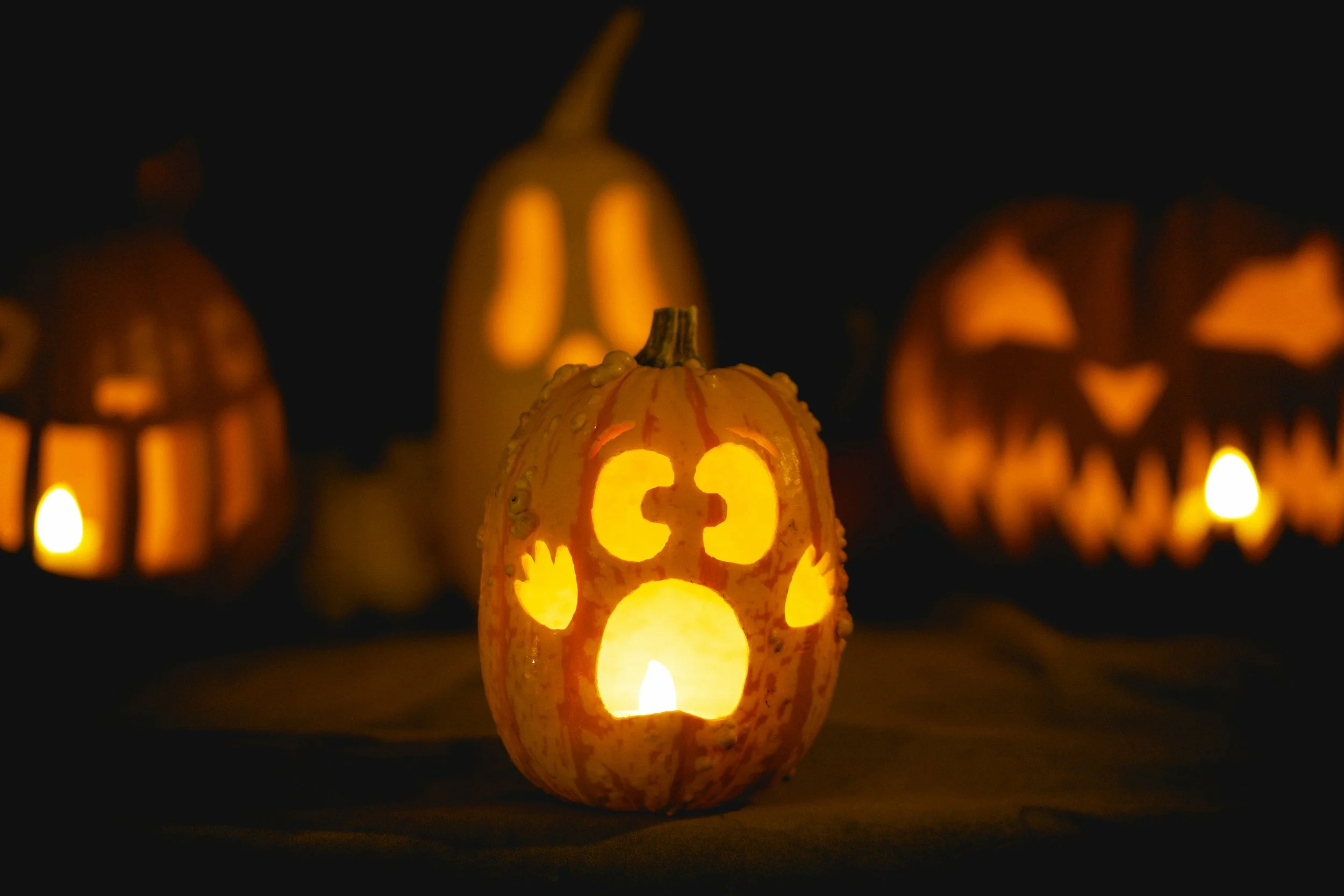
Pumpkin Moon
Those Jack O’ lanterns weren’t like that yesterday, what happened?
Image courtesy of Danil Зakhvatkin on Unsplash
By: Hannah Bertalot, Short Story Editor
Salem placed a newly carved pumpkin on the front porch of his house, joined alongside the other four his family had carved. Each had its own personality, reminiscent of the person who carved it. His mother’s was carved patiently, with delicate details. His younger brother’s had a monstrous face gouged into it with the sum of a five-year-old’s dexterity. His sister’s had similar quality, with the exception that she had taken the time to carve cat ears above the eyes. His father’s had a particularly rough look, as his choice of tool was a small saw from his workshop, rather than a kitchen knife.
Salem’s seemed boring in comparison, as he had gone for a classic look, with sharp, triangle eyes and teeth. He looked them all over briefly, then smiled faintly at the collection of pumpkins. With his contribution to the family tradition complete, he stepped back inside the house to clean up and get on with his evening.
The next morning, Salem stepped out of the house, keys jangling in his hands. Even in his rush to get out the door, he did notice the pumpkins were moved. Nothing too substantial; one was turned a little too far to the left, one leaned awkwardly against another in a manner that it hadn’t been last night. It didn’t immediately occur to him as strange— it could have easily been his siblings playing with them, he knew they wouldn't keep their hands off them. He didn’t devote too much thought to it, though, as he rushed across the lawn to get into his car- he needed to get to campus before he missed class.
Amid the mornings that followed, his family noticed similar discrepancies in the pumpkin’s positions; though they were minor enough that it could have been dismissed as them settling against an uneven surface. The old wooden porch wasn’t exactly flat, nor was the bench, nor the table. The gusty October air could have been enough to shift them.
Two evenings before Halloween, however, Salem noticed a difference that was not so easily ascribed to chance- the stems had grown. He had to double-take, then knelt down in front of the bench to look closer. It wasn’t a trick of the eyes; they had grown thicker, longer. Small thorns had sprouted.
After that, his siblings no longer played with the pumpkins.
In the nights that followed, the plants grew thornier. Salem’s parents fussed over the matter and argued whether they should discard the pumpkins and do away with whatever befell them. Salem and his siblings protested throwing the pumpkins away over what could have been a fluke. Ultimately, the agreement was that they were to be thrown out the day after Halloween.
On Halloween night, Salem went out with friends. His parents were busy trick-or-treating with his little siblings, so he figured he could get away with staying out past curfew. It was long past midnight by the time he pulled up to the curb, so he wasn’t surprised when the house was dark. He figured everyone must have been tired after walking the neighborhood, since usually, his mother left the lights on and waited for him to be home before she went to bed.
As soon as he stepped onto the porch, however, a distinct chill ran down his spine. Something was wrong.
Almost all the pumpkins were missing from their original spots on the porch. His was the only one that remained as it was this morning. A hollow creak sounded behind him, and Salem whipped around defensively, startled. He breathlessly gasped as, in the bright moonlight, he saw moving forms as they crawled toward him, wailing incoherently. He stumbled into the door as his keys uselessly fumbled against the deadbolt, then the porch’s motion sensor light flicked on. The shroud of darkness was ripped away, and revealed the overgrown forms of the pumpkins; vines that stretched and reached, twisted in a manner that could almost be humanoid. The four that were animated crept toward him slowly as they cried out to him. As the key finally fit into the keyhole, he threw the door open, then stumbled back into the dark house. By the time he had locked it again, they were almost at the threshold.
He recoiled as he felt the. . . whatever those were, because those weren’t pumpkins, threw themselves against the door.
“Sss . . . Salem! Saaallleeeemm!”
His heartbeat crescendoed in his chest with terror as they wailed his name.
Why did they know his name?

Flashes of Gold
Image Courtesy of Jerson Martins
By: Tommy Sitz, Staff Writer
The morning fog is starting to lift as the sun slowly rises in the sky and creeps its way over the jungle canopy. Water flows over the rocks in the river, causing noisy rapids that mask any other small noises. A man stands on the raised riverbank holding a fly rod as he gazes at the crystal clear water. He studies the water, noting every small movement or change in the current. As he stands there, he sees a sudden flash of gold in the water. He follows the movement of the specimen in the river, which he can now only see the dark back of. He leans over to make himself a smaller outline and slowly makes his way left on the bank, creeping closer to the object in the water. He gets close enough and starts waving the rod, trying not to catch his fly in the thick jungle canopy behind him. The pile of feathers plops in the water on his final cast forward. They land on the surface of the water above the fish's back, and it suddenly goes zooming down the river, not to be seen again.
“Dang it,” the man mumbles to himself as he sits down on the bank.
“Another blown attempt.” The man walks down the bank to the river and crosses just above the rocky rapids. Once on the other side, he deliberately makes his way up the river, scanning the water as he goes. The next promising part of the river flows 200 yards above the man. He makes it to the section, being careful not to slip on the wet rocks that cover the side of the river. He stops and starts scanning the river again, looking for another golden flash in the water. Suddenly, an eruption breaks the surface of the once calm water. A fish. The biggest fish the man has seen so far. Not just any fish, but a monstrous beast that owns this stretch of the river. It came up to eat something that was innocently making its way across the water.
After the splash, the man focuses and sees every movement of the fish in the mid-depth water. He starts the wave of the rod as he lets go of the fly in his hand. Bright green line slowly comes out of the rod tip, and with every motion, the line goes farther and farther out. The man softly lays down his feathered hook ten feet above the fish. It sinks slightly below the surface and wiggles with the movement of the river. The current takes the fly right to the fish, and the fish looks up. The man strips his line. In a sudden, violent flash of gold, a giant fish’s tail breaks the surface of the water, attacking the fly. The man strips his line in an attempt to set the hook, but as he does, the line is ripped out of his hands, giving him a cut in the crease of his index finger. The fish accelerates down the river, ripping line out of the reel of the man's rod. He fights the beast, struggling to keep control of the situation. The reel is now in its backing with the fish fifty yards downstream and still moving. The man runs down the river's edge, trying to keep up with the giant. He reels in line as he moves, trying to keep the fish from getting too far. The man keeps running downstream, chasing the monster. Every time he starts to get close, the fish bursts away and takes off down the river. Now exhausted from running down the goliath, the man starts to get close. The fish is sitting there, in the middle of the river, also exhausted from the grueling fight. The man keeps reeling and walking closer to the fish. It makes an attempt to take off, but not successfully. It goes ten feet and then stops, out of energy. The man is now twenty yards from the mammoth and slowly gaining. With the rod in his left hand, he grabs his net out of his pack. He is now ten yards away and in the water. He slowly pulls the head of the fish out of the water and pulls it towards his net. The gargantuan gives up, slowly trying to move away, but too exhausted to do anything. The man puts his net in the water and scoops up the fish.
“Yes!” the man yells in the excitement of landing the fish. The fish he has been looking for for the last week is now in his hands. He walks to shore and grabs the fish out of the net. He raises it above his head and does not say a word because of the amazement he is in. He has landed the golden dorado of his dreams and cannot believe it.
Pinky
Picture courtesy of Sam Hoffman
I delivered the winning ball over the net with expert slice, sliding across the acrylic until I stopped masterfully just short of the net. The ball skidded onto his court and was gone as fast as it came, leaving no opportunity for a return. A shot like that can not be reciprocated, only praised. Emilian stood, dumbfounded, whether from crushing defeat or the language barrier I could not discern. My words were usually fueled by raw schoolgirl emotion rather than any real intellectual reflection anyways. Then I shook his hand, and hopped off the court, bobbing my head like a wise turtle.
Immediately upon exiting the gate, a sticky boy who reeked of pineapple snatched my hand in a reverent handshake. He rather reminded me of an eager dog. As soon as I could , I backed away slowly and started for the registration table to record the score.
The score: 6-1 7-5. I had won State Tennis. I wiped the pineapple off as best as I could with one of my many, many cooling towels, then scratched my signature down, sealing my victory. Only one missing piece remained.
When the award ceremony finally commenced, they announced the girls first. There was a lot of emotion; so many tears. Once they concluded the girls awards, I stopped crying. As soon as they called my name, I sprung up, and claimed my polyester prize. There was some difficulty fitting it over my obnoxiously green hat. According to my vanity mirror sunglasses (same size and concept), the hat did not seem too loud, but the heckling from the mass majority of the crowd made me second guess trusting my shades. It was a mere replacement for my original salmon ballcap, which I had lost tragically since last season. Yes, salmon. NOT pink. I will run from that nickname as fast as my custom insoles can carry me. Nobody could replace shayla truly, but limalicious would do for now. After I adorned my medal, they entrusted me with the trophy. This was but the beginning of my legacy, I could feel it in my freckles.
Following the ceremony, we boarded the bus. I leapt up the steps and plopped down in my seat. The parents had painted our names and varsity spots on the windows. I gazed up at my name and the spot I earned from my seat. It was backwards from my view, but I didn't need to read it to know what it meant. Starting in Sheridan, it was a beacon of hope and a tormentor all in one. One singles meant nothing on its own, but it held the power to be something great. The greatness was tangible, the weight of success heavy around my neck.
The bus roared, and we started for home, hearts light. The girls chattered happily at the front. Every single one of them was talking to a camel whose height difference they swore was not that bad. I wondered when they would realize that they were all at the mercy of the same 5’7 zesty munchkin.
I was absolutely vibing with my Unleash your Inner Imagine Dragon playlist when the world around me spun. I heard a loud crash and everything rotated around me, like I was watching the spin cycle on the washing machine. With another deafening crash, I was flung to the opposite side of the bus, from window to window. When I opened my eyes, smoke surrounded me, attacking my corneas. I shut them, and used my other senses to decipher what was happening. The leather was hot beside me. The window frame stabbed into my side. Shards decorated the rough surface beneath me: pavement. People so far away shouted things I couldn't interpret, couldn't hear over the resounding ringing. An acrid scent chalked with chemicals bombarded my nose. I coughed, disgusted.
I managed to open my eyes and fought to keep them open. As soon as I did, a dark form passed in front of me. The seats on either side acted as walls, and it became the third, blocking out any light that filtered through the thick atmosphere. The only thing that escaped me was a very manly squeak. Images of my childhood sped through my mind, but I experienced each one carefully. They were all blurred together, except one that seemed to play over all the others: an image of my father, suddenly obscured by the hat he had thrown on my oversized head. It was countless sizes too big. I lifted the brim, daylight pouring into my eyes. He swayed in front of the sun, allowing me to see his freckly face and his proud smile. He snatched the hat back playfully and said something in his resonant tone I couldn't hear. I could feel it though. Feel every word. One day it will fit. He swung me up on his shoulders like nothing. I gazed down at the pink hat.
There were sirens. My father was gone and suddenly replaced with a man I had never seen before. He, too, was carrying me, but his eyes were filled with purpose and determination, not joy. I coughed. He clambered through an opening, an emergency exit, I guessed. As soon as we stepped out, everything came into focus.
Two yellow schoolbusses lay smoldering. Parts of them were still blazing. I could feel the heat as it radiated off the fire and the engines, and the man as he cradled me like a delicate baby. I could really use one of my cooling towels right about now. The pungent smell of rubber flooded my nostrils. My sense of hearing was the last to return. It slowly but gradually amplified. Sirens screeched and first responders called out procedures, but above all that, there was a chorus. A crowd encroached on the man and I, cheering lightheartedly. The refrain flooded my ears, ‘Pinky! Pinky! Pinky! pinky…”

Acceptance of Fate: Part 2 Purple Eyed Dream
By: Alex Sitz
In a bison hide teepee, a fire cracks and snaps as a stew in a pot, suspended by cooking sticks, boiling over it. Smoke rises from the fire and wafts out the hatch in the top of the structure, as a single beam of light shines down onto the animal hide floor. A man sitting cross-legged next to the fire, leans over to stir the pot suspended above it. His long black hair, tied into a braid with multiple painted feathers sticking out of it, runs down his brown colored bare back. Behind him, a shaggy blonde man lays under a buffalo hide blanket asleep. His bearded face is worn from a life of physical work, with a scar from a past battle placed under his left eye, and his left arm wrapped in a white cloth bandage stained with blotches of red blood. His torn and blood stained shirt hangs at his feet, with his rifle and antler-handled bowie knife, stained with blood, resting underneath it.
It was the trapper. Suddenly, his eyes shoot open, and he wildly looks all around the teepee. He did not know where he was or what had happened to him, with only one question entering his mind.
“I’m alive, but how?”
Instantly, the events of the last time he was conscious rush back to him. The trap for the bear. Everything going horribly wrong. The shot of his rifle, leading to unimaginable pain. Drawing his knife. Deep cutting stabs to the bear's head, then its fall, and finally, its death. Propping himself up against a tree. The darkness taking him. But how he came to be here was a question he did not have the answer to.
Outside, he can see the outlines of two horses and a mule against the teepee wall. On the other side of the teepee, there is a large hide leaning up against the wall, tanning in the sun. Through the small entrance, he can see a small welcoming meadow, lined with tall pines that cover the ground in shadow at its edges.
Now scanning the tent, he notices the man slowly, but deliberately stirring the clay ceramic pot with what seems to be a hand carved wooden spoon, seemingly not paying any attention to him. Under the man's braids, a scar that stretches sideways from his right shoulder to just under his left armpit is visible. Each mark expands and contracts with the native's breathing.
Trying to sit up, the trapper is suddenly aware of a great pain in his abdomen. He grunts slightly as he gets to a full upright position and puts his hand down to his stomach feeling the white bandage around him, where the pain is originating from. The native obviously hears the grunt, but doesn’t react to it in any way except for the fact that the Indian starts to speak.
“You’ve been asleep for a long time.” He says, speaking his own language, but having lived long enough in this land, the trapper recognizing it to be Shoshone, and understood it well. “It has been five sun ups and five sundowns since I found you.”
The native’s voice gave the sense that he knows a great many things, as though he has lived a thousand lives while not being much older than the trapper himself. The trapper, upon hearing these words, looks down at the buffalo hide blanket covering him. Removing it to take full inventory of the damage, the trapper finds a third blood stained cloth around his upper right leg. As he did, the Indian, without looking, somehow knows what is happening behind him and speaks again.
“You were in a great fight with a beast that has killed men before, you were lucky to bring it down, and that I was close enough to find you in time.”
Finding his voice, he replies in Shoshone, “Where am I?”
“In the land of the Sheep Eaters, the tribe of which I belong to, days ride from where I found you.”
“We are in your village?”Asks the trapper as he tries to rub his tiredness out of is face.
“No, I am what they call a lone wolf, a man that lives outside the order of the tribe, but still follows their traditions and religion.”
“Who are you?”
“They call me Aagwayq Hoagande, meaning Bear Warrior, but some French trappers called me Seul. They told me it means "alone”, you can call me that if you wish.”
As he says this, Seul grabs a small wooden bowl off a grizzled brown fur rug, that must be from an old grizzly, and using the wooden spoon, methodically scoops some soup into the bowl. He then turns and hands it to the trapper, and for the first time, the trapper gets a good look at his face. It was just as he expected. Suel is past his youth, but not quite an old man yet. His dark brown eyes show years of knowledge and hard work, with a fiery speckle of Shoshone brave spirit within them. He is of average build, with lean arms and a full chest. As he hands the bowl to the man, their hands touch and the trapper discovers how rough they were, but with a gentle touch to them.
“And what do they call you, where do you come from?” Aagwayq Hoagande asks curiously.
The trapper pauses for a brief moment. No one in a long time had been around or had reason to ask him that question, he had also forgotten. Finally finding the words he answers.
“Martin, my name's Martin Jean. I came here from a fort back in the Dakota territory.”
“Why did you come here, Martin Jean?” questions Suel in a concerned tone.
“I was looking for beaver and any other kind of fur I could sell,” Martin answers in between sips of soup,“but that bear put a damper on that.”
As he finishes his sentence, a sharp stabbing pain that feels almost as if he has been shot in the gut, enters his stomach right in the center of the bandage around his stomach. Martin doubles over in pain and lets out a groan, dropping the bowl of soup that spills across the buffalo hide. His vision blurs with pain, as Suel helps him lay back down. Suel says something, probably trying to soothe Martin, but the trapper can not make a syllable of it out. As his head hits the ground his vision goes from blurry to almost black, until the darkness consumes him with the last thing he sees is the face of the Shoshone Indian man hovering over him.
Woods. Thick, deep, pine tree woods. The giant lodge poles tower over the thick vegetation, made of mostly unflowered and fruitless huckleberry bushes covered in a thin layer of mist. The looming trees block out most of the sun, casting an eerie appearance across the forest seeming to silence the forest, for no sound can be heard within it. No sweet chirping of birds, nor caws of crows. No songs of elk or squealing of squirrels. No humming of buzzing bees or tricking of water. Not even the wind blows through to rustle the leaves. The silence of the forest gives any visitors a wary feeling.
A man. A tall, shaggy blonde headed man stands naked, except for a buck skin loin cloth that hangs down around his waist, amongst the foliage. The greenery of the forest floor covers him up to his hip so that only above his waist is visible. His white skin and blonde beard contrast against the darkness of the green woods makes him look completely out of place. From where the man stands, the woods have seemingly no end, but only disappear into darkness.
He stands staring out into the where the green disappears into dark blur. His gaze breaks and he looks around, taking in all that he sees. While looking around, his head jerks as something rusting in the undergrowth out toward the edge of the darkness. The rustling starts moving on a straight line closer to him. The man watches intently as it does, moving nothing but his eyes. The movement continues closer without stop or pause. Finally about 20 yards from the man, a brown fur back appears through the foliage, moving through like a beaver through the water. Its shoulders move up and down as it strides closer. Its round ears point out at an angle emerging over the greenery, and then its head, both much darker brown compared to its body. Its black nose on its pointed snout sniffs the air curiously. Its ribs collapse and expand with every breath of its round body.
Now ten yards, the man still watching the animal, understands that this is a bear. But not just a bear, a brown phased black bear. Less than ten feet away, the bear stops and stares up at the man. The man can hear its every breath and see every hair on its body. Its hair is not just brown, but has a thin blonde streak going down along its spine.
“Probably female,” thinks the man, “Probably a young female.”
While being so close to an animal that is normally unpredictable, the man feels no fear towards the bear. For a moment, the man and young bear lock eyes. Looking into the bear's eyes, the man notices how her eyes were not as a normal bear’s eyes are. Her eyes are deep and caring, full of life and youth, yet knowledgeable and mystic, but more than that they look closer to the eyes of a person than a bear. They are not human colored though. They are purple. Purple like freshly boomed lavender in the spring. Gazing into those deep purple eyes, the man found himself getting lost within them. Mesmerized, the man looks into those purple eyes for a long time and they look back into his.
Then, without a sound or reason, the bear takes a step back into the undergrowth and begins to stand up on its hind legs. Just as her front paws raise from the ground, a haze falls upon her that clouds her from the view of the man. The man watches as the smoke and haze rises and grows to his eye level where it stops. The haze then begins to dissipate starting from the top, cascading down the length of the form that was the bear and mists off into the greenery it is standing in. As the smoke falls and mingles into the fog among the overgrown huckleberry bushes below, it slowly reveals what it was finding; a woman.
Not just any woman, a beautiful native woman dressed in her buck skin ceremonial dress. The dress in question was well made and complements her slender build with a simple design, fringed all around its edges, with the fringes on the arms flowing down the length of her body. Blue beads, the color of robin's eggs, lined with pearly black beads, are woven across her shoulder and all the way down the tops of her arms as they sit elegantly at her side. Her black hair, done up in a single braid, drifts down her neck and onto her back, stopping just below the line of beads. Though she seems to be clothed finely, she wears no shoes or moccasins, so her feet sit bare on the earth, yet are completely clean of all dirt or mud. Her face glowing with youth while showing no signs of blemishes. The only way the man could tell that this native woman was once the bear, is that her eyes are the same shade of purple, but they show even more brilliantly against the young woman's stunning face. Even though the forest is cast in shadow, the woman has a radiance about her.
Her lavender eyes gaze straight into the man's eyes and his back into hers just as the bear’s did. For a moment she does not move or sway, only looks at the man. Then out of nowhere, her lips move almost catching the man off guard.
“Martin,” she calls him by name eloquently, but continues with a tone of warning, “when the moon is full over the great river valley of the burning mountain, the Spirit of the Thunder Bird will touch the earth. There, he will scorch the earth as to renew it, but it will first have to destroy all upon it and all in its path.”
Martin puzzles over her words then pauses briefly before asking,
“Why are you telling me this?”
But she goes on, as if his question was irrelevant, “When the flames come down upon you, look for me to guide you out. Do not falter in following me otherwise you too will be destroyed.”
Again looking into those purple eyes he asks her,
“Why do you tell this to me?”
“I tell you this to let you know that your journey will not end there, you are meant for more than you know, but you must trust me, do as I say, for if you do not, you too will be destroyed. I will guide you through the renewing flame as long as you follow me ”
“Meant for more than I know?” repeats Martin more to himself than to her.
As the words pass his lips, the woman turns from Martin, back toward the darkness at the edge of the wood, and starts to walk away. Her walk must be the most graceful thing the man had ever seen; she seems to glide through the underbrush as she goes, cutting through the bushes like a knife. The man watches her every move as she goes, almost studying her. For a moment he feels as though he might recognize her from some distant past life, but the notion quickly passes as he watches in awe as the haze returns over her in midstride. The smoke, with its hidden form, lowers back into huckleberry bushes, where the vapor wears off to reveal once more the young brown coated black bear.
Martin tracks her with his eye, until she disappears back into the underbrush of which she came. As soon as the bear leaves the man's vision, an ear splitting screech breaks the silence amongst the pine, the kind of screech that could only be made by a great bird of prey. For the first time, Martin moves more than just his head, making a full circle with his body searching the canopy for the raptor responsible for the noise. Seeing nothing more than trees fading into black, the forest fades back into silence. But Martin continues to look harder and more frantically all across the woods, scouring the trees for anything that could have made that sound, yet all that is left is quiet.
Still looking, another noise cut through the silence. Not sharp and high pitched as before, but deep, low, and rolling, starting out rather quietly then gaining in volume before fading away again, as if it was passing over the man. It reminded Martin of the sound made by a far off herd of raging buffalo trampling across the plain. He knew exactly what it was though and it was no animal. It was the unmaskable sound of rolling thunder.
As soon as the man recognizes the sound, a bright static flash of light hurls down through the trees, landing directly in front of Martin, met instantly by a much louder boom than the first. The force of the lightning bolt throws the man backwards into the woods past the darkness where everything turns to the blackest night.
A crashing roll of thunder joins a flash of white light across the night sky, springing a shaggy blonde headed, bearded man awake. As the thunder rolls over and fades away, the sound of falling rain on buffalo hide replaces it. The man’s bare chest expanding and contracting rapidly as though something was chasing him in his sleep. Two old bandages wrap tightly around his old wounds; one around his abdomen, another around this left forearm. From a glance, it is quite obvious that he had been in some great battle. His blue eyes on his scarred face scan the room, trying to figure out where he is. Recognizing the inside of the teepee with its small fire still burning, illuminating the clay pots sitting next to it and various animal skins laying about, he breathes a sigh of relief, calming him down.
Finally calming down, the man notices the native sitting near the entrance of the dwelling, staring at him with a look of concern on his face. His body, half shining in moving light with the other half being cast in moving shadow from the fire, is positioned in a way that suggests he had been watching the storm for some time.
“Same dream, Martin?” Asks the Indian in a monotone voice, speaking the Shoshone language.
“Yep,” replies Martin bluntly.
“Same girl?” Questions the native again.
“With the purple eyes, yeah,” replies the man once more, slightly less blunt, seemingly a little more responsive.
The Indian nods then turns back towards the opening in the teepee to watch the rain. Another streak of lightning flashes across the sky, making Martin look up as it lights up the inside of the teepee, imprinting the shadows of the nearby pines upon it. A roaring boom of thunder accompanies it quickly revealing how close the strike was. The native, apparently unfazed by the light and noise, keeps his focus on the entrance. Martin looks back down towards the patient native. The Indian, noticing Martin is still looking at him, turns back towards him. He can tell something weighs heavy on Martin's mind.
“You did more today than you have in quite some time. Let me check your wounds.” Says the native trying to come off caring, but sounds more blunt than anything.
He crawls over toward the blonde man, as the blonde man takes off the buffalo hide blanket covering him, revealing the rest of his naked body except for an animal hide lounge cloth around his waist and a third bandage around his leg. Reaching Martin, the native leads down slightly to untie and unwrap the old bandage. Martin lifts his leg, bending it at the knee and propping it up so the native could get underneath it. The Indian unwinds the bandage, passing it back and forth between his hands fluently until it exposes the wound. Using the light of the fire, the native inspect the wound, while the blonde man looks down with a troubled look across his face. In the dim glowing of the fire, the once was gash looks almost completely healed over with only a small slit running down the middle of a forming scar.
“It is almost healed,” speaks the Indian, with the faint sound of joy and surprise in his voice, as he begins to rewrap the wound in the same manner he unwrapped it. Even with the good news about his leg, Martin's look of worry remains. Before the native finishes wrapping the bandage, Martin looks up just enough to see his care givers face.
“Suel, what is going on? What could this dream mean? I’ve had the same damn one five different times now,"asks Martin worryingly.
Suel takes a moment to sigh, then speaks, almost disappointed with his own words,“I don’t know. I wish I could tell you, but I am not a Medicine Man. Only time will be able to tell you. For now you need sleep.”
Too tired to contest, Martin listens to Suel. Recovering himself with the blanket and laying back down, as Suel crawls back toward the opening of the dwelling to continue watching the storm in the same way he had been before. As his eyes begin to close, another streak of lightning lights up the teepee with only a brief pause met once more by a clash of thunder booming all across the mountains. The noise joliets the Martin awake, but he scare only lasts a moment, before the rhythmic drumming of the rain overtakes Martin, sending him back into his sleep.

Letting Go Of The Past
By: Mercy Buck, Staff Writer
All he ever wanted was to make his father happy. Anthony has never been the same since his dad left him, calling Anthony a failure and saying how embarrassed he was of him. That left Anthony's life in shambles and broke him in so many ways he could never be fully repaired. Chaos followed him wherever he went; he didn’t even mean for it to happen, it was just the result of his actions. Having grown up without a father figure, he has been chasing approval all his life, leading him to do things he normally would never do and leaving him more vulnerable than ever. He has been on the move since he turned sixteen, when he ran away from the boy's home. His mother tragically died when he was ten, which sent him through the foster system but his behavior was so bad they sent him to the boys home.
But that was in the past. Now nineteen years old, he was currently working his day job at the grocery store and he could barely keep his eyes open. Stocking shelves and cleaning in the back was such a tiring job, and it bored him to death. This was the fourth job Anthony had in a year; he had been fired from all three of his previous ones. Once his shift was over, he clocked out and hopped on his bike to ride to his tent under a bridge. But before he could make it out of the parking lot a gray car pulled to a stop in front of him, cutting off his path. After just finishing a long shift, Anthony wasn’t really in the mood for some pranksters.
He threw his hands over his head and said “Bro, move.” in an irritated voice. The window rolled down revealing a man who looked to be about forty years old with a scruffy beard and dark eyes.
“Anthony?” the man asked.
“Yes? How do you know my name?” Anthony replied.
“It has been a long time since we’ve seen each other, I’ve been looking for you for a very long time; I made some mistakes in my past that I am not proud of.”
Confused, Anthony asked, “Who are you?”
The man looked at him and sighed.
“My name is Irving and I am your father”
Irving took him to his house, it was in the nicer part of town where rich people lived and where crime wasn’t a thing. Anthony looked around in wonder at all the fancy houses; he had never seen anything like it. They pulled up to a white brick house with modern designs all over the place, the lawn was green and freshly cut. They hopped out of the car and walked up the marble steps to the door and walked inside.
“Welcome to the casa.” Irving said. Anthony looked at all the nice furniture and the fancy lights.
“Wow, this is super nice.” he said. “Too bad you never shared any of this with us.”
Irving looked pained. “Yeah, I’m sorry about that, like I said, I made some mistakes. I’m trying to make that up as best I can.”
An awkward pause followed.
“How did you find me anyways?” Anthony asked.
“It’s a long story, but we have a lot of time, unless you are planning on going somewhere.” Irving said with a small grin. “That night when I left you in a, uh, rude manner; I was in a drunken stupor, I wasn’t in my right mind. I drove off and didn’t stop until I ran out of gas. The next day I realized what I had done, all the things I had said to you and your mother; I was too scared and embarrassed to come back and apologize. So I started over. I began to work all kinds of odd jobs until I saved enough money to afford a place to stay other than my car and got a full time job. My boss saw how much I needed this job and gave me a chance with two conditions. One, I quit drinking and go to rehab. Two, I reconcile with my family. We became good friends and he gave me great advice and often helped me when I needed it. Sadly he got sick and passed away. What I didn’t know is that he had made me his predecessor for the company before he died. I was so shocked by what he had done for me, I became even more motivated to keep my promises to him. I worked hard and went to rehab every day until I quit for good. Now I had to reconcile with you and your mom. Firstly I went to search for your mother; I asked everyone back where we lived if they knew what had happened. I was heartbroken to find out that she overdosed about a year ago.”
Anthony’s throat became dry. His relationship with his mom had declined when his dad left. He still loved her and she loved him, but times got hard and it was difficult for them to express their feelings. When he got moved to the boys home, that was the last time they saw each other. It had been 3 years since he had heard of her. Irving broke the silence.
“I’m sorry, Anthony, I know I am responsible for this.”
Anthony just bowed his head, holding back tears.
Irving went on, “It took me like three weeks to find you. You would not believe how much courage I needed to come up to you. I guess the hard part is now.”
He took a deep breath. “Will you forgive me? You can stay at my place or you can go back to where you’re staying now, but you will always be welcome here. I realize you might be angry or hurting or both, and I understand if you can’t forgive me right now or ever.”
Anthony hated his father for what he had done. He might never fully heal from the wounds he had caused and he was deeply saddened that he had lost his mother. He could never forgive his father. But the man standing in front of him was not his father; he was different, he had changed. This man was legitimately sorry and was trying to fix his mistakes. Everyone deserved a second chance, including him.
“Yes. I forgive you.” Anthony said. The words came out shakily, but they were said. Letting go of the past was easier said than done, but it was necessary.