
Fire Folklore

Shadow on the Horizon
Written by Treyton Allphin
A lone figure walked through the endless stretch of sand, the sun hanging low but still beating on him from above. His clothes, once dark and full, were now torn and shredded from the harsh desert winds. His lips were peeling, his eyes sunken, and his steps sluggish, yet he continued.
The man had been walking for days, maybe weeks, he had come from a city once, a place with bustling streets and busy markets, he even had his own cloth store, a name even, Amir, but now it seemed as distant as a dream he was no longer welcome back. All he had was the desert with its vast, unyielding stretch of sand, the sky that never changed, and the blistering heat that clung to him like a second skin.
His identity was slowly fading. Just the endless horizon and the crunch of his feet in the sand. His water had run dry days ago. His food was long since gone. Yet, even with every step feeling heavier than the last, he couldn’t stop. It can't end now.
And the wind shifted. A soft whisper in the air, so faint it could have been his breath. His eyes flickered toward it, and there, on the horizon, a shadow appeared. It was not a mirage, not this time.
In the distance, a woman, draped in black with no sand on her to be seen. Her cold eyes held his gaze, he was captivated.
With the last of his strength, the wanderer made his way toward her, his body almost dragging him forward. The air grew cooler as he neared, and his skin felt even drier than before, like parchment. He fell to his knees beside the woman, he was stuck, the sand swallowing him. He looked up, the woman was doll-like but held a terrifying gaze and a slight grin, she held out her hand to him. He raised his hand, slowly grasping her hand, and with all his worries fading away, he smiled.

Grandma’s Garden
I know she won’t be at my graduation, and I know the dust is gathering on her recliner. The little blue office is still empty, the tire tracks will fade in the yard, and the weeds in the garden will continue to burgeon.
By Julian Denney
I’ve only visited my grandma once a year at best—almost 17 years of week-long summer trips over the mountains in Pocatello. I never thought about it much until we had to visit twice: once for fun and again for a funeral.
I was 16 when my grandpa died. It was odd sorting through the military garb and Native American memorabilia left to the family, sitting on the dusty blue carpet surrounded by boxes and boxes of “junk.” While the office had always been cramped, it no longer felt homey; I no longer felt the warmth of sleeping on a cot with a quilt, just the cold blue light struggling to brighten the room. It was sitting on that scratchy, aged floor that I realized something was different.
It was on our summer visit following the funeral that I knew it wasn’t something reversible. The first thing that drew my eye was the flower garden. A dilapidated truck sat a few meters off, now covered in rust and weeds. My old swing was faded by the sun, the red now a dull pink. The yard was overgrown—save for the tread marks where my grandma had begun to park her car, no longer able to walk from the garage to the front door. The garden where I’d once dug up worms from neat rows of flowers now had Canada thistles as tall as I was, having finally encroached where my grandpa had been warding them off.
It was off-putting to me. As a kid, I never expected my grandparents to age beyond their golden years; as a teen, I thought I’d brag about my grandma being 90 forever. I never processed that health truly would catch up, that my grandma would ever really die—nobody does until it happens. Even when I noticed her voice was frailer or that she had a walker, I simply thought of them as adjustments to keep her comfortable, not signs. I was in the first stage of grief before I even knew it—denial.
I can’t say it was unexpected when I got the call that she was in hospice. She’d been in and out of the hospital recently, cancer treatments and checkups becoming a routine.
In a way, I think I’m still in denial—I still don’t believe that when I go back to Idaho, she won’t be there. I don’t believe I won’t see her when we go to the house. She has to still be there on her recliner, feeding stories about when she was young and asking if we want candy behind my mom's back. I should be able to open the door to the scent of newly baked cookies and dated flower perfume, but I can’t.
I know she won’t be at my graduation, and I know the dust is gathering on her recliner. The little blue office is still empty, the tire tracks will fade in the yard, and the weeds in the garden will continue to burgeon.

The Deadwood Saloon
Image courtesy of Grizzly Rose.com
Silence filled the air. It was as thick as the dust floating through the beams of light coming from the saloon window. A pile of old and weathered playing cards sat neatly in the center of the table, yellowed by years of cigarette smoke and grime. The rest of the saloon was empty, aside from an old man passed out over the bar and a bartender quietly scrubbing a glass. A thick layer of dust covered the floor, taken there by years of travelers coming and going as they pleased. Three distinct piles of poker chips lay haphazardly on one of the tables, one noticeably larger than the others. Behind the different piles were three distinct men.
Hiding behind the smallest pile timidly sat a small man with sizable spectacles, trying to stay small and unnoticed. Mouse-like in appearance, he wore tattered and dirty clothes, sporting a bald spot on the back of his head reddened by the western sun.
Behind the second-largest pile sat a disgruntled-looking man, his mean eyes visible beneath a dark cowboy hat. A cigarette stuck out from under his brown mustache. He swayed it side to side as he tried to figure out what his best option was, his scarred hands angrily gripping the cards.
Behind the largest pile lay the boots of the obvious victor, his feet lying comfortably up on the tabletop. The winner’s chips took up most of his side of the table. He leaned farther back into his chair and let out an exaggerated yawn, bringing his other hand out from the large red and white poncho draped over him to cover his mouth.
He smugly looked over his cards, then glanced up to meet the man in the dark hat’s gaze, raising his eyebrows with a stupid smirk. The man in the hat glared harder, almost looking as though he would burst a blood vessel in his forehead.
“Don’t I know you from somewhere friend?” said the man in the hat.
“It’s possible,” said the man in the poncho, “I'm somewhat famous ‘round these parts.”
“That so…” said the big man before laying down his cards on the table. “I fold.”
The man in the poncho suddenly switched his gaze to the small man in the glasses, staring him down. The shy man's eyes fluttered back and forth between his cards and the poncho'd cowboy's fiery scowl. He slowly dropped his cards to the table and squeaked out a faint, “I fold,” before dropping his head to stare at his worn boots.
The man in the poncho couldn't help but bare his teeth in an evil grin as he threw his hand down on the heavily marked table, revealing an assortment of random suites and numbers. Taking his boots off the tabletop he greedily raked in the pile of poker chips that had accumulated in the center of the table during their round. The mousey man covered his face in shame, knocking his glasses up his large forehead and letting out a faint groan.
“Looks like you boys are plum outta luck and guts,” the poncho'd cowboy sneered.
A loud thud rang out from the front of the saloon, a large figure standing in the now-open doorway, casting an outstretched shadow covering the poncho'd man; his arms still wrapped around the chips he had won. Everyone in the bar saloon paused
The drunk old man lying on the bar slowly raised his head from the small puddle of drool he had created, looked the man in the doorway up and down, and dropped his head back down to the counter.
Sniffling, the stranger took his first step inside; the spurs on his boot rattling loudly as his foot hit the old wooden floors. The man slowly made his way to the bar, grabbing hold of the chair sitting next to the old man and turning towards the poker table. As slowly as he had walked in he made his way over to the three men dragging the chair behind him, the chair jumping around due to the uneven flooring. With every step echoed out his loud footsteps and jingling spurs. The three men stared at the man as he finally made it to his destination, swinging the chair and letting his large body fall to the chair unfortunate enough to bear his weight letting out a desperate creak.
All three men stared at him blankly.
He wore an old leather coat and chaps, the coat hanging halfway down his quads. His long hair and beard sat messily on his face and head. His eyes puffy and cheeks rosy gave the impression he had been crying. If not for his size and glum disposition, he would come off as a pushover.
“Dutch Carson?” The words barely left his lips, his voice sounding weak and shaky.
None of the men said anything in response.
The large man let out a deep sigh and reached under the table, pulling out a well-maintained Colt revolver, his eyes dancing around the table as he gently set the cold metal down on the tabletop, his fingernails gnarled and dirty. Sleeves covered in dust and grime.
The spectacled man went white as the man in the dark cowboy hat quickly sat upright. The bartender watching from the back of the saloon let out a deep sigh and began to hide his most expensive liquor behind the bar’s counter.
“Listen, friend,” the poncho’d man said calmly, “I’m afraid that you might be mistaken. I don’t know anyone by that name ‘round these parts.”
The Stranger’s bloodshot eyes locked onto his face.
“You boys listen and you boys listen well,” he said, continuing to stare the poncho’s man down, the man's voice cracking every other syllable. “I have been wronged by a man named Dutch Carson. Now I don’t know what he looks like but I know for a fact that he is sitting at this table.” The man paused as tightened his grip on the revolver. “I’m not the type of man to hurt anybody I don’t have to and would be appreciative if the yellow-bellied coward would fess up now.”
The three men continued to sit awkwardly, eyes fixated on the gun, all waiting for someone else to say something.
The Stranger's lips began to quiver as he took in the men’s silence. He quickly brought his fist up before slamming it down into the tabletop, causing the mousy man to let out a loud squeal.
“One of you killed my wife last night.” His voice cracked and faded back into the awkward silence at the end of the statement.
“Like I said, I am not trying to take the life of an innocent man, but I don’t know what I’m capable of.”
The Mousy man began to hyperventilate, sweat dripping down his forehead, eyes still fixated on the cold piece of steel held tightly by the infuriated man.
The man in the poncho spoke up first, slowly and calmly. “I swear to you I don’t have an inkling of an idea to what you're talkin’ bout.” As he tried to de-escalate the situation, his left hand slowly inched its way from his hoard of poker chips and towards the edge of the table, pacing it every few seconds, millimeters at a time.
“I didn’t do anything either,” the man in the dark hat butted, hands raised and shaking, the cigarette in his mouth down to its butt and his mustache twitching.
The stranger brought his sleeve up to his forehead, wiping the moisture accumulating on his brow. “I don’t know… I want to… I-I…” His puffy eyes shot to the mousy man who sat frozen in fear.
“Why haven’t you said anything,” the stranger said, narrowing his eyes in suspicion.
The mousy man's mouth opened but no words came out. He tried to swallow but his mouth was too dry. His eyes flickered around in desperation, begging the other men to say or do anything but they didn’t.
The stranger's grip tightened more on the handle of the gun, his knuckles and fingertips whitening under the strain.
“Say something!” The man yelled, tears streaming down his face in a river of hopelessness, slamming the butt of the gun on the table.
Suddenly the stranger's eyes widened; the pace of his breaths increased, “I know you, I saw you yesterday at the cabin.”
The mousy man began to cry too, “What-”
“Why were you there, what were you saying to her,” the stranger said, face contorted in rage.
“I’m a postman,” the mousy man managed to squeal out, his voice high and frightened like a snared rodent.
“Shut up!” the stranger screamed, raising the gun directly between the mousy man's eyebrows, “We didn’t get anything yesterday!”
The poncho’d man’s hand lunged underneath the table underneath the table and kicked his chair backward, scattering chips all over the floor. Catching the sharp movement out of the corner of his eye, the stranger swiveled his body along with the gun to face the poncho’d cowboy. At the same time the man in the dark cowboy hat dove to his right seeking cover behind a table and reaching for his own gun.
The Saloon stood nestled in between the drugstore and a small hotel, only having six rooms. Made out of timber from the north. It was a single story in height and had a small wooden porch in the front added years after its original construction. A candle fire years earlier had nearly burned the building down, one of the few interesting things that happened in the dying town.
Loud Cracks rang out from the interior of the saloon, first a quick burst of three or four shots, then a pause, and then another burst, too close together to be able to count an exact number. One of the panes in the back window shattered and fell to the dust of the barren desert.
Silence once again broke out over the sleepy town.

The Camping Trip
By: Greta Morgenweck
The wind blows through my bright red hair as I rub my arms attempting to diminish the goose bumps while the wind whistles past in only a breeze. My body is only covered with a thin tie dye bikini. I stand while setting my arms over my stomach, peering over the edge at the 20-foot drop that looks like a million feet down. Cautiously stepping over the rocks to Wren, I look at him and say, “ ready?” He nods while I grab his hand and we take that step off the cliff. My stomach feels as if I just took off in a plane. In an instant we fall into the water. As we come up gasping for air, we swim to the rugged boulder we have to climb to get back up to the cliffs.
We are on the North side of the lake and the dam is roughly a mile away from us. It is 89 degrees. The pebbles and sand on the cliff burn as our bare feet quickly walk over to peer over the edge once again. I stood next to Wren as Kate and Ben jumped off. Wren was a foot taller than me but weighed less than my thigh. He stood there, arms crossed, trying to hide the unnoticeable bumps on his arms and flat stomach.
Ben and Kate were always along for the ride. Kate was just under five feet with a slim waist, but too filled out for a small bikini. She had blue eyes and shimmery blonde hair. Ben has broad shoulders, a goofy smile with oversized glasses, and a GPA that would make Stanford want him.
“ Dang, I wish Mia could’ve come.” Wren says.
“ Yeah, definitely.” I say with resentment.
“ You know Ella, you're such a great friend, you’re like a sister to me!”
I smile and nod because if you don’t have anything nice to say don’t say anything at all.
“ I am soooo tired, can we leave?? Pleaseeee,” Wrens says in a whiny voice.
Ben laughs and says,”Get in.”
After this you would’ve thought the day was over, but it only began as we started driving to a camp spot on the South side of the lake, called Deer Creek.
Kate’s hair reached to the end of her back and dripped all over the backseat of Ben’s car as she put it up in a messy bun. Wren sat in the front as always. Ben started driving to Wren’s car in town before heading to Deer Creek so he could drive too. I sat next to Kate in the back as my shoulder length hair drizzled red water down my chest and collected in my belly button.
Wren got out and hopped into his car as I crawled into the front seat.
A ‘85 Blazer is in front of us that Wren is driving as we start our journey. The mountains are becoming closer to arm’s reach and fewer houses are appearing along the way, while Tame Impala rings through my ears. I turn my head to look in the back and Kate is curled into a ball fast asleep. Ben’s right arm is leaning on the console and the other arm is on the steering wheel while his hand is tapping to the beats of his favorite album.
At around two hours in, Wren called us and asked if we could pull over for a minute. We stop for him to call Mia right before we lose service.
After this we finally arrived and drove over a bridge to enter Deer Creek.
As we step out of the car there's not a soul in sight and the only sound is the water flowing and birds chirping.
I can’t help but look up at the mountains that used to seem a million miles away that we’re now sleeping at the edge of. We all ran over to the creek right away. The smell of pine trees and wildfires fills the air. The sunset borders the mountains and the sky is a mix of orange and blue. We jump from rock to rock through the shallow water. After our side trip to the creek, we went back to the campsite.
“ So here’s the wood and lighter fluid, coal and stuff to make a fire. Who wants to?” I ask
Wren and Ben go silent.
Kate laughs and says, “Uhhh do you guys even know how to make a fire?”
“ Well you see- not really.” Ben says. “ I don’t camp.”
“ I’ve watched one be made in a movie.” Wren says as a joke but no one laughed.
“ I guess I will do it myself because the men clearly can’t.” Kate irritably says as she grabs a piece of kindling and throws it in the pit.
“ Why don’t you guys make yourselves useful and go set up the tents you brought?” I say while rolling my eyes.
Wren and Ben leave for a few minutes to go set up while Kate and I build the fire.
Wren comes back over and nervously says, “ So what if I told you I forgot the stakes?”
“ God Wren, I asked you to bring one thing and you can’t even do that!”
“ I’m sorry, my mom packed it for me.” Wren defensively brings into the conversation.
“ It's whatever, try to find a solution because I am trying to make a fire that you obviously can’t be trusted with.” I angrily say and point towards the tents.
As the night settled in and both the tents were set up with no rain coverings or stakes. Ben and Kate decided to sleep in a tent together and Wren and I got the other one.
I lay awake staring at the stars as the sound of Wren snoring is in the background and the smell of his cologne fills the tent.
I turn my head and look at his crisp jawline and spotless face and then turn back to watching the night sky as a shooting star passes. I fall into my own dreams.
I sit up and quietly move to the zipper of the tent. I pull up the zipper and look back after it moves up every inch to make sure his eyes are still closed. I step out and hear a crunch of a leaf. Crap, I hope no one heard that. I slide on my birks and go for a walk by the creek.
Why did Wren compare me to his sister? What was wrong with me? Why doesn’t he think of me the way I think of him?
A pine cone falls from a tree and lands behind me. I turn around and get chills. Why am I scared? And why am I not enough for Wren?
I walk back toward the tents and the full moon above me is the only light and all I can think of right now is everything he has taken from me.
I see that rock against the tree just about the size of my hand. Big enough.
I picked it up. I turn it around and observe it. Perfect.
With the tent still unzipped I slide off my shoes outside and step in.
I look down at Wren peacefully sleeping on his back. I think he’s the most beautiful person I’ve ever met, but that mindset changes quickly as my vision becomes a blur of his lips on hers, and his hands on her waist, all so wrong.
My hands are shaking but that doesn’t stop me from bashing the rock down onto his head and it feels like water as blood splashes onto my face. The momentum of the blow throws my arm back and his body jolts.
The way he had me wrapped around his finger and only wanting me when it was convenient for him. I throw my hand down again holding the rock as he makes a sharp inhale. His face is getting more and more unrecognizable.
Who does he think he is? Why did he think he could just do that to me with no consequence for his own actions? My vision gets more blurred as the warm tears run down my cheek. I take my left hand and wipe off the mix of sticky red and transparent water. Even his blood smells like cologne.
Another splash of blood hits my face after a strong blow and I fall out of the haze and look down at my hands. My fingers become weak and the rock falls out of my hand that is covered in red.
Wait what the-
I fall back in the tent realizing this isn’t a dream and hear leaves and grass behind me as I quickly turn around to see Kate holding Ben's arm from behind as she has her hand over her mouth.
I look back at Wren's motionless body and then slowly tilt my head down to see the red water dripping down my chest and collecting in my belly button.

The Dark Forest
Maybe, just maybe, the forest has a story
Photo credits to Sebastian Unrau on Unsplash
By: MJ Whelan
It doesn’t matter how sunny the day is, the forest is always dark. Always like the sky above is a deep grey. Any light is dim, only able to bring clarity to three steps ahead of you.
During the day, it’s quiet. There’s barely any creatures scurrying around, the wind barely moves the trees. No, they move on their own when annoyed. At night though… the forest comes alive with noises and sounds. Some familiar, the howls of wolves, cries of birds. But the others? Hideous shrieks of being that sound like they were once human, feral growls that follow any foolish enough to enter, and shrill cries that might be birds, or something else. Rustling in the bushes that seems to get close and then far away.
Everyone knows something is wrong with the forest, and yet, people still enter. Pulled by some dark, fierce curiosity. There are those that seem to have the forest running through their veins. Those that don’t shy from the edge when the creatures scream, that can’t seem to take their eyes away from the edge. They stand at the start of the paths leading into the forest, paths made by the forest itself. No human would ever make an entrance to that place.
Most who enter, never come back. The few who do, well, they’re changed forever. Something has left them or something is there that wasn’t part of them before. Their eyes are always empty, like any life has been drained from them. When they die, you can’t find the bodies. They were reclaimed by the forest in death, though how is unknown…
Young people and children always dare their peers to go a few steps down the paths into the forest. Most can’t do it, their skin crawls before they can ever reach the treeline. It feels like the forest is watching with bated breath, waiting to consume them. Once, people tried to send sacrifices to it, in an attempt to keep themselves safe, but they were fools.
How do I know that? Because any village that's tried that ends up a ghost town. You can’t satisfy greed by feeding it. The forest claimed them too, added them to its darkness. Its hunger became their hunger, or, that’s what other stories say.
It’s odd when you think about it, all these stories and we still don’t know what happens in the forest. We know people usually don’t come out, the few who do are changed forever. But, what exactly happens in there to cause it? Storytellers like myself often wonder, we try to make sense of it through the fantastic and improbable. But, what if it’s not either of those? What if it’s simply an old forest that we made a demon? The disappearance caused by wild animals who were hunting, the ones who come back and disappear at death? People with madness that got blamed on the forest.
Of course, you don’t believe that, do you? I don’t blame you, the noises alone are enough to cast doubt on it being normal. Not to mention the paths no one ever recalls making. The ghost towns, the mysterious callings to it.
Oh? The Storytellers, like myself? The ones who show up and no one seems to know where we came from? Many people think we’re tied to the forest, that we come from it. I’ve heard people say that we’re the disappeared who survived and made the forest our home. That we go to towns at the edge and try to lure people in like a form of the Pied Piper. I’ll leave the decision of what we are to you. I don’t much care, so long as you’ll listen to my stories.
Stories, maybe that’s what gave the forest its power. A few strange things happened and people spun tales that spiraled out of control and made the forest what it is today. Well, we’ll never know, the first stories are so old anyone who was around at their creation is long since dust. No use in lamenting it, is there?
Oh, your parents are calling, little ones. Hurry now, I’ll still be here tomorrow with more stories to fill your young minds. Tales of heroes and villains, strange creatures, and the forest. Now run along, you don’t want to keep your families waiting, be swift, little ones. Eat your dinner, sleep, and ignore the fog from the forest that creeps into town at night. Goodbye, I’ll see you tomorrow and tell you more stories. Goodbye…

Lost and Found: Chapter 1
By: Savanna Proffit
All the kitchen cabinets were light green and covered with charcoal black countertops. The sink laid on one counter below a small window with buffalo check curtains making the scene cute and quaint. A hall led from the living room to the back of the house, where a bathroom, two bedrooms, and an office were. In the one bedroom, the morning sun shone through the window, making the silver handles on her dresser sparkle. Next to the dresser sat a hiking pack with socks hanging out the top. Clothes were scattered on the floor and bench in front of the queen bed against the center of the north wall. Two small tables stood on either side of the bed with pretty white lamps on top. The sun caught her golden hair that sprawled across her pillow making it shimmer like strands of silken gold. She was just starting to stir; a stretch of the leg over here; a stretch of the arm over there; and then a yawn; finally a little flutter of the eyelids.
Twenty-one-year-old Kayla Sage Anderson opened her eyes and looked around her cozy little bedroom; she was still a little groggy when she went through her plans for the day in her mind. Kayla suddenly flew out of bed; she remembered she was supposed to meet her family in the Green Mountains for their annual backpacking trip. Her family had left a few days before to get a head start. Kayla could not join them due to some work orders she had to fill. Her mother had sent her the coordinates of their campsite, where they were waiting for her and her sister Megan, the day before, so they would know where to find them.
Megan, Kayla’s older sister at the age of 22, had not been feeling good the past few days and she and her husband, Nick Peterson, decided it was best not to go. Her mom, dad, two brothers, and her youngest sister had started ahead, and Meg and Nick would follow up later with Kayla if she felt better—but she did not. They texted Caroline, her mom, to let her know that they would not be joining the family trip this year. Though the family was disappointed, they understood.
——————-
Kayla went through her packing list, “ Socks…check, plenty of shirts…yes, hat…check, pants…yep, sweatshirt…check, light…yes, food…yes, mug…yes, jet boil…yep…” She read through her whole list and checked everything off one at a time until she reached the end. Yet, when she was sure she had everything, she still felt she was forgetting something; something important.
“What could I be forgetting? I know I put everything I needed on this list…OH! My camera!” She raced down the hall to the dining room, dog in tow, and almost lost her footing on the slick wooden floor, to get her camera that she could not do without.
After everything was completely packed, she set her stuff down by the door, went to the kitchen, scrambled some eggs, fried some sausage, and made herself a nice hot cup of black coffee. The smell of the amazing breakfast cooking on the stove made her taste buds tingle and her tongue lick her salmon-pink lips that matched the color in her cheeks, which gave her a beautiful, youthful charm. Her pretty green eyes watched as the liquid eggs slowly turned solid and the red meat turned brown. Her eyes were perfectly placed on her gorgeous round face and paired just right with her nose, which was a smidge too big for her taste. As Kayla stood mixing her eggs and flipping her sausage, her wavy blonde hair laid down her back, stopping halfway, only adding to her beauty.
She poured her coffee into her favorite pastel green mug, grabbed a plate, and served herself a delicious breakfast of eggs and sausage. As she sat down on a stool at her kitchen island, she scarfed down her breakfast so she could leave as fast as she could. She went to take a bite of eggs and a piece of her golden hair slipped into her face.
“Ah, shoot! I still have to do my hair,” then she looked at her feet, “And put my shoes on! Plus, get out of my pajamas! What on earth have I been doing that I didn’t get dressed yet?”
She grabbed her plate and mug, headed to her room, and put on her favorite hiking outfit while she took bites of egg in between. Then she did her hair into two French braids which she started at the front and worked all of her hair into them until she got to the back. When she finished her hair, which looked like two golden cornrows on top of her head, she put on her hiking boots and tied the laces in perfect bows. She placed her favorite green hat with trees on the front of it, on top of her neatly braided hair. Kayla took a deep breath, and looked at herself in the mirror.
“Good to go!” She said.
The Anarchist #2
Second part to “The Anarchist”
By Austin Corbin
Corvus sighed as the blood seeped into his dirt floor—a mess he desperately wanted not to clean. The strange politician lay in the chair against the wall, blood still spitting out of his neck. The man posed no threat to Corvus, yet he knew what must be done; anyone trying to form some type of government must die. It was part of his creed as a Steward of Anarchy. There were plenty more of his kind, wandering the cities, the settlements, the whole country. The Stewards of Anarchy was an elite group of military commanders handpicked by the two generals of the Anarchical army to keep the Anarchy safe, a program that went back generations. After the first few went undercover and set out into the country, they recruited more; they recruited the best of debaters, the most skilled in combat, and the people who were born to wander. As these qualities all invested into one living, breathing human being are quite rare, the most apt recruits were few and far between.
As for Corvus, he was more of the type to stay at home and read. However, he was a masterful swordsman and a dead shot with his Thompson and revolvers. Corvus was chosen by a man named Thomas Farrel Canfret, who spent eighty-four years of his one hundred and two-year life as a Steward of Anarchy; he never retired. It was rare that a Steward of Anarchy meet another, besides, of course, the mentor and the student. This was because of the strategic dispersal of the original Stewards of Anarchy. Even for the ones that travel enough and to the right places, they remain strangers, as revealing their identity would go against their creed. However, there was a system to call all Stewards. If help from the entire corps of Stewards was necessary, then the individual that calls all of them has a mark that they must don upon their forehead; then they must wander the country; when another Steward sees this mark, they will stop the other and don the same mark themselves; then the two wander together and find more Stewards of Anarchy. The process can take years; however, most threats to the Anarchy take years to escalate.
Corvus sighed. The blood was either going to be an eyesore for years, or it would take digging it out and re-mudding the seat and floor. Thankful he would not need any firearms, he leaned against the counter. Quickly he checked the body for any other weapons or bombs; not finding anything but a small pocket knife, he hurriedly dragged the rather large man into his cellar, where Corvus left him as he ventured off to find his shovel. Once found, the shovel made quick work of the wall in the cellar where Corvus walled up the body with mud, twigs, and rocks. The man was not the first to be buried in the walls of the cellar; Corvus knew he soon needed an expansion. Corvus kept constant track of his kill count, and it would never be something he would be proud of—simply a number attached to the duty he would forever carry out with a sense of accomplishment.
Corvus, in the end, decided to shovel out and re-mud the blood-soaked floor and chair. He figured it wouldn’t be too much more work than walling up the politician; however, it was just as much work, if not more. It all took Corvus into the early afternoon when he remembered his coffee on the woodstove and picked up his pipe once more as he sat on his bed. The day, not yet near to over, took on the slow, moody, grey guise of a cloudy day in autumn despite the summer month.
This led Corvus to find a pleasant book on his bookshelf, which he read for the rest of the evening until, on his third bowl of North Carolina tobacco, Corvus seemed to drift into a waking slumber, something he often found himself inundated with, an augmented reality where fine motor skills fade and a state of unmoving, peaceful, yet observant sight sets into the eyes. This strange sleep lasted for quite some time.
The second knock on his door confused Corvus mightily; it was late, and he had drifted into a more acceptable state of sleep, yet on his door, he heard a knock. As he got up, he groaned, not out of some awakened rheumatism, nor did he groan out of anguish; no, he groaned for the years he had spent alone; he groaned for every frown, every smile, everything he had done alone. Since his mother had given him away to Thomas Canfret, he could only remember her face. After he was done with his education at the age of eighteen, Corvus knew nothing but the occasional stranger on his adventures and the occasional knock on his door as he was at home. He groaned.
Once he had properly armed himself and met the door, he tiredly opened the door. His heart absolutely dropped; confusion, worry, and anticipation flooded his mind. The woman standing in front of him bore the mark to call all Stewards.
The Trail Behind
Chapter 2 of The Trail Behind
She’s not only lost, but being stalked; with the wilderness and darkness growing around her, she’s forced to take shelter in an abandoned cabin. Will Hazel survive the night and make it home, or will the mountain claim her as its next victim?
Written by Nico Fuhriman
As it lunged at the window, I flinched, expecting to be mauled by the feline-looking shadow. But after a few seconds, I realized it hadn’t broken the window. When I looked back in its direction, I saw some kind of luminescent film outside, between the window and the shadow. It was as if some barrier kept it from breaking through. It threw itself at the window over and over again, growing more relentless. I watched in horror, unsure how much longer this so-called barrier would last.
As it continued to throw itself at the window, the symbols across the wall gave off a faint glow. The barrier was somehow connected to these symbols, but I still didn’t know what they meant or if they were something that could help me. I moved closer to the wall, keeping my eyes on the window. Not that I could do anything if it broke through. I ran my fingers over the symbols, tracing them, hoping something would magically happen. Every time I traced one, a tingling sensation ran through my hand, and I tried not to smudge it.
When my fingers returned to the originally smudged symbol, a soft whisper suddenly filled the air: “Repair the mark.”
I whipped my head around, goosebumps forming on my skin. I looked around frantically, unsure where the voice had come from or if it was just my mind fraying under the adrenaline. Then I noticed a small bowl filled with a red substance. I hurriedly grabbed it and traced back over the smudged symbol. Unsure whether it was blood or just a red paste, I set my worries aside. As the symbol was repaired, the barrier seemed to strengthen. I didn’t hesitate; I used the paste to trace over every symbol, even the carved ones. I wasn’t risking anything, and if this would help, I was willing to stick my fingers in this blood-like paste.
There was no longer movement outside from the shadow. I wasn’t sure if the symbols had scared it off or if it was just hiding, waiting for me to come out. I wasn’t leaving this cabin until sunrise. I was growing hungry and cold. Though I had shelter, there was no heating, and my clothes were still damp from the rain. I took off my layers to wring them out and try to dry them as much as possible before the sun rose. I planned to leave as soon as I saw a speck of sunlight peak over the mountain range.
I was still worried about whatever was outside. I didn’t know if it would retreat once more into the wilderness once there was light or if it would just wait out there until I felt secure enough to leave.
A few hours later, my once-damp clothes were just cold. I slipped them back on to help contain my body heat. As I warmed up, I began to hear birds chirping. I looked out the window to see that the sun was starting to rise. I grabbed my stuff and shoved it back in my backpack. I was hungry and terrified; the first thing I wanted was to get out of the wilderness. I hoped that with there being light outside, I could follow the trail back down and make my way back up to the parking lot. I’d just need to move faster than I usually would.
I took one last look at the symbols, flickering with a glow, and began to push the barrier from the door. I hoped that whatever was out there last night would be gone. As the cabin door slowly creaked open, I peeked outside with my heart racing. There was no sign of the shadow. I was safe… for now. I slung my backpack on and made my way down the trail. It was still muddy from the rainfall, but at least I could see in front of my feet.
As I made my way down the trail, I couldn’t help but feel paranoid. As if something could be watching me from the tree line. It was eerily quiet. I just hoped I could make my way out of here before nightfall.
#2230 - Eric Leupold
By Gabe Bree
“Eric, thank you so much for coming on the podcast. I appreciate you finding time.”
“Yeah man, I’m a regular listener, and I love the work you’ve done with this podcast. I think you have connected with the people in a great way.”
“Thank you, that means a lot.”
“Yeah dude, in the world we live in now, there is so much polarization everywhere. Whether it’s politics, conservation, or any movement, there is just so much conflict and separation, but you are the only one to diversify the people you have on, and it's very unbiased. So, I congratulate you.”
“Yeah, I mean, that’s one of the major reasons I started this podcast is to give multiple sides to one story and hopefully bring the sides back together. Anyways, I've been reading your book Alpine Solitude, and I have absolutely loved it; your detail and dedication to this piece of art are fascinating.”
“Well, thank you. This book is kind of a memoir of all the things I have learned and experienced in the wilderness. I tried my best to make it as accurate as possible. I had gone back to all my old journals and notebooks, where I had gone into detail about trips and experiences. Anything and everything I could find I would use.”
“That's awesome. From the sounds of it, you have had quite the amount of experiences in the mountains.”
“You could say that.”
“Well, Eric, there’s one chapter in particular I wanted to talk to you about. You wrote a chapter called Life. That is one of the best pieces of literature that I have ever read. It’s so intricate and well-written. Would you tell me what prompted you to write that chapter in such detail and thought?”
“Ok first of all, how in-depth do you want me to go with this?”
“As in-depth as possible.”
“Ok well, the chapter was written so thoroughly because it needed to be. I mean, it was called Life for a reason. I also wanted to show the importance of wilderness in relation to life.”
“I see. Go into ‘Wilderness in Relation to "Life,’ expand on that.”
“77 years, that’s how much time we have. When I was younger, I looked at this number and thought, ‘Wow. There are so many things I will be able to do.’ I can remember saying, ‘I have so much time.’ Since then, my perception of time has changed drastically. I was only 17 when I said that. The number one factor in changing that perception of time is life; Life is the driving force that pushes everything forward. It is kind of stereotypical, but the more I think about it, the more it is true. When you stop, life does not, and after a while, it will run you over and force you into the ground. Life is a rush. When I was young, it was hard for me to understand this; it drove me insane. I always wondered if there would ever be a break or an end to it—something to put it in slow motion.
The year I hit 12 was one of the most important years of my life. At the time, I didn’t even realize it. In the state of Wyoming, to be able to hunt, you have to be 12 years old. I can remember countless times my dad left early in the morning to go hunting, and every single time, I wished I could go. Before my 12th year on this earth, my time spent outdoors was relatively limited to driving through scenic areas and enjoying from behind the glass. Being that young, I had never put much thought into going out into the wilderness and enjoying it there, outside in the moment. The time had finally come for my chance to truly experience the wonders of the wilderness, free from the shackles of enclosed buildings and vehicles.
Since that moment, my love for the wilderness has been growing at an exponential rate. In the wilderness, the possibilities are endless. There's a certain amount of peace in knowing that you don't know what's going to happen. The wilderness is an escape from the penitentiary of life. Countless trips I've been on and an endless amount of scenarios I encountered, and none of them were more challenging than the burdens of life. Life has a way of pushing you over your limit, the wilderness has a way of only pushing you to the limit rather than over. As we grow into adulthood and expand into the ever-flowing complexities of life, the wilderness has a subconscious way of knowing that—drawing you closer until you can no longer fight the urge to stay away from the wild. When you're in the wilderness, it allows you to be truly free. Nothing is stopping you from climbing the nearest peak, or taking a nap and relaxing in your sleeping bag.
The wilderness understands your struggles, it feels your pain and agony. In the beginning, God created the heaven and the earth. Along with the earth in its physical form, God created the earth in a form that only humans themselves can perceive. It’s a form of earth that lives in all of us, it is interconnected with our souls. It’s that little essence in the back of our minds that longs for us to experience the wilderness from more than just our man-made means of travel and comfort. The wilderness is interconnected with humans; that is where we began as a species. The earth we were born into was unlike anything anybody today has ever seen. The wilderness is interconnected with life and that is what secretly drives all of us. I know for a fact that it is what drives me. The wilderness is in every part of my life. It's in my writing, in my actions, in my behavior, it’s in everything I do. That's the issue with society nowadays, the population masses live in these massive urban centers full of man-made objects. Buildings, cars, furniture, and people; an endless amount of people. What we are missing is a presence of solitude.”
“Wow, that was a lot.”
“Well, you told me to go in depth.”
“No, I appreciate the depth that you went into, this is the kind of thought that we need more of rather than whimsical ‘fly by the seat of your pants’ thought, we need real meaningful thinking. So that was perfect.”
“Ok, good.”
“I couldn’t help but notice that towards the end there you began talking about some issues with our society today. Why is that?”
“Well, a lot of my writing is centered around the issues that I see in our society. There is a lack of drive in all of us, we need to have the ability to push ourselves rather than be influenced by outside forces. In other words, we need to break the laws of physics. An object at rest will stay at rest unless acted upon by an outside force; we need to have the ability to start in motion without an outside force. Now, I'm not saying that everyone needs to be a David Goggins, but we can keep living like this, or it will drive our society to the ground. As I said before, the wilderness is interconnected with life, so life and wilderness are what drives us—not one or the other, but both together, and we all have plenty of life so it's obvious what's missing.”
“I agree with a lot of what you are saying. I too think that something is missing in society. I think one of the main reasons for our struggles is technology especially phones they hold us back more than we know.”
“Yes, technology is a big one because who hasn't wanted to go do something and then sit on their phone and lose track of time, or get too focused on what they were watching and decide not to go do whatever they were going to do before? I’ll admit to it I've done it plenty of times, so it's not like I'm some special occasion it happens to all of us.”
“Yeah, the kids these days are the worst. Everywhere I go, I see kids, especially teenagers, on their phones all the time. Even the parents of these three-to-six-year-old children are buying their children iPads instead of raising them.”
“The young kids are what truly matters because they are the building blocks for the future. They are the ones growing our world, but if they don’t escape the chains of technology that will never happen. So it is imperative that they are the ones getting outside and into the wilderness.”
“I agree. I take my kids hunting, fishing, backpacking, and biking all the time to show them that there are better things in the world than your phone.”
“That is important also, not only getting the younger kids into being outside but getting the parents of the younger kids into being outside and active because it really does benefit all of us.”
“Well Eric, I believe that we have used up all our time here, and I appreciate you making time to make it onto the podcast.”
“Thank you for having me.”

Welcome to the Big Leagues
An unexpected promotion
Photo credit to Andrew Seaman on Unsplash
By: MJ Whelan
Amycus followed Onyx; he was nervous. The promotion to the main office was quite a shock. When the senior writer showed up at his department and told him to pack up and grab his photographer, he honestly believed he was getting fired. Then Onyx simply told him and Kaldor to follow them, and now they were here. Being led to an unfamiliar part of the Underground Press building.
Onyx stopped in front of a door several floors up and turned to them, “Well children, welcome to the big leagues.” And then they pushed open the door.
It was… more chaotic than he imagined. Several voices hit him at once, as well as the faint scent of cigarette smoke. Someone with a black fedora with their feet on their desk took another drag of their cigarette, reading something off a paper in their left hand, “Get a load of Vanderley’s description on these new wanted adverts. A tall male possessing darker skin is believed to be involved in the illegal publication known as Underground Press. What a joke! Height and skin color are literally so useless without anything else.”
A man, Amycus assumed to be Vanderley, chuckled, “I think we would want to keep it that way, no?”
The original speaker nodded and took another drag from her cigarette, tapping the ashes off when she was done. Onyx had led them to the center of the room and clapped their hands to get everyone’s attention, it calmed down instantly. The eyes of everyone in the room turned to them, Onyx cleared their throat, “Everyone, welcome the new additions to our team Amycus Horne and his photographer, Kaldor Hawke. Everyone be nice, Seraphyx you’re under special orders not to be a nasty piece of trash to them.”
Seraphyx, the one with the fedora, looked offended, “First of all, shut up you-”
The man Amycus assumed to be Vanderley cut them off, “It’s great to have you both, I’m Vanderley Dragun, the head editor here.”
Amycus nodded, “It’s a pleasure to be wherever here is.”
Seraphyx scoffed, “You don’t know where you are. Did Onyx here throw you into the deep end of the pool? Typical.”
Vanderley sighed, “That’s Seraphyx, she handles world events with her photographer, Bowie Burke.”
A red-headed man huddled over a camera waved at the mention of his name. Vanderley nodded, “And Onyx does financial coverage and also serves as the head photographer.”
Onyx nodded and went to what Amycus assumed was their desk. They made a vague gesture at two empty desks across from each other, “Get your stations set up.”
Amycus cautiously sat at a desk with Kaldor sitting across from him. There was a new typewriter lying in front of him and a host of other supplies for writing. Across from him, Kaldor’s desk had supplies for photography. Amycus set his bag down and pulled out his current story, looking it over before putting an empty sheet in the typewriter.
Kaldor had also started with continuing their work, looking over the photos he had managed to get of a government official accepting a bribe from the mafia. The both of them fell into a trance, their work consuming their attention. It was only when a startlingly loud noise sounded from somewhere in the room that they finally looked up. Onyx was standing up, fuming. The origin of the noise seemed to be that they had slammed their hands on their desk.
“Sera, I swear to all that is good!”
Seraphyx rolled her eyes, “Like you know anything good. You can’t even do your chores at home.”
Onyx was about to fire back when the door opened again. An exceptionally well-dressed man entered the room. Everyone scrambled to stand up, Seraphyx almost fell when she threw her legs off her desk to stand up. Amycus looked at Kaldor, and the two of them copied everyone else.
Vanderley greeted the man, “Hello, sir. I didn’t think you were visiting us today.”
The man smiled and waved his hand, “Why can’t I visit you guys without it being official?”
The whole room relaxed and sat down with the wave of his hand, Vanderley offered the man a spare chair.
“Thank you Vanderley,” the man said as he sat down, “Now what is everyone working on?”
Onyx spoke up first, “I’m working on an article discussing the truth behind the government’s recent statement about spending less money on the military.”
Seraphyx snorted, “They probably just diverted funding into programs that feed into the military but aren’t explicitly military.”
“That’s exactly what happened.”
The man nodded, “Good work Onyx. What about you, Sera?”
Seraphyx tapped her cigarette on her ashtray, “Hidden correspondences with world leaders. Bowie got a great shot of a foreign leader exiting a transport on a governmental base.”
“Good work Bowie,” the man said with a smile, he turned to Amycus and Kaldor, “You two must be the new guys. I’m Bishop Valentine, the founder of Underground Press. May I ask what are you working on?”
Amycus swallowed, “A story about a government official accepting a bribe from the mafia, Mr. Valentine.”
Bishop nodded and smiled at the two of them, ”Good work, and you can just call me Bishop. Or sir if you want, but I would prefer Bishop, even if you put Mr. in front of it.”
“Yes, Mr. Bishop.”
Bishop smiled and stood up, “Well it was great meeting you, and everyone, keep up the good work. What we do here is important for the people.”
There was a chorus of goodbyes as he exited the room. Seraphyx smirked and lit a new cigarette, “You new guys are lucky, meeting Bishop on your first day here.”
Amycus nodded absentmindedly, still processing the fact he had met the founder of Underground Press himself, Kaldor was also having a similar experience.
Onyx smirked, “Well you two want to stay here? We have the biggest bounties on our heads and are some of the most wanted.”
Amycus and Kaldor shared a look before nodding; Amycus grinned, “We do.”
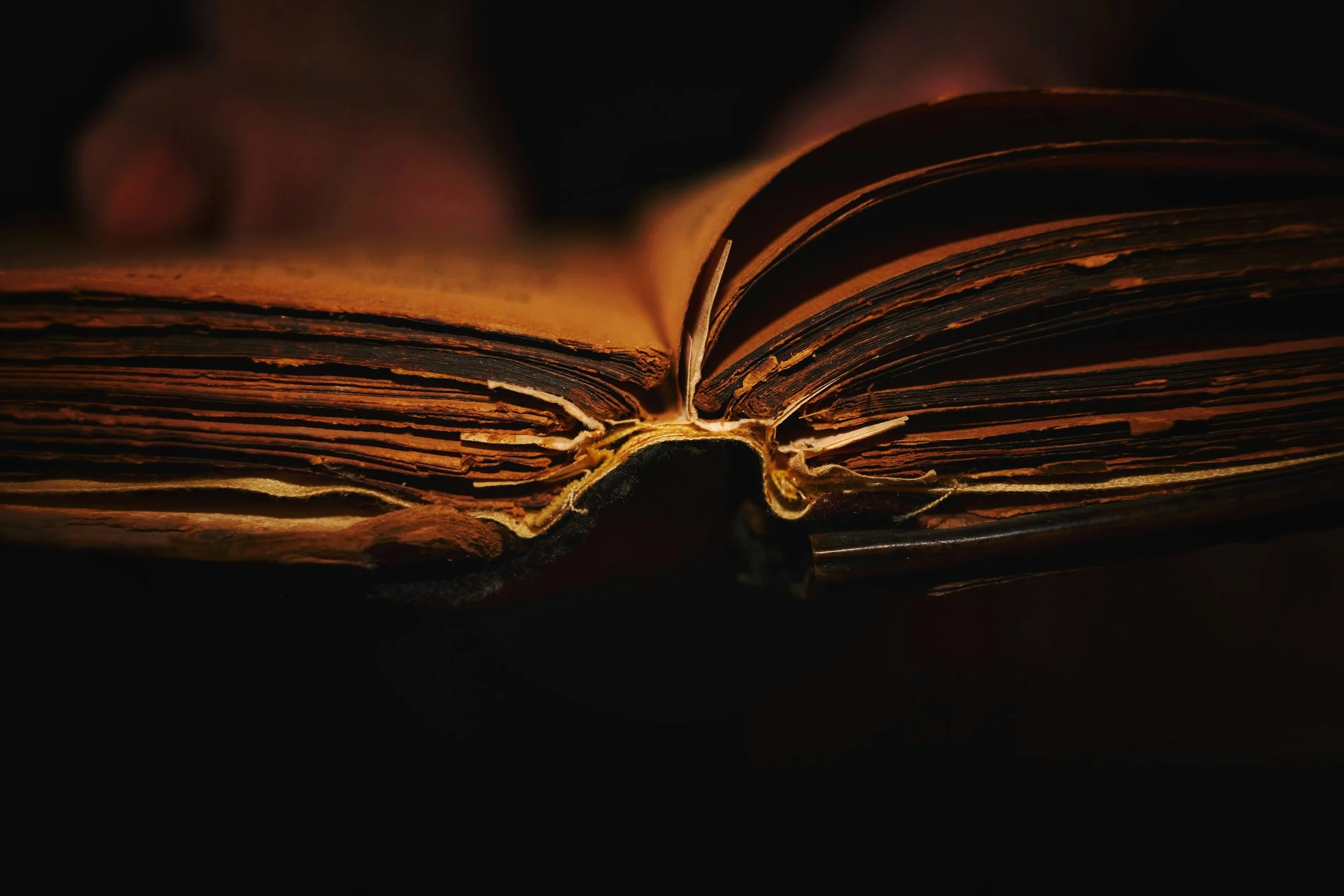
The Gilded Book
Photo by Sergiu Valenas
a group of teens find books with there life stories
Written by Cedar Jeffers
The door creaks open, and a mildew smell hits the teens' noses. The old floorboards squeal under the weight of the four kids. River scrunches her nose.
“Eww, I hate this, let's turn around and forget about this.” Rivers suggests.
Rolling her eyes, Indy says “Come on this is going to be fun.”
Indy and River have been friends since the summer before 3rd grade. River moved from a large city and stuck out like a sore thumb in the country, Indy was born and raised here. They live across the canal from each other. Indy took River under her arm and showed her the ins and outs of Long Springs. Long Springs is like any other small town; everyone knows everyone and only a few secrets are kept for long. Long Springs is a southern farming community with a handful of churches and small old townhouses that dot the surrounding landscape.
“Come on River, it has been like seven years and you're still a city kid.” Nash laughs.
“Indy is right, this will be fun, and think of all the parties we could have.” Elliot points out. The four of them had become friends because they all lived close to each other and they carpooled to school in Nash's old ‘85 Ford truck.
“Who would want to hang out with us?” Nash asks as the group looks around the building. The afternoon sunlight spills through the boarded-up windows.
“Look at all the books, why would anyone leave them here?” Elliot questions. Elliot has short blonde hair and a splash of freckles from working in the sun. Elliot is the smartest of the group. After High School, he plans to go to law school so he can travel the world.
“Look at the names of the books. That’s our principal's name, and Mrs.Carflat’s name.” Nash says as he reads, his flashlight bouncing all over books. Nash has black curly hair, is the group's muscle, and is planning to inherit his family farm.
“This is so weird. We need to go. Guys, look at this,” Squeals River. With long, pin-straight blonde hair and a mole above her upper lip, River is the rich kid in the group. She dreams of returning to the city and becoming a fashion designer.
“You found a book with Elliot’s name on it.” Whispers Indy in amazement. Indy has short brown wavy hair. Indy is a people person who loves to talk to everyone and knows all the town's drama. Everyone in the group stares in wonder at the warm leather with a gold flowy font with Elliot’s name.
----------
“Come on Elliot, open the book and read it. Stop being such a baby.” Nash says as the group sits on the couch at River’s House.
“What if it can tell the future… here let me open it if you aren't.” Indy reaches for the book and yanks it out of Elliot's hand. She opens it, and they all watch with anticipation as Indy reads out loud.
“Elliot Weston was born in 1990 to his mom, Kira, and his dad Kevin. He has one younger brother named Sam, three years younger than him.”
“Wow, who wrote this book, this is kinda creepy,” Elliot asks.
“Look there’s more.” Indy flipping ahead
“Elliot travels to Rome in 2015 and gets in a boating accident leaving him with a limp… Elliot gets married at 27 to Rosalina, they have 3 kids and live in Texas… Elliot is a world-famous traveler.” Indy reads in amazement.
“Ummm, this is totally creepy, we need to get the book back to that weird library and forget about it.” River suggests in a disgusted tone
“This is up to Eillot if he wants to keep his book that could be real or not.” Indy butts in.
“I think that this is fascinating and I will keep my book... In fact, we should go back and look for your books.” Elliot suggests with an eager grin plastered on his face.
“Well, let's go. This will be so much fun.” Nash says, jumping to his feet and grabbing his keys, he calls over his shoulder, “River before you complain, there is probably a book on your life.”
“You think so, I mean I was not born here and Eillot was…So maybe it is just you people who are born here.” River suggests looking at the book with wide eyes
“I wasn't born in Long Springs, I was born in Harington.” Proclaims Elliot.
“Whatever nerd.” Indy teases
The group squeezes into Nash’s trunk and heads to the woods at the end of the county line. They take an old two-track road until the woods parted to a small opening with the log-built, boarded-up library.
“Let's go. I'm so excited to see what is in my book.” Indy runs out of the truck and flings the log door open. The sunlight illuminates the dust and cobwebs in the air, and the walls are covered with books in every nook and cranny. The group looks around in a new sense of awe and wonder, now knowing that these books could tell the future.
“Look, this is a book on the town’s founder, all of the facts are accurate even how he died.” Indy breathes in amazement.
“I bet that there is a book on everyone who has lived in Long Springs…here is my great pepaw, and here is my Mom’s book.” Blabs Elliot
“We should start with our books and then we could read others … I don't want to invade their lives,” Indy suggests. The group all agrees and spread out to find their own book.
“Guys, I can't find my book, here are my brothers and sisters and the rest of my family but I don't see one with my name on it.” Indy draws an unsteady breath.
“It is ok Indy we will find it, we all have ours so your book is probably here somewhere.”River reassures her.
“River stop making her feel worse, and stop making that face every time you touch a book,” Nash tells River.
“What face am I making? If it is a grossed-out face, I can't help it. This is so gross with all the dust and cobwebs… Ah, There is one caught in my hair!” Screeches River. They all laugh and go back to exploring.
The group stays until dusk looking for Indy’s book; they look through all the shelves and do not see a single thing.
“Well, It’s getting dark so we should get back before dinner. Sorry, Indy. I don't think that your book is around here.” Eillot says with a reluctant look.
----------
Indy is lying on River’s bedroom floor and is listening to River read her book out loud.
“I am going to make it into fashion school, but then I have to drop out because I decided to become a teacher. I hate little snot-nose-kids, they are so gross and annoying.” River carries on and on about how this is not going to be her future. River is so absorbed in her own book that she does not see Indy’s upset face.
“Hey River, I should go and help my Mom with dinner.” Indy Mumbles
“What? No, you hate cooking, you have not read the rest of my book yet.” River whines.
“River, I'm going home. I don't want to read your book and hear about how your life is going to turn out awful. You get to know or at least have some idea of what to do with your life. You are so self-absorbed in your own life that you don’t realize that your best friend is upset.” Indy yells.
“Fine, whatever. Go home and cook and live your life in this stupid town for the rest of your life.” River huffs. Indy walks out of River’s room, River glares and calls,
“You are not special, you are nobody, even that stupid library does not care about you.”
----------
Nash’s truck rolls to a stop, and the two of them stare at each other and turn their eyes to the library.
“You think that your book is here? Indy, don't get me wrong but we have looked and we didn't find it.” Draws Nash.
“Whatever, you don't have to come in and look. I am just going to look for it. It’s not fair that everyone has a book but me. Even River has one and she is not even from here. She hates Long Springs.” Indy snaps.
“Hand me a flashlight, maybe it was covered by another book or something. Indy, it will be ok if you can't find your book, we don't even know if this is real or fake. You can still live your life without knowing what will happen next. You will find your calling and be okay.” Nash explains. Indy gives an unsure smile and hops out of the truck.
“Indy, it has been hours…I'm tired and hungry, let's go home.” Nash complains.
“No! It has to be here somewhere, maybe under the floors?” Indy wonders.
“Go get my crowbar in my toolbox” Nash exhales. Indy runs out excitedly. When she comes back, Nash grabs the crowbar and walks over to the spot where Indy’s family is and with one solid whack hits the floor.
“Look Nash, that's my book!” Shreeks Indy. She shines her flashlight over her book. The gilded book cover winks back at them. Indy shakes as she pulls out her book. The golden book is thicker and longer than the other books in the library. Indy in a breathless wonder whispers,
“What is this? Why is my book like this so special about me?”
“Come Indy read it already.” Nash's voice quivers in anticipation. Indy takes a breath and opens the book. She reads out loud.
“Indy Jones was born in 1990, to her mom Ashley and her dad Tom.” Indy's eyes drop down to the end of the page in big bold letters. Indy’s voice shakes as she reads.
“Indy Jones will bring the light to the darkness… What does that mean Nash?”
“River didn't tell you? At the end of all our books, it says something or another about a world-altering event and how there is light to save us, but only if you follow your story from the book.”
“No, I got annoyed at River for complaining and stormed off, then she told me that no one cares about me and I am a nobody.” Indy huffs. Nash’s face pales.
“That happened in my book… Do you think all of this could be real?” Nash asks
“If you are not lying, then it has to be real,” Indy says in amazement.
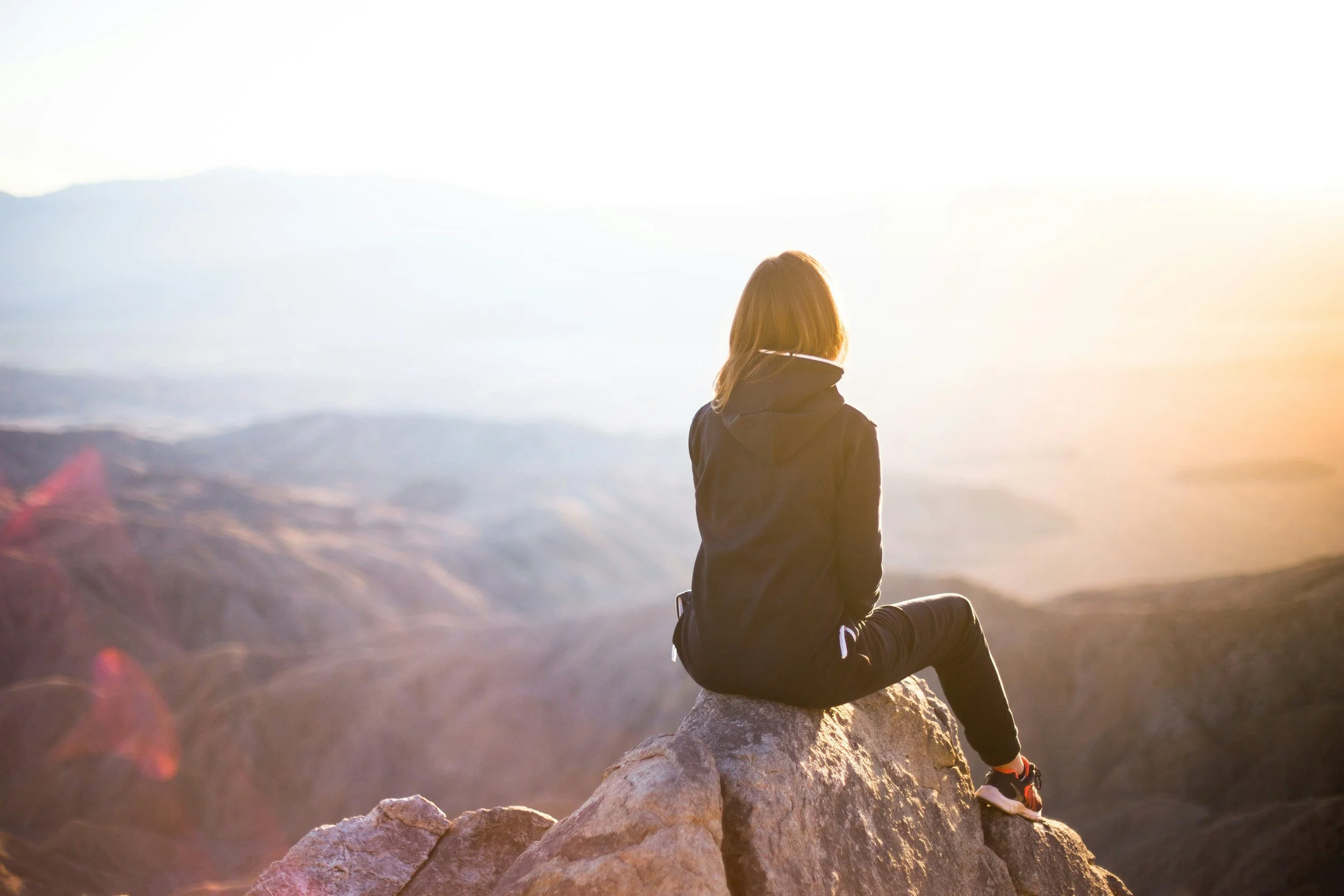
Living On
By Greta Morgenweck
I remember it all too well, but now I don’t know where to start; I guess from the moment we met. I saw him across the crowded coffee shop wearing a Carhartt vest over a loose black sweatshirt and carpenter jeans. He had straight black hair that covered the acne on his forehead. “Just my type,” I thought. I didn’t think much of a cute boy I saw once because obviously there were many so far in my second year of college. I looked back down to reading Fahrenheit 451 by Ray Bradbury. Not one for romances or horror stories, I look up once again to watch this boy grab his drink and leave. I check my watch. Twelve-fifty-two; guess it is time I head to my 1:15 p.m. class.
It was autumn. I usually parked where I could find a spot because this coffee place was the study spot in town. My blue 2006 Toyota RAV4 sat near the back. I shook my keys out of my pocket to unlock the door and immediately started my car. The heat pushed through the vents from the highest setting it was on two hours ago when I drove there. On my way to campus, I drove downtown, passing murals on the rustic brick buildings along with yoga studios, cafes, bookstores, and bike shops. Mountains surround this little town sitting on the edge of the Canadian border. 'Reduce, reuse, recycle’ bumper stickers were on almost every car surrounding me.
I pulled into the campus’ student parking at 1:05. I turned around, grabbed my backpack from the back seat, and pulled it up into the passenger seat. Turning off my car and placing my keys into the front pocket, I grabbed one AirPod from the case and slid it into my ear. Attempting to not slip on the ice-covered sidewalks, Mac Demarco’s sweet tunes rang through my ear. I stepped into the lecture hall. I walked to the back row and sat in my usual seat.
“Good afternoon, class.” Professor Smith said. “Today we will be continuing our analysis of the Narrative of the Life of Frederick Douglass by Frederick Douglass.”
“Miss Davis, could you begin by summarizing the reading from last night?”
Oh crap. Does he really think I read the whole ninety-eight pages last night?
“Umm yes-”
The door opened and a young boy walked in.
Oh my god, that’s the guy from the coffee shop.
“Can I help you sir?” Professor Smith asks.
“Yeah, is this, uh, reading and research writing fundamentals?”
“Indeed it is. Take a seat, young man.”
He walked to the back of my row and sat a few seats away from me. The chairs in between us were empty.
“Yes, where was I?” Professor Smith says and goes on to write a summary of the chapters we were supposed to read last night on the whiteboard.
Thank God.
“Hey. I just transferred here from Michigan,” whispered the boy over the three empty seats in between us.
“Oh, cool. I can catch you up on the material.” I whisper back. “What’s your name?”
“Josh. what's yours?”
“Margaret. Nice to meet you.”
“Likewise,” he said with his soft voice as he looked back to the front of the class.
Never thought I’d see that guy again. Weird.
After all my classes, I went home. I squeezed into a parking spot between two big trucks and proceeded to walk up two flights of stairs outside to get to my apartment 203b. I walked into the smell of pumpkin spice, Chloe—my roommate—and I’s favorite fall smell.
“ Heyyyyy, Maragaret! How was your day?” Chloe yelled as I hung up my coat.
“ It was good. I saw this guy when I was reading at the coffee shop, and he showed up in my literature class. He transferred from Michigan, I guess.”
“Oh, was he hot?”
“Ha, ha, sure he was attractive,” I said, walking to my room.
Chloe was sitting on the couch binge-watching Gossip Girl as usual for her. She had long blonde hair and bright blue eyes. She usually waited in the evening, but she had the night off. I went to my room to read and relax for the night.
I sat on the stool at my vanity and brushed through my silky brown hair as I looked in the mirror at my blue eyes with green sparks through the iris. I wrapped my hair in heatless curlers and blew out my candle. My bed had silky sheets and a thick comforter covering the top. I stepped over and flipped open the blankets as I slipped comfortably into the bed. I set my alarm for seven in the morning and fell into my dreams.
The next day I went to my same class, and Josh sat right next to me this time.
“Hey can I get your number for help on the assignments?” Josh asked right as the class ended.
“Yes of course.” I excitedly said as I wrote it down on my notebook paper for him.
After the class, I got into my car, and my phone lit up.
Josh: Hey it’s Josh. Had to make an excuse to get your number ;)
Margaret: Haha smooth.
We continued to talk for the night and planned a date in two days on Friday night.
Friday night came along and we met up at the fountain at the end of downtown. As I looked down the street, the Christmas lights were strung across to the other buildings. I sat on the edge of the fountain and waited for Josh.
A finger tapped my shoulder, and I turned around to see Josh’s award-winning smile. He has a bouquet of pink roses with lilies.
As he handed me the flowers, he said, “I thought you’d like these.”
“I do, thank you,” I said as I grabbed the bouquet.
From there we headed to an Italian restaurant for dinner. We talked the whole time without any lingering silence.
“Have you ever been in love?” Josh asked.
“No, I don’t think so, I just haven’t really dated or met anyone that made me feel that way. I am only twenty, too.”
“Right. Me too, just haven’t met that person, until maybe now.”
I tried to hide my smile, but I couldn't. My heart beat faster as we gazed into each other’s eyes, but the waiter interrupted with, “Can I get you guys anything else?”
“Just the check. Thank you,” Josh replied.
We paid and then left, it was ten at night and the town was shut down.
“Can I dance with you?” Josh asked, holding out his hand.
I smirked and grabbed his hand. We begin to dance to only the sound of crickets chirping.
I once again stared into his dark brown eyes with so much behind them. I think he is the most beautiful person I have ever met, and we were only strangers until a week ago. My mind rushed with thoughts of how I could prevent what I was feeling. I tried to find an excuse for the reason my heart was pounding and my stomach was in knots, but maybe it was just what I thought it was, love. Even though I barely knew him and it was all so impractical, maybe I did sort of know him.
Josh spun me around and pulled me towards him. He lifted my chin with his index finger and kissed me.
This was our first date; this was the start of something we never got to finish.
Over the next couple of months, we grew in love and began our relationship. We traveled to his family in Michigan and gathered with mine in Montana. We moved in together going into our junior year of college. We had been dating for almost a year.
“Josh, do we really need all of these vases from your mom?” I asked while cleaning out our cupboards.
“No, we can get rid of some of those.”
I compiled these vases that haven’t been used in years into a cardboard box.
“Okay, I’m off to work. See you tonight,” Josh said as he kissed me on his way out the door.
“See you later. Love you.”
“I love you too,” he said as he pulled the door shut.
Closing the cupboard, I turned around and sat on the couch.
Knock, knock.
“Come in Chloe.”
“Ha, ha, how’d you know it was me?” Chloe asked, walking in and taking her shoes off.
“You always come over on Saturday mornings.”
“It is the only time we get to talk now since you are basically married.”
“Mmm not yet, hopefully soon.”
“I hope so too, jeez,” Chloe said anxiously. “Oh my gosh, I have been so emotional this week from my period. I couldn’t handle a proposal.”
When did I last get my period?
“ Hello Margaret? You okay?”
“ Um, yeah. I just can’t remember when I had my period last.”
“Oh no girl, you gotta take a test.”
Chloe and I grabbed my keys and ran to Walmart to buy a pregnancy test.
Right when we walked through the door back home, I ran to the bathroom.
“Oh my gosh, my hands are shaking. We have never talked about kids, we aren’t even married yet.”
“That’s okay we don’t even know if you are yet, but would it be so bad? You and Josh are so in love and maybe it is a little out of order, but it was all going to happen eventually, right?” Choe said outside the bathroom talking to me from the hallway.
“Yeah, I guess so. This wouldn’t be so bad,” I said with a smile thinking of the family we could be starting.
I set the stick on the counter and set a timer for two minutes on my phone.
“Okay, now we wait,” I say to Chloe.
Chloe gives me a big hug and whispers, “It will all work out, it always does.”
The timer goes off. My hands were shaking as I flipped over the test to see a plus sign. My hand went over my mouth.
“Chloe,” I said, showing her.
“ Oh my god, Margaret! You’re gonna have a baby.”
My eyes filled with water as I looked at Chloe. She hugged me and everything felt right.
Maybe this was just how it was supposed to happen, I thought.
“How are you going to tell Josh?”
“We are meeting for dinner tonight when he gets off, so I will be there I guess.”
“Yes! This is so exciting. I am sure he will freak out a bit at first but then come to terms with it,” Chloe said.
“ I agree.”
I anxiously waited for the clock to turn to five all day. I went into my room to get ready at around four-ish and picked out a loose short black dress that Josh loves. I slid on my three-strap Birkenstocks to go with my dress. I threw my purse strap over my shoulder and grabbed my lipstick to put on in front of the mirror right before the doorway. The glossy pink lipstick made my lips pop and shine. My thumb drug under my lower lip to get rid of the residue.
All ready.
My phone began to ring as I walked to the door.
I swiped left to answer and said, “ Hello?”
“Is this Margaret Davis?” A woman on the other end of the phone asked.
“Yes, who is this?”
“I am Dr. Johnson. This call is regarding Josh Harvey. He was in a car accident.”
I turn around to see two policemen standing outside my doorway with their hats off.
“No, no, no, no, no, no, no. Where is he? This can’t be happening.”
I felt my knees go weak and I fell to the floor. My heart grew heavy and my stomach sank. My vision turned blurry. I looked down to see my hands to make sure I was still alive. Unfortunately, I was.
“Ma’am, try to remain calm. Mr. Harvey is at the hospital. The mortician is taking him to the morgue there for now,” One policeman said as he bent down and had his hands on my shoulder.
My breath moved fast and my eyes began to close.
I opened my eyes to my mom, rubbing my face.
“Mom?”
She sat on the side of my bed with a woeful look on her face.
“Oh honey it is going to be okay. Do you remember anything?”
“Yes,” I said as my voice cracked and I pulled my hands to my face to cover my eyes. I began to cry in a way I never had before. A way that made my heart ache for days after and left me restless.
“It’s not fair mom.”
“No, it is not.” My mom said while wrapping her arms around me.
After a few minutes, Mom spoke.
“Let’s put some different clothes on.”
I looked down at the dress, then to the clock. 1:54 a.m. My mom lifted my hands to pull me up. I lifted my head and walked to the door. My dad stood in the hall.
“Oh sweetie, I am so sorry.” My dad said as he pulled me in. “Josh’s parents and sisters will be here tomorrow evening. They are flying in and I will pick them up from the airport.”
My heart sank even more than I ever knew it could.
This can not be real. This can not be real. This can not be real.
“I need to go to sleep,” I said.
“Okay of course we will stay in the guest bedroom.”
I went back into my room and slid down my dress. A tear drips off my cheek onto the ground. I lay down and closed my eyes with a deep breath. I replay our conversation on his way out to work this morning. Did I say I love you? Did we kiss? I thought I did but I can’t remember now.
I opened my eyes and walked through my house. I grabbed the vacuum and started cleaning the floors. Next, the counters need to be wiped down. The piano needed to be dusted. The dishwasher needed to be emptied. My laundry needed to be washed. I searched for anything to clean in the house. Suddenly my alarm went off at 7:00. I set the swiffer against the wall and walked to my phone to turn it off.
I heard the door open and Chloe was running around the corner to wrap her arms around me.
“I am so sorry.” She said,
My parents walked out of the guest bedroom and said, “let’s get dressed.”
Chloe took me to my room and she picked out a pair of sweatpants and a sweatshirt. I took off my pajamas and put them on. I went to the bathroom alone. I looked down at my hands and up to the mirror that had already been covered by my mom. Probably good. I’m sure my eyes are swollen.
I breathed in for four and out for four. Okay, let’s go.
I walked out and my mom said, “ Do you want to go see him today?”
“Yes,” I replied almost instantly.
Chloe and my parents drove me to the mortuary they moved him to from the hospital. Right as we walk in there is a smell of chemical-like odors and soft piano music playing in the background.
“Can she see him now?” My mom asked the mortician who is around six feet tall and is wearing casual business clothes. His family photo is on the wall of him and his wife with their kids at a baseball game. If you saw him on the street, nobody would know he has the most depressing job on this Earth.
He had a sorrowful look on his face I will never forget. Even though he sees people in shambles every day he still manages to not be desensitized to this stuff.
“Yes,” he said.
I had Josh’s favorite blanket in my hands as I walked around the corner to see his body lying in a brown casket. I was shocked he looked the way he did. Lifeless. I realized why humans are not supposed to see each other dead. It all became reality. I cautiously stepped closer to the side of the casket. His skin was pale and his hands were intertwined lying across his stomach. I touched his hands, but they were ice cold and hard. I placed the blanket over him because he hates to be cold.
Please wake up.
He looked peaceful, but not himself. I could see the chemicals injected to make his cheeks red and the glue keeping his lips closed. Although his eyes were shut, all I could see was his big brown eyes staring back at me.
“I love you,” I whispered as I kissed his forehead.
We arranged a funeral in Montana three days later. His parents wanted to bury him and I agreed.
Then we stood above his grave looking down on his casket being lowered six feet deep. I fell down to my knees and grabbed the silver edging of the casket right before they began lowering it. I wiped my tears off my cheek and pulled myself up. My mom held my arm while we watched. Josh’s parents, his sisters, and I each grabbed a handful of dirt and threw it into the grave.
After the service, there was a repast at the Catholic Church. I finally pulled away from the line of hugs and grievances to talk to my mom.
“Mom, I need to tell you something?”
“What is it, honey?”
“... I’m pregnant.”
She stood there in a look of disbelief.
“I don’t even know what to say. Do you want to take care of it?” She asked.
“I think I have decided to keep it,” I said as if I had thought about it, but I hadn’t. I just then knew.
“Who else knows?”
“Chloe, but that’s it.”
“Okay. When you are ready, we should tell Josh’s parents and his sisters.”
“Yes, you are right. Not today.”
After the gathering, we all went our separate ways home. Josh’s parents came over and picked out things of his they wanted to take home.
“Let's get breakfast in the morning before we leave.” Josh’s mom said as she grabbed one of his shirts.
“Okay.”
The next morning we met at a local cafe downtown. We sat and had coffee and didn’t order food because none of us had really any appetite.
“I have to tell you guys something important,” I said.
“Okay.” His dad says as his mom nods along.
“I am pregnant.”
Smiles appeared over their faces and their eyes filled with water.
“Oh my gosh!” His mom said and stood up to hug me.
They both exclaimed their happiness and said we would keep in touch and they would help with the baby after. I drove them to the airport, and their parents went on the plane with hope in their hearts back to Michigan.
Over the next seven months, my stomach grew. Although I cried every day, I looked down to remember why I was doing this and had to keep going.
Josh now lives through me and onto our child.
The Cattleman and the Bear
By Alec M. Giacoletto — CHS Bonfire Advisor
Sweat dripped down his bald head over the ledge of his forehead to the follicles of his brow from underneath his straw cattleman’s hat. The hand he used to swing a staple-mashing hammer into lifted and swiped with a three-quarter-sleeved forearm to remove the perspiration before lifting to the sky for another round. Whack! Whack! Whack! A shake and rattling of wire echoed through the summer’s air ensured the security of the cattle tight fence because loose cattle took time to wrangle, and time was money to the rancher. Any second spent rounding up steers and moving the critters back into the proper pastures were seconds detached from irrigating, cabin repair, laying new gravel on the obsidian based road into the property, fence upkeep, feeding horses, organizing tools, covering the holes on Meadow Crick’s bridge, or barking at his son – the youngest of his children – to keep busy.
The Cattleman walked down the fence to place another set of staples into a brand new post. He hoped to replace this fence line in the spring with brand new materials, but things didn’t play out that way as was life on the ranch. No option other than a progressive, through-the-season replacement seemed viable. One piece at a time, he dug up a rotten brown post, sunk a new yellow post fresh out of the lumber mill into the ground, spliced barbed wire with a silvery shine between the breaks and holes in the rusty strands, and punched four evenly spaced staples into the fence post to anchor the wires to the wood. He played each of the four wires like guitar strings and the hum wobbled down the line to the opposite end with fading shakes before the breezeless silence returned.
Dusty boots scuffed the earth with each step back to Buck who stood tied to the h-brace down the line behind him, and when he approached, Buck nayed and flicked his head vertically in numerous abrupt motions while he stomped his forelegs in an out-of-rhythm scuffle.
“Yeah, yeah, yeah – I’m coming,” said The Cattleman in his gruff voice.
Buck was a buckskin stock horse with a laid back demeanor and a tall, burly frame at 17 hands high, so his owner preferred him both for his muscular acumen and his low maintenance personality. His last horse, Grumpy, often failed at both tasks and bucked him off into broken arms twice because he was always fussy. As one would’ve observed, he lacked creativity when naming horses, but his equine nomenclature system proved efficient. Less time spent naming a horse was more time spent doing something productive that contributed to the functionality of his operation.
The dusty left boot lifted nearly hip high into the stirrup, and the left hand grasped the horn of the saddle previous to rocking and swaying over Buck to kick the right leg up and over into the opposing stirrup. A heel thump into the steed’s sides and a slow trot down the fence line initiated.
Sage brush coated the hillside downslope onto the mountain grass covered flat sprawling for an endless distance to the west until the backstop of the Centennial Mountains. Cattle in the distance appeared as black dots across the yellow fields to the far off fence line, which set the western boundary of the 1,300 acre property. The stream cut and meandered through the heart of the property with three cricks inhabited by beavers and brookies spilling in at various points throughout the land. To the south, what once existed as lodgepole pine stands now housed weekend warriors, tourists, and transplants from cities such as San Francisco, Los Angeles, Seattle, Salt Lake City, and Denver. These folks were aliens in a foreign land and The Cattleman often wondered if they were capable of understanding his kin. Could they truly comprehend the ache of a sore back from shoveling dirt all day? Did they know the sharp pain felt in one’s thigh when a freshly branded steer’s foot slipped a cowboy’s hold and stamped ‘em right on the meaty spot? Had they sensed the smelly stench of three cowboys busting their tails in the summer's heat digging and filling post holes? Could they understand frustration boiling through their veins when 25-head of steers died from an unexpected illness that ravaged the herd? Pigs would fly before those city slickers knew much about the rancher’s plight outside of their Hollywood-based presuppositions, or so he thought. No matter how many Paramount cowboy and western TV shows they sat and watched, no serial would’ve made them understand.
Eventually, Buck picked up the obsidian covered dirt and gravel road that cut through the edge along the lodgepole pines preceding the grassy flat. The log cabin built during the earthquake that formed the lake laid at the epilogue of the path. The sun progressed toward the Centennials to the west and the sky turned from bright blue to orange and yellow hues, which typically warmed the hearts of the most apathetic souls, yet The Cattleman hardly gave it a second thought. It’s not that he didn’t feel affable toward his gorgeous home, in fact, he loved it, but the ranch consumed his attention nearly every waking moment. When he wasn’t working, he thought about the upcoming work; when the work was done, he already knew what tasks required his attention next because the work was never done. If it was done, one of two things occurred: he sold the place or he died. A halt in productivity possibly meant his family didn’t eat and as a man, a father, and a grandfather such an outcome was unacceptable in his view.
Over the hill to his front, the road rose into an open meadow and a break in the timber. There sat the cabin, the barn, the horse pasture, and his old white Chevy Silverado pickup truck. He rode past the rig as a one man parade, dismounted and unsaddled Buck, stored his tack and tools, and shuffled toward the cabin and into a setting sun amidst an orange blaze glistening on the horizon.
Coffee bubbled in the glass pot when the digital clock on the maker flickered to 5:30 a.m. The Cattleman rose early, every day, to set himself ahead of his work. Time was money, and more time spent working in the morning meant more time to accomplish necessary tasks or account for unforeseen challenges. Beeps rang through the cabin and the slender cowboy buckled his belt, buttoned his pearl snaps, and he lifted the pot and tilted it into a mug with his worn, calloused hands, which were the hands of a rancher. Steam elevated over his blue mug that read “Idaho Cattlemen's Association” in white letters over the silhouette of a black angus steer. He turned and shuffled his worn feet attached to achy legs tied to a worn, high mileage back to watch the sunrise outside the large window pane and peer into the freshly risen day.
After four or five sips among his admiration, he checked the analogue watch on his left wrist, grumbled and walked to the hall to bang on his son’s door.
“Get up! We’ve got things to do,” he said in a raspy voice.
“Urgh!” groaned a response from behind the closed door.
The Cattleman sat and read the paper from the previous day while his boy (a man in his twenties – hardly a boy anymore) dressed and prepared for the day’s work ahead. Creeks from flexing wood and squeaks from sliding metal signaled his entrance into the hallway while he walked over to the pot of caffeine to pour himself a cup. He sniffled, drank, and said in a raspy morning voice, “So are we looking for that bear today?”
The Cattlemen, without looking up from the day-old paper, responded, “Let me worry about the darn bear. You focus on irrigating the south end.”
“Alright, but what if it kills another steer?”
This time he tilted his head away from the paper to glare out of the corner of his eye before saying with a slightly raised voice, “I said, let me worry about the bear you focus on irrigating the south end.”
His son, who wasn’t trying to start a conflict but, rather, cultivate a conversation toward solutions once again raised a bear related question, “In a week the grandkids are going to be crawling all over this place, do we really want a –”
The Cattleman interrupted, but this time he turned fully around to face his son and looked him in the eyes with an agitated tone, “I’ll worry about the darn bear – you’ll irrigate.”
The young man lifted his hands to a surrendered position and tilted his head down. “Alright, alright. I get it. Irrigate.”
As his son drove off on his dirt bike with a shovel tied to the handlebars and hip boots slipped up both legs to irrigate the south end, the old cowboy walked to the barn to saddle Buck and check on the cattle. Rumbles softly shook the air and earth as per usual when a vehicle approached the cabin. A white two-door Ford F-150 with a grill guard, flood lights, a large dent the size of a softball on the passenger door, tiny rust splotches along the front bumper, and Idaho Fish and Game logos on both sides rolled up the road with a trail of dust behind it. It slowed, turned, and parked parallel to The Cattleman’s rig followed by the driver’s side opening and an average height and build blond woman with a ponytail, a brown bomber jacket with Idaho Fish and Game logos on the sleeves, a tan button up shirt with a gold badge on the left pocket, and forest green pants with generic low-top hiking boots stepped out.
“Morning, Rich,” greeted the woman.
“Morning, Lucy,” grumbled the old cowboy.
“I hear you have a bear problem.”
Irritation animated over his face – he didn’t want to have this conversation again, and this continuously reminded him of yet another problem he had to deal with among the never ending list of problems inherent to a rancher’s life. He grumbled, “Something like that.”
“Rich,” she said with a serious tone, “You know you can’t just put a bullet in its head. This ain’t the old days.” Lucy was the local bear biologist and grew up in the area, so she attended school with two of his children. “They’re on the Endangered Species List. If it's a problem, tell me and I’ll contact the U.S. Fish and Wildlife service.”
“Hmph,” he groaned, “Just like y’all helped with Bobby’s wolf problem.”
“Rich, I did everything I could, but I can’t make the feds –”
The Cattleman interjected, “We're out here losing livestock and y’all make excuses. You realize we have enough crap on our plates as it is? There are no guarantees in this business. Not in crops, sheep, nor cattle. The weather screws us, the economy screws us, and now our own government who we pay taxes to screws us. If it doesn’t snow enough, then we suffer; if it snows too darn much, then we suffer. If it’s too hot, we suffer; heck, we suffer if it’s too cold. The beef market is so bipolar it should be institutionalized. Now – now, the people who forced this predator reintroduction and management crap onto us, who said they’d protect our livelihoods, who’ve positioned themselves as the only one’s with the power to fix the problem won’t do squat, so you tell me, Lucy, what the heck am I supposed to do about bears when they kill my cattle, when my little grandchildren are outside playin’ in the woods they run, and you folks won’t lift a finger to stop ‘em?”
Lucy quickly blinked, flickered her eyes, looked down for a moment, and tilted her head back up to stutter into a retort, “I-I get it. I really do. You know my parents. You know I grew up raising animals and farming potatoes. You know I understand, but you also know this is my job. Sure, I do empathize with your pain. I get every pound that turns into every cent counts to a cattleman. I know next year is never a given in this business and you have to make money every opportunity you get, yet I also know killing off every predator in sight is wrong.
“I went to six years of college studying predators to come back and bridge the gap between people like you and folks who want these animals back, so let me build a bridge, Rich. Help me help you.”
“Or,” he responded, “I can take care of it myself.”
“No,” she intensely interjected, “no, you can’t. This isn’t the wild west anymore. You can’t slaughter every clawed and toothed critter behind every tree as your grandpappy did. Not without cause.”
“And killing my cows ain’t without cause?”
“Not if you don’t witness it, and even then, you’re taking a risk. Let me handle it. If it happens again, call me immediately and I’ll take it to Fish and Wildlife Service to plead your case.”
The Cattleman smirked in disbelief, “I’m sure that’ll play out just as well as the last time.”
“You know I did everything I could.”
He groaned and started to shuffle his boots through the dirt in the opposite direction. Lucy spoke up, “This is more complicated than your selfish needs.”
He stopped dead in his tracks and turned over his left shoulder to face her, “My needs? What about our needs? I’ve known your parents and your grandparents since before you were born. They worked hard and did everything in their power to build a world for you to live in. That’s built on putting our cows, our crops, and needs first because without it you wouldn’t be here – I wouldn’t be here if my parents, grandparents, and great-grandparents didn’t sweat and bleed on this land. If you don’t see that… if you of all people can’t see that… I can’t do a darn thing about it, but I can do something about a pest posing a threat to my livelihood and my family.”
Lucy sarcastically chuckled, “Ha, ha, yeah, you are right Rich. I do understand. You don’t have the right to lecture me on how I feel about my family. I know full well what they did for me and what they sacrificed. Not a day goes by without my gratitude; however, that doesn’t mean we should kill every bear and every wolf in an eye shot. That also doesn’t mean I want bears to get away with killing a rancher’s cattle.
“I’m trying,” she continued, “to help us. I am trying to prevent you or some other cowboy who can’t let go of the old ways from being charged in federal court for slaughtering a protected animal under the Endangered Species Act. That’s where this might end, Rich. If you choose to kill this bear, you are taking a risk; a risk that ends with you destroying everything and men like you hung to be future examples as the bad guys who poach endangered charismatic megafauna.”
The Cattleman cleared his throat before giving his final thoughts on the matter, “I will do whatever I have to do to protect this land and my family.”
Lucy sighed in irritation. She opened her truck’s door, climbed in, and started the ignition. Both hands on the wheel, the biologist sat in thought and rolled down the window and said, “I understand why you're upset – I really do, and I say this to protect you because I do care: don’t kill any bears. If it comes back, please, call me.”
He stared at the dirt with his arms folded and lifted his head and glared through the brim of his straw cattleman’s hat to say nothing. She looked away, threw the truck in gear and drove off leaving a trail of dust in her wake.
The next day, his son left for the weekend leaving The Cattleman to his own company. On the porch, he sat to admire the swaying lodgepole pines in the afternoon’s breeze with hardly a cloud in the sky. One was left to wonder how such a peaceful place could wreak so much havoc on its inhabitants. Farmers and ranchers never had it easy, but as the world became more civilized, it appeared life was no easier for the west’s cowboys. The hardship had changed in the past 120 years, but new challenges arose the more the holes in the map filled.
A red Dodge pickup truck roared up the dry, dusty road. The operator, donned in a white and blue checkered short-sleeve pearl snap and a cattleman’s hat of his own, climbed out after parking. “What are you doing with your feet kicked up?” He said, “Don’t you have work to do?”
The Cattleman responded, “Well, when you’re as good as me, you finish the work twice as fast.”
“I’ve seen you work. The only thing fast about it’s how quickly you make mistakes.”
The Cattleman smiled, “It’s good to see you Bobby.” The friends-since-childhood embraced before sitting next to each other on the porch. “What brings you over here?” He asked.
Bobby placed a toothpick between his teeth before saying, “I hear you have a few problems.”
“I’m an old rancher. I always have problems.”
“I’m not talkin’ the usual crap. Bear problems,” replied Bobby.
“I have one bear problem. Two… heck, two bears is somethin’ I don’t want to think about.”
“Nah, two: the bear and the bear biologist.”
The Cattleman turned his head, “Lucy? She’s a pain, but she means well. Says she’s tryin’ to save us.”
“She swung by my outfit the other day with the same speech.”
“Oh, yeah? What’d she tell you?”
“Some bull jive about the old times are gone, we have to get used to a world with bears and wolves, keystone species, endin’ up in federal court, yada-yada-yada.”
“Hmph. I’ll give it to her, she’s gutsy. She has to know you’re the last one that’ll crack.”
Bobby laughed, “If she didn’t know then she knows now. Tried to spin somethin’ about keepin’ my nose clean and leadin’ the community. Apparently, if we play our cards right, they might eventually ‘sell tags and hold a huntin’ season for the darn things when they’re recovered.’”
“What’d you tell her?”
Bobby turned away from admiring the mountains to the distance and respond, “I told her, ‘I don’t need no tags and I don’t need no season.’”
The Cattleman laughed, “What’d she say to that?”
“I think she thought it was a joke.” Silence settled in for a few moments before Bobby’s tone turned serious. “Rich, listen, I know you’re a thinker and a problem solver, but this one’s easy. Put a bullet in the menace and be done with it. Bury it in the woods where our properties border and they won’t find crap.”
The silence continued for a few more moments until Rich responded, “She may have a point, Bob.”
“The heck she does! There’s a reason our ancestors wiped ‘em out – bears and wolves – they kill and destroy. They kill our animals and destroy our livelihoods. When the heck does the government do anything for us? Why should they have a say? All we have is our families, our land, our animals, our hard work, and each other. We got mouths to feed: our mouths and the rest of the country. These city slickers want a cheeseburger and a steak at their favorite restaurant or their local grocery store, and they are incapable of providing it for themselves, but they want to tell us how to go about providing it. They want the result but they are appalled by how we produce it.
“Plus, you got little grandkids. What if one of ‘em runs into that bear in the woods playin’ tag? You’ll surely regret not taking care of the problem when you had the chance.”
Conflicted, The Cattleman responded, “I know, I know, I know. The world is – the world is changin’ and I’m not sure if it’s good or bad. I think it’s more complicated than that, but Lucy isn’t wrong. Whether I shoot this bear or not, we’re gonna have to figure out how to coexist with these damn things.”
Bobby said, “Look at you. You’re an environmentalist now. Rich, this is what you have to do.”
“I don’t like it any more than you, Bobby,” said his old friend, “I just… I don’t know.”
Bobby's rickety knees stalled his ascent from the chair before stretching his lower back and saying, “Let me know if you need another shovel; you know where to find me.”
“It was good seein’ you, old friend.”
Bobby casually waved as he walked to his red Dodge and said, “Yeah, yeah, yeah – I know.”
Evening settled in and the orange hues of the setting western sun blasted over the Centennial Mountains. The Cattleman washed his dishes after dinner and listened to the evening news on the radio before hearing a loud crash from the barn. Water rushing through the pipes and out the faucet ceased and the sounds of naying horses and the thumps of running hooves followed with another crash as the exclamation point. The closet door flew open and he swiped the clothes on hangers to the right revealing the lever action rifle chambered in 45-70 leaning in the corner. On the top shelf, he found a box of 20 shells and frantically dumped the contents in a rush to run out the door toward the noise. Light dimmed and he had just enough to see a potential target. Brass slipped through his fingers into the tube one at a time and it ended with a crank of the lever to chamber a bullet. Stock to shoulder, he peered over his sights while he pushed the broken barn door open, which laid partially open on its hinges from the beast who broke in. Penultimate light rays shined through the window to expose the aftermath. Trash scattered across the floor and a garbage can was missing; someone – something took it. The sounds of rummaging echoed outside the barn, so he slowly backed out of the doorway and pied the corner to the right to reveal what was previously unseen around the building’s side bit by bit. Suddenly, he saw it in the fading light. He saw the culprit’s brown, furry, and large rear end with its head buried in the trash can searching for food scraps. Another step forward to align the shot and a twig snapped and the large male grizzly bear whipped his head out of the can and stumbled into a defensive stance facing The Cattleman.
The beast stood on its hind legs and towered as a giant over his head. To the would-be rifleman, it appeared taller than the trees and wider than a tractor. Thumps pounded his chest while he tried to regain control and composure as conflict divided his mind. Voices of Lucy and Bobby entered his thoughts pulling him in two polar opposite directions: let the bear live and call the U.S. Fish and Service to solve the issue, which may do nothing, or put a bullet in the bear, risk federal charges, and kill a native, endangered predator who was just trying to survive the same as him.
“Go!” He shouted “Get on outa here!”
“Rawr!” the creature belted. It was frightened and appeared to be ready to defend itself, but so was The Cattleman. It dropped to four legs to huff, wheeze, and stomp in his direction.
“Run!”
The bear continued to stomp and its behavior suggested it might charge. Rich aimed down the sights of the rifle and hoped and prayed it’d turn the other way and run.
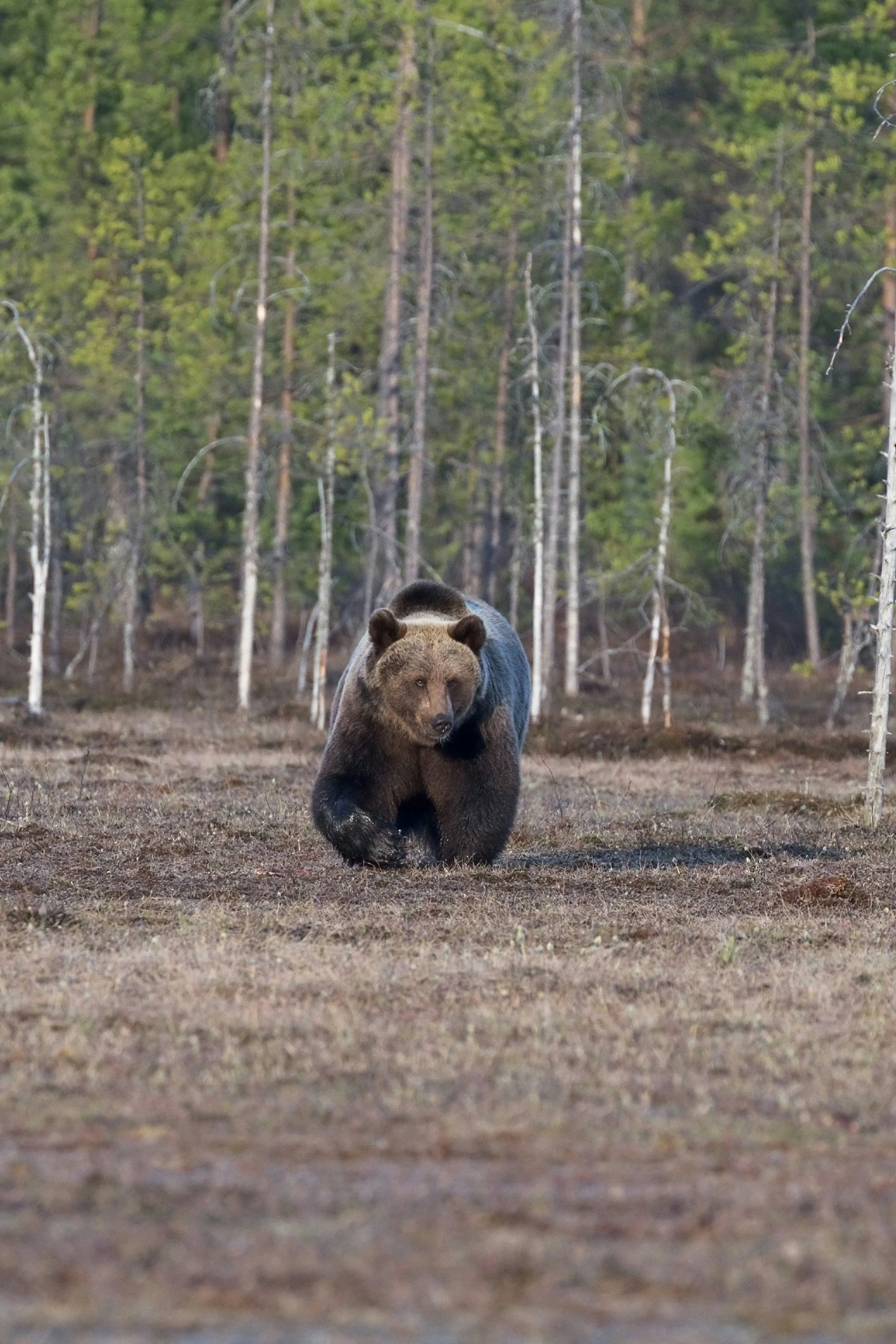
Brooked Out

By: Maddax Ball
It is the middle of July and the water is finally turning clear after an eternity of muddy water from the winter runoff. The crackle of grasshoppers flying through the air can make any fly fisherman excited and make them anxious to get out on the water. As an avid fly fisherman like myself, I am too anxious to get out on the water. The faint crackles of grasshoppers and the rivers’ ferocious rapids finally slowing down mark the beginning of the summer dry fly season. The fish are crushing dry flies this time of year constantly making glorious leaps out of the water in an attempt for their next meal. The summer dry fly season is by far my favorite time to fish out of the year. The adrenaline rush you get when you finally get a bite from a big trout slowly appearing out of the depths is unlike any other feeling.
Like I said the summer dry fly season is by far my favorite to time fish. During the summer I am fishing every waking moment that I am not working construction. After a long week of labor, it is amazing to put your feet in the freezing river water and feel the calming sensation of wettin’ a line. On the way to this remote backcountry fishing spot that is an annual tradition for me and a few of my buddies, I catch myself marveling at the natural beauty of the canyon flying by the glass window of my truck. My truck is grasping the asphalt in front of me inching closer to the dirt road that will take us to this spot. The river in the canyon is flowing and is clear. Thank goodness… it had rained a couple of times in the past few days so it was a sigh of relief when we saw the river was clear. Even though the river is usually clear in the late summer months occasional rain or as local Wyomingites may call it a “turd floater” may cause the river the muddy up. But this time we lucked out.
Finally, after a couple hours of driving the dirt road was closing in. We parked near the highway and unloaded our dirt bikes, packed our small bags, and had a bite to eat. The roar of the dirt bikes lasted another couple of miles before the open expanse of the green valley was finally flooded with a clear and slow-moving stream cutting through the middle. As far as the eye could see the slowly moving river winded its way further and further West. I could not wait to finally put some flies out on the water. As we walked through the grass down to the river, the dew from the grass fell onto our uncovered legs as it was still a bit chilly in the summer mornings. But we knew in a couple of hours we would be complaining about the muggy heat so we just took it. From previous experience fishing this river, we knew that the fish were quite panicky of shadows or your stature towering above the water. This made casting difficult, but that just adds to the gift when you catch a fish. Enough of the blabbing, now let's get to catching! Haha! The first fly I tied on was just a simple caddis, fished it for a while, a few bites here and there. No fish landed though, I switched it up to a micro chubby and this is when things got good. As we continued West, the river had better holes and better water. Boom! The surface of the water breaks as a little brookie comes flying out from the depths about a foot out of the water. Every time I see a fish fly out of the water my adrenaline skyrockets and it makes fishing so much more fun. This stream consists of about eight to ten inch brookies, anything bigger than that is pretty rare.
It’s midmorning now and each of us has lost count of how many fish we have caught. To some fishermen, quantity is not as important as the size of a nice trout. While that is true for me in some instances, today I put that thought in the back of my mind. I was delighted with the countless brookies that just kept biting. Every time the line tightens, it causes the same exhilarating feeling; it never gets old. We casted and casted fishing the same flies until they were falling apart, and left unfishable. Every color you tried, the same results came. It seemed like the farther away from civilization, and the harder it was to trek around in the river, the better the fishing was. I have concluded that the colder the water and the higher the elevation the more beautiful the brookies become. From the bright orange underside to the super dark vertical stripes, dotted with yellow and a white outlined fin, what more could you ask for in a trout? You have to realize that these high country streams with water that is so cold it will make your feet ache do not always have big fish but the quantity and beauty of these tiny brookies will stick. You will never be brooked out.
Still Rain
Each droplet stayed paused in time, the hum of rainfall still seeming to echo around her despite having ceased.
By Julian Denney
The mountains were adumbrated by the blue fog of rain—clattering dishes and yells interjecting the air of would-be peace. Very seldom did precipitation come in the warm months; the summers were dry, and the winter opted to leave snow drifts reaching up to her shoulders. Even with her window open and screen taken out, the warmth of the rain barely grazed her small hands where they grasped the frame, falling droplets being obstructed by the dangling eave.
Finally, she accepted defeat, creeping away from her perch and to her bedroom door. It creaked as it opened, the hinges wearing from decades of use prior. The sounds of screaming children and bickering parents became clearer as she stepped into the hallway. It was relatively easy to slip out unnoticed. Everyone was preoccupied with their own problems and interests: a red truck, an argument for who gets the blue one, why they were behind on bills again, or the fact she’d forgotten to let the chickens out of the coop. She ducked behind the couch to slip on her shoes, grabbing a little camera in lieu of a raincoat.
The entryway door clicked shut quietly, once again muffling the noises of the house. The faint smell of pets and candles was washed out from her senses, replaced with wet grass and blooming flowers. The pitter-patter of rain accompanied each footstep as she finally ducked out from beneath the eave, droplets of rain dampening her clothes and flattening the frizz of her hair.
She never had a plan when she left the house. There was rarely merit to leaving in her eyes, no matter how bad she wanted to; she’d explored every inch of land for miles around, and the only other life was the ranch animals and owners. While she’d once taken joy in exploring, she began to simply dwell in the empty homes until whatever conflict in her own had calmed. The rain made everything different; it obscured the views she was familiar with, mystifying what would otherwise be ordinary. It revitalized the allure of nature, decorating leaves with dew drops and putting new colors in the sky. Her camera was barely enough to capture the views she found along hidden pathways, a small digital screen struggling to keep up with the shutter click. It made her feel less alone—like someone was experiencing the wonder alongside her.
Every creek she passed was rushing with the weight of snowmelt and rainfall, roots of reeds clinging to the dirt walls lining them. She’d been scared of crocodiles in the water when she was younger, far more afraid of impossible hypotheticals than the reality of losing footing in the deep ends of it. Either way, she kept her distance from it en route to the hidden forests by the river. It was one of the only places she knew others wouldn’t find her to continue disrupting her silence, although she still found herself wishing for someone to come with her. The closest she’d ever gotten was her long-passed dog.
By the time she chose to begin the trip back, she’d amassed a small gallery of photos, one for each pitstop: the split of the road between a pasture and another empty house, the bridge, and the pond where beavers had dammed up water. Throughout each grainy picture, the clouds gradually cleared, starting from above the mountains and reaching one of the far-off pastures across the bridge. Already, she could feel the drops lessen against her skin, a gauge of how much longer it would last—15 or so minutes, at best. It only took ten to arrive back home.
As the final beads of water came to fall against the sidewalk and the sun overtook the clouds, she, at last, began to go through each picture, admiring each moment as if she hadn’t witnessed it herself just minutes before. Every scene, even those obstructed by rain on the lens or the shakiness of her excited hands, was not only flawless but eternalized. Even from upon her front step, with muffled yells and dry clothes, she swore she could still hear the rain pitter-pattering around her.
Last Stop
There were always more people coming through, though nobody ever knew the destination; he wanted to leave with them, to remember to scent of flowers and view of unobstructed skies once again.
(Image from Javad Esmaeili on Unsplash)
By Julian Denney
Sun beamed through the windows, giving the store a warm, comfortable atmosphere. The only noise to emanate from the outside was birdsong and an ever-distancing train. It was hard to put together a clear image of the horizon on the other side of the glass—bright advertisements cluttered the panes, obscuring the flower-speckled fields and blue skies.
A muffled melody rang out alongside the screeching of brakes as the train came to a stop outside, marking the arrival of the newest passengers. The station’s platform was the only infrastructure besides the cozy gas station for miles—the only two things obstructing a place otherwise unmarred by human hand.
His job was a calming one; seldom was the store populated by more than ten people at once. Typically, the folks coming through were older—some were embittered by age and ego, but many were content to wait the extra time for another customer to fumble around in their wallet or double back for a forgotten fountain drink. The only consistent sound aside from the whispered nature was the repeating beep, beep of scanning barcodes dotting the ends of sentences as customers checked out.
A gentle chime interrupted the rhythm, followed by the gentle click of a door falling back shut. An older woman entered, at least in her 60s. Her dress was adjacent to a well-loved school librarian; eccentric colors, glasses, and a knowing countenance only achieved with true life experience. The sun beaming through the windows landed on her skin and brightened her pale features, as though it was revitalizing a fading life.
The store was soon empty for all but her and the cashier, her browsing and him simply idling. He appeared younger than most who passed through—only looking to be in his teens, though his nametag was faded as if it had faced decades of wear. His complexion had a warmer undertone compared to the older woman. By the time she came to the counter, she only held two items to lay down.
“Will that be all for you, ma’am?”
“Yes.” She had a genial tone to her voice, crow's feet at the corners of her eyes wrinkling as she broke into a habitual grin. They were quick to fall back into the typical flow of the exchange—small pleasantries and depthless questions interspersed with adages and anecdotes, each tidbit a small enlightenment for living life well.
“You know, I loved traveling by train when I was younger. Watching the scenery go from mountains to plains within the blink of an eye was always breathtaking. I’m excited to see where this one goes.”
He nodded passively. The woman simply continued.
“And you?”
He found himself paused for a moment, trying to find some surface-level response; something to continue the conversation. He had nothing he could relate with. When he thought about it, he couldn’t remember. He couldn’t remember any sweet smell of the flower fields, couldn’t recall a vision of hills unobscured, and couldn’t even remember his own name. He’d grown not just comfortable in his position of monotony, but fearful of what would happen if he left it.
“I… can’t remember traveling much. Most of my life revolves around working here.”
The woman seemed unsatisfied with that answer, though not upset.
“That’s no life to live, sweetheart. Living is what happens outside of work and responsibility. It’s the one thing you should remember.”
He hummed with thought, furrowing his brow. Her items were already bagged, and he could hear the train coming—knew it meant the inevitable arrival of more people—but he found himself invested in what was meant to be a trivial conversation. He felt his shoulders falling as he kept coming up with blanks. She kept her eyes trained on him, waiting for a reply. Only when none came did she continue.
“When was the last time you left his place, sweetheart?”
“...I’m not sure.”
“Do you want to?”
“...”
She seemed to know the answer before he did. Casting a glance out the window, seeing the gaps of blue sky in between the posters, he realized he did. The harder he thought about it, the more he realized he hadn’t quite lived; he’d been there when each new advertisement had been pasted to the window, and he’d been there as their colors were faded and edges ripped. Had it not been for his cleaning, the store surely would’ve boasted a thick coat of dust by now.
He distantly noticed himself fumbling with his nametag, a nervous habit he’d had when he first took over for the last clerk. They’d given it to him alongside the keys before stepping out for the next train, leaving him to take over entirely. As he looked at it, he realized it never held a name—just a blank slate overriding his identity, clinging to his shirt with a pin he now unclipped.
It was like a fog cleared as he set it down on the counter before him. The woman smiled reassuringly, as though she could sense the anxiety of both losing a part of himself and reclaiming another. She offered a hand to guide him, the bags long since forgotten as he accepted.
Distantly, the train horn blared again, a screeching of brakes soon accompanying it as it came to a halt outside. This time, he finally stepped out from behind the counter, moving to get a clear view out of the glass panels of the doors. It wasn’t sensational, no flashing glamor of state-of-the-art technology, but it was liberating, like seeing the stars in the night sky for the first time. He found himself giddy taking it in.
His keys jangled with every step toward the door, his hand trembling just slightly as he grasped the hem of his shirt for comfort. For the first time, the horizon was unobstructed; the hills rolled into a vanishing point, clouds being lit from beneath by the gradually setting sun. The train tracks contrasted the overgrown grass and blooms, but not jarringly—small buds still pushed through the gaps between the slats, bright petals accenting the aged metal. Faded paths were cut parallel to the rail where animals had settled for walking.
Finally, he willed up the courage to push open the door, a faint breeze greeting him. His hand stayed pressed against the cool glass for a moment before he finally let it fall shut once again, fumbling with the keys for a moment before locking it shut. He tugged on the door once for good measure, only being met with a slight shudder and a resistant click. He found himself stuck for a moment as he took in the store from the outside. It was quaint and inviting despite the somewhat dated clutter, like it was a scene from a 1999 retro-toned cinema.
As the train came to a gentle halt, he could make out more people than he’d anticipated in the cars—not packed together, but still with a few seats left open. Despite the sun illuminating each of their faces, they still seemed cold—ashen. Despite it, none of them appeared somber; expressions ranged from accepting to anxious, but nothing of true distress. Only a handful of glances were spared at the now-locked store, with a majority opting to continue hushed conversations or silent admiration of the rolling hills.
The atmosphere remained peaceful as he finally stepped through the entryway onto a car. The woman took a seat, gesturing for him to come sit beside her. A gentle hum of machinery rang as the doors closed, the train lightly shuddering as it began to move forward once again. He found himself enamored with the vivid blur of color outside the windows, listening to barely audible conversations beginning to fill the car once again.
“Isn’t it beautiful?”
“This reminds me of my childhood.”
“I can’t wait to see my grandma again. It’s been years.”
Each bump of the tracks felt as though it lifted another weight from his shoulders. Gradually, conversations began to drift in directions.
“I haven’t seen my husband since we were in our 40s, I hope he’s been waiting for me.”
“I hope I’ll come back as a bird, I never got the chance to fly.”
“I hope I did enough in life.”
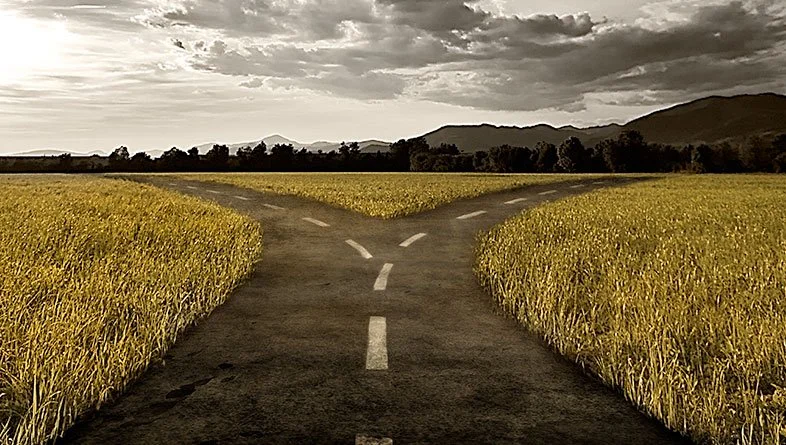
Which Direction?
Written by Josie Schultz
The sunlight glittered through the window onto my desk as my teacher droned on about the fall of the Roman empire, like who couldn’t care less? The warmth drew me in and made my eyes heavy, lulling me into an interesting dream state. Just as some intriguing things happened in this wacky dream, a book is slammed onto my desk, echoing throughout the classroom. I had a hazy half-memory of a question being asked so I answered it as I shot up.
“...Correct… but stop sleeping in my class, Mr. Christ.”
Embarrassed, I start taking my notes, only daydreaming a little. The school day always drags on, especially since I don't talk to anyone. I mean I've tried to… it’s just hard when everyone already has their groups and people they’ve hung out with for years. I thought I could make a few friends by getting the top marks and joining a few sports, but that idea fizzled out quickly. After I became the top in basketball, soccer, and alpine skiing, top in my grade, and 5th in the school it felt like I was further than before. I wasn’t bullied but I was acknowledged less than before. Only the teachers really talked to me and that's just to congratulate me on my achievements.
When the sweet bells of release finally ring out I gather my stuff up, flinging myself out of the school. Soon I find myself on a path I'm all too familiar with. A few years ago I often came here to walk and process how I felt. A flood of memories suffocates me for a moment as I absent-mindedly walk further. Losing my footing on a gravel patch I face-plant. Quickly I get back up, brushing myself off and ignoring that I just ate a bush focusing on something in the distance that intrigues me.
Before I even have a second chance to think, I start moving towards it, almost like I am drawn to it. As I get closer, I realize it’s a treehouse. There are vines and leaves all over it and parts of the wood have weathered, giving it an abandoned look. It creaks and squeaks as I climb up the wooden ladder, making me worry about its structural integrity.
Finally getting into the house I look around. It’s pretty beaten up and definitely needs some work, but ideas are already flowing through my head on what I could do to spruce it up. I started by picking up the leaves and sticks that had piled up over who knows how long.
Ensuring I had as many leaves as possible I scooped up and dropped them all out of the window. I watched them flutter to the ground below as a glimpse of something shiny caught the corner of my eye. I rush down the ladder to check it out, curiosity taking full control of me.
Digging through the leaves I finally found the shiny object. Much to my disappointment, it was just a compass. I put it in my bag pocket and decided to head back home now so my parents wouldn't worry, planning to come back tomorrow.
The next day school dragged on and on as I daydreamed about what I could do to fix up the treehouse and make it my little base. The sun caught on the compass that was in my bag, reminding me of it once more. I grab it and examine it instead of paying attention. It was a little dirty but I could tell it was golden in color and had intricate engravings on it. Opening it revealed a well-kept compass, but it seemed like it had a soft glow emitting from it. The bell ringing brought me out of my intense infatuation and reminded me to go to the treehouse again.
It took me a few extra minutes to remember how exactly to get there but when I did I made myself comfortable in the corner. I started on some schoolwork I had to do anyway and then went back to the compass. I wiped it off on my jeans and tried to figure out what the engraving was. The harder I looked the more confused I got, giving up on it after a few more minutes of trying to figure something out. I set it aside and revised a paper I left out. Looking up after I finished it I realized I should’ve left a while ago. I end up racing home, forgetting all about the compass.
It’s finally the weekend meaning I can spend all day at the treehouse. I tell my mom I’m going to hang out with a friend, a small lie for the greater good of my renovations. She seems so happy at the idea that I have a friend, so she doesn't question anything and offers to buy snacks and drinks for us. I tell her there's no need to find a way to brush her off that wouldn’t make her suspicious.
Happily, I make my way down the path with a few blankets, some books, and a deck of cards to help make the treehouse more like a home. As I'm climbing up I hear the muttering of someone in the treehouse. It stops me dead in my tracks mid-climb and my heart starts pounding in my chest. My mind is racing with possibilities of what could happen if I were to continue going up and if I were to leave, most very unlikely. Finally, I decided to continue up, making sure to be very cautious of this mystery person.
As I get to the top and look up I see a boy about my age in the corner holding the compass I was unaware I had left there. We make eye contact as we both scream.
“Who are you?” I questioned, climbing in the rest of the way and setting my stuff down in the corner.
“Who are you?!” The boy repeats.
I debate the consequences, ultimately deciding that there were very few cons to him knowing my name, before replying “Name’s Jeremy… now you”
The boy shook his head, frowning as he did so.
“Hey! I told you my name, so it is common courtesy to tell me yours!” I gave him an annoyed look, impatiently waiting for his reply.
His eyes darted around briefly before he accepted that I was blocking the exits. “I'm Cameron… do me a favor and don't tell anyone I'm here…” He spoke with an odd hesitation. Almost like he was embarrassed, and then it hit me. He is embarrassed.
As he was talking I was able to get a better look at him, realizing how I had seen him around the school. He was always surrounded by others and praised for doing just about anything. It made sense tho… he was a relatively attractive guy who was good at everything. Of course, he would be embarrassed about being here… with me.
“Oh.. yeah, I got you” I slump against the doorframe, assuming he hates me like everyone else apparently does.
After a slight pause and sigh of relief, he answers “Hey, thanks, man. My parents would KILL me if they find out I'm here… they don't like when I wander”
I try not to pry into his personal life much, instead pointing at the compass he had rested on his leg “Hey what are you doing with my compass?”
“Oh it was just in here so I decided to look at it, curiosity got the best of me, y’know?” Cameron picked it back up and ran his fingers over it, looking at it with awe as it caught the light from the window.
“Yeah… it's pretty mesmerizing, isn't it” I point out
“It is” He paused, “Hey, do you know what these engravings mean?” He glanced up at me as he asked.
“Umm. No... I was gonna look at it a bit more carefully and try to figure out what language it could be. I was thinking French at first glance but I’m not so sure the more I look at it” My tone hinted towards my excitement at finally being able to talk to someone about anything really. Cameron slowly nodded his head as I spoke, taking in my different theories and thinking of his own. He shared some of his and we kept going back and forth, building off each other.
The sun starts to set as our conversation winds down causing us to realize how long we had been talking. We lock eyes and realize we're dead. Neither of our parents thought we would be out this late and were bound to be worrying by now. “Hey, are you coming back here tomorrow?” Cameron looks at me hopefully as he waits for my reply.
“Yeah, I think I will” I smile at him hoping he wants to come back too.
“Then we should start meeting here so we can figure this mysterious compass out, okay”
“Yeah I like that idea”
This marks the start of my first ever true friendship, as we both rushed home to hopefully not be chewed out by our parents. Even after a good scolding, we found our way back to the treehouse relatively fast.
At first, we would just hang out at the treehouse after school and sometimes on the weekends. We would take turns bringing different games and snacks to help entertain ourselves when we couldn't get anywhere with our compass theories. This was our everyday life for about 2 months, with a few words at school every now and again, mainly to let the other know if we couldn't meet up that day. As the weather became worse we decided we could talk about it at school instead. We spent most of our breaks together, causing an uproar in gossip.
Our friendship was unpredictable since I was such an outcast and he was so popular. It helped break our social stigmas, making both of us more approachable and feel more normal. Of course, there was negative gossip about Camreon only wanting to be my friend for test answers or how I just wanted his popularity. We do our best to ignore things that would negatively impact us, making sure we don't stoop down to their level and snap back.
As the months go by we progress in figuring out what this compass could say. After searching some of the basic languages we decided to look at Greek. The letters were hard to make out, even after cleaning it more thoroughly than before. After looking up the Greek alphabet we started comparing the two. We were able to find some words within it.
“now and” This sparked our interest in it, causing us to try much harder in the following weeks. We spent more and more time together, often playing cards and just chatting about the compass when we had any spare time in school.
Our unlikely pair had finally stopped being the drama center, but it left a lasting effect. After our friendship was seen, it encouraged others to actually talk to people and not just stay with the group they had always been with. It reminded people they could choose to be around who they wanted and leave the comfort of familiarity.
For me, it was nice to actually have a friend. Someone to confide in and to just be around. Everything felt… right. That's the best way to put it. As we grew closer we worked on figuring the compass out a little less, finding more joy in getting to know each other. It seemed like the closer we were to figuring the compass out the less we wanted to. The fear from both sides knowing that if the compass is figured out then there’s not an excuse to hangout. Not wanting the comfort to leave. Not wanting the newly formed friendship to end quite yet.
And so we waited. Pretending that there were other things we had to do. We made excuse after excuse to just be hanging out instead of trying with the compass. We would often glance at it when we hung out, like checking to see if it somehow solved itself. One day we glanced at it and then at each other, finally deciding that we should work on it.
We pulled out everything we knew, laying it out to cross-reference. We had started off by comparing letters that we could make out, realizing there was still dirt and mud stuck in the engravings making it harder to figure out.
“Hey, pass me that water bottle,” Cameron said while reaching for a twig to use with it. He took the cap off, poured a few drops of water onto the compass, and dug out the mud as carefully as possible. After watching him for a few minutes we decided it was good enough and went back to comparing words and letters. Time flew by as we searched and it was starting to get dark. Just as we were about to give up for the night, I realized we had mistranslated some letters. Frantically I started writing out the correct letters, piecing together words as Cameron moved to look over my shoulder. We both leaned back, looking at the compass and what we had translated. It read “ Friends for now and forever”
We stared at the phrase and then looked at each other. After a small smile crept its way to Cameron's face we both burst out laughing, relief trickling through as we both realized the compass brought us together and created a lifelong friendship for both of us. We had shared the last 6 months becoming friends and learning about each other, figuring out how much we had in common.
Sure we only became friends because of our curiosity but it blossomed into more. Because of this compass, we were both able to feel more connected, seen, and understood. It helped put into perspective how the world works and how easy it is for things to change. We were able to grow as people and both gained a lifelong friendship and found a direction we wanted to go.
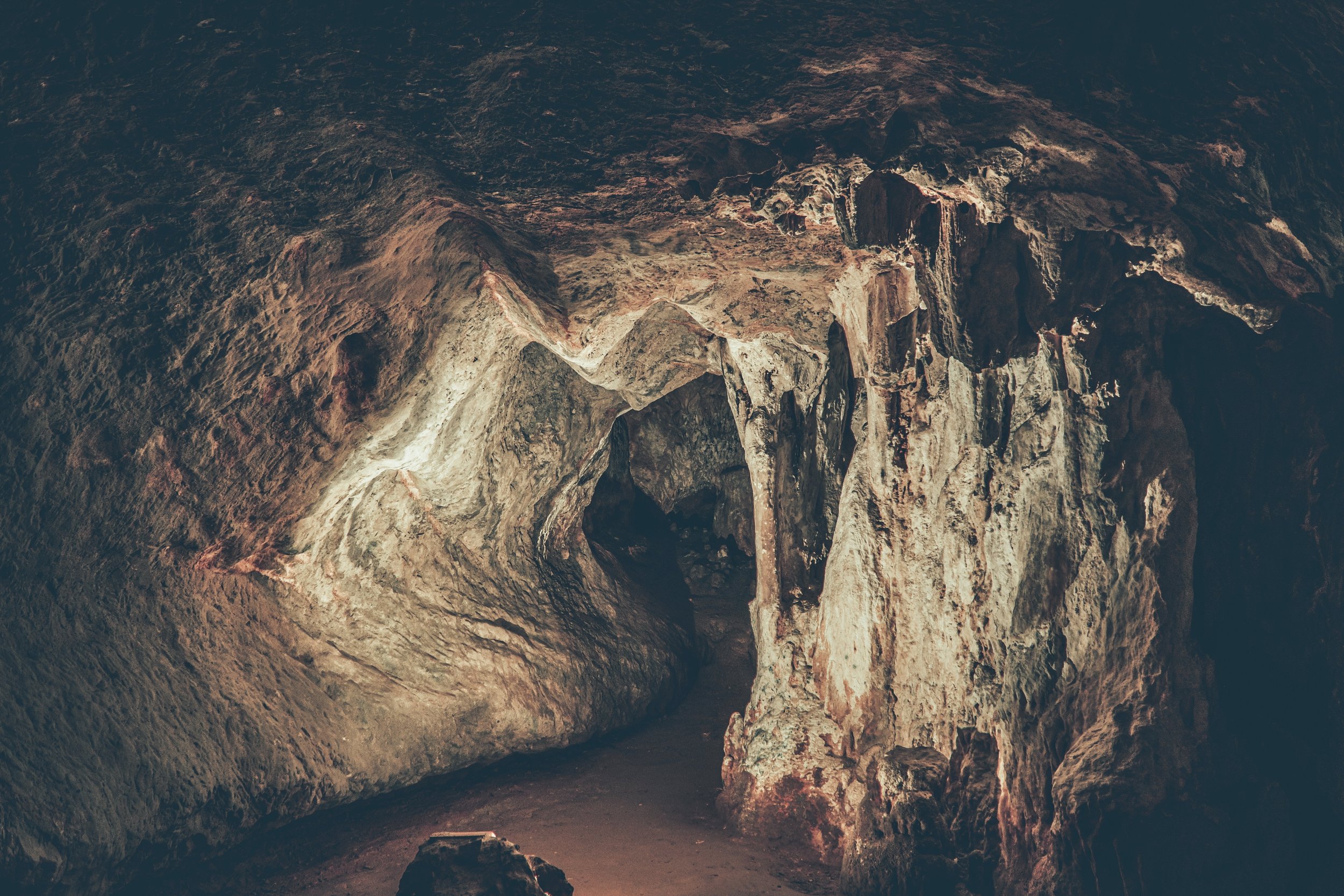
Nine of Us
I find myself gravitating further and further back in the line, putting as much distance as possible between me and whoever it is. There were only supposed to be eight of us—why are there nine?
(Image from Daniel Sofinet on Unplash)
By Julian Denney
A loud clang reverberates off the walls as the gate is unlocked. It reminds me of a mailbox more than a gate; it’s roughly half a meter by half a meter, a preliminary test to ensure we’ll each fit through the tightest spots in the cave. I’m comfortably in the middle of the makeshift line, with four people ahead of me and three behind me. My only acquaintances in the group are Karyna and Graham, the two who insisted I come along for the experience in the first place. I know them well enough to ensure the entire caving expedition isn’t unbearable, though I’ve mostly been stuck to the sidelines of their conversations.
“Phones will be left up here. We’ll be doing headcounts after the rough spots in the cave to make sure we aren’t missing anybody. We’ve got a small group, so it shouldn’t be difficult to communicate from the front of the line to the back so long as everyone does their part right.”
I carefully set my phone in the backpack dedicated to holding essentials, tightening my laces as I nervously check over myself. My spare light is deep in my front pocket, my clothes are all zipped properly, and my helmet is secured properly; all is well. The headcount is quick, the guide counting in twos—eight people.
The entryway to the cave is far more sketchy than I’ve mentally prepared myself for. The skinny pathway parallels a chasm, the ledge a straight dropoff. Nobody’s died in here before, but my head’s telling me I might be the first. I follow along behind the guidance of the more experienced, keeping my gaze averted from the potential fall as I cross to the other side. The remaining three in our group passed over with significantly more ease than I. There’s another headcount before we continue—still eight. Same old, same old.
The ensuing trek is far less scary than the start; half of it is just like walking down a hallway, and any “squeezes” aren’t tight. Arrows guide us along the main path. There’s one area with another drop, but it turns out to be one of the many unmarked paths—not one we’ll need to take. While I’m thankful not to be going near it, it still emanates an eerie vibe to me; our headlamps struggle to penetrate the darkness, leaving the deeper parts of unexplored regions entirely encased in black.
The first rough spot shows up after eleven minutes. It’s a tight twist you have to take headfirst, making you turn sideways partway through to fit. We’re informed it’s the only route to a point of interest—some writings discovered in a recent expedition. The room’s small, only able to hold up to five people at a time. We’re separated, four and four, into groups; I opt to go in the latter.
The first group takes their sweet damn time getting in and out. It’s impossible to hear much of anything they’re doing in the adjacent chamber, but there are still occasional trickles of pebbles that echo from somewhere in its direction. Waiting feels like an eternity; it’s awkward. I don’t know the group I’m stuck with well enough to make good conversation, and it’s making me miss having music.
I’m just beginning to count the seconds to pass the time, or rather, to keep track of it when the sounds of people begin to grow closer again: stones and pebbles shifting with movement, hushed conversation, and the susurration of fabric. The guide emerges first, the other three quickly following after. Their conversations revolve around the cave paintings and writings—the intricacies and artistry, the remarkability of it all.
Contrary to my belief, they weren’t wrong. After hitting my head a few times trying to squeeze through the tunnel, the room that greets me is truly incredible for the presumed time period. We’d been informed that it was dated to be roughly 30,000 years old, but the scribbles seem far more purposeful than I’d anticipated to be possible. They take up every inch of possible space, with shockingly detailed drawings and incomprehensible writing covering even the stone overhead. Tracing my fingers over the pictograms, there seems to be a story embedded in each stroke; I can’t discern what each drawing means, but I can see the overlying theme. It’s not a welcoming one—there are religious overtones of spirits or revenants plaguing the caverns enveloping us. It’s unnerving, but nobody else seems put off by it. Rather, they all have the same excited ramblings of the first group—how incredible, amazing, beautiful, and so on the artwork was.
We exited the cave after a duration of observation, finally meeting back up with the rest of the group. As with the prior ones, the headcount only takes a few moments, our lead quietly muttering to keep track as he tallies us.
“Two, three.. five… nine. We’re all set. This next part up ahead is scarier than it looks, but it’s not half bad. I’ll be guiding you from below once I get to the bottom. Gottit?”
There are some murmurs of acknowledgment as we watch him lower himself into the hole, contorting his body awkwardly in some of the rougher spots. I shuffle to be further in the back, watching four people go before I finally work up the courage to make the descent myself. It’s tight, but not terrible; rocks jut out in a way that’s uncomfortable to get around, but they offer small seats to lean back on when I need a moment. A light beams on the rock below me as instructions continue to echo up at me. It only takes a minute for me to land down amidst the others.
The next three people are quick to get down, with the last one only taking half of the time I did. I still can’t place a name to any of their faces—my memory’s never been my strong suit. I find myself following behind Karyna and Graham, back in my spot in the middle. Four people in front of me, four behind. Despite the safety of the spot, I feel the hairs on my neck raise, a quietly building anxiety gnawing at me. It’s hard to place why; I’m not claustrophobic, and I managed the more treacherous sections of the cave fine thus far.
I shake off the feeling as we continue on. Eventually, the ceiling starts to noticeably slant down, making the space more cramped. I find myself having to duck, then crouch, then get to my hands and knees to continue on.
The guide speaks up as the ceiling gradually gets lower: “Tight spot ahead; flatten yourself to a commando crawl.”
Karyna and Graham both carry the words back to me, as we’d been instructed to do prior to entering the cave. I repeat it, continuing to send the message down the line.
“Tight spot ahead. Flatten yourself to a commando crawl.”
The person behind me echoes it to whoever’s behind them, but it stops there. I strain my hearing to ensure I’m not just missing it, but I’m not; the only sounds are labored breathing and the shuffle of our slow progression forward. There are still at least three people behind them who should’ve repeated the phrase. I struggle to crane my neck, casting a glance behind me. My helmet knocks against the nearest wall as I do.
I avoid eye contact with those behind me as I tally. I was right; there’s five people behind me in total. I realize I’m staring, but continue straining my memory to try and put a name to each face I see. Her name’s something with a T… maybe Teagan. The back should be Jayce. The other two were siblings, I think. They’re both in front of him. Who’s the fifth?
I struggle to glimpse their face; they’re just behind Teagan. I finally process the nasty look she’d been giving me as we accidentally lock gazes. Shit, I look weird.
“Um… did, uh,” I struggle again to try and recall their name, “the—er, the person behind you tell the other three? I didn’t hear it.”
She rolled her eyes at my paranoia, repeating the words louder. “Tight spot ahead, flatten yourself to a commando crawl. There, everyone’s heard it now. Keep moving.”
I grimace inwardly as I turn my focus back forward, continuing on. The message continued back this time, though it seemed to skip straight to the first of the siblings before finally reaching the back. The tunnel’s tight enough that if I were to push up from my elbows, my shoulders would scrape against the roof. It’s enough to make me question how accurate my judgment of not being claustrophobic was.
Finally, we reach the other side, the cavern before us being illuminated by our headlamps. It’s not huge by any means; it resembles a wide fissure more than a cave. Regardless, it’s refreshing to be able to stand upright. As the rest of the group gathers back up, there’s another headcount. Nine people. I find myself studying each of their faces once again, this time with much more ease: Teagan, twins, Jayce, Karyna, Graham, and the guide. Finally, my eyes fall on the last remaining person; I still can’t figure out their name. They stick out from the group, but none of the others seem to notice. They’re pale and gaunt; their limbs almost look too long. Their eyes look lifeless. I find myself averting my gaze from theirs. Though nothing’s outright threatening about their appearance, they’re still unnerving. The moment I look away, I can feel their gaze fall on me—like they’re studying me in the way I had just been observing them. It’s eerie.
Subconsciously, or so I tell myself, I wind up behind them in our lineup—despite the fact that it distances me from the only people I really know. It feels uncomfortable to be in front of them, like turning your back to a big cat.
I find myself gravitating further and further back in the line, putting as much distance as possible between me and whoever it is. Even at the tail end of the group, I’m still on edge. My steps are faltering, my pace is slowing—I’m falling behind everyone else. I can still see everyone ahead of me well enough, but I’m relying on the contrast of their lights against their silhouettes. My nerves aren’t gone, but they are soothed; the further away I am from the ninth, the better. I know it’s counterintuitive, but as long as I can still follow their tracks and leave, I don’t care. I’m going off my gut more than common sense, and I know it.
My light flickers. It’s only for a split second, but it still makes my heart seize. My step stutters, and I stumble, barely catching myself. I reach out a hand to press against the rough, cool rock. I continue to trace along it as I quicken my pace to be closer to the group once again, using their faraway lights and the wall as a guide. Fine dust finds its way into the creases of my trembling fingers and embeds itself in the scratches on my hand.
My view is obscured momentarily by a boulder jutting out of the rock face, my dimming light illuminating its crevices and ridges as I maneuver around it. By the time I reach the other side, there are no longer lights ahead of me. The path leads to a small drop, only a foot or so down, but the ensuing tunnel seems to split off at the end. One path, another chamber going further down, and the other a continuation of the fissure I’m walking along. I linger for a moment, glancing between the two. There’s no way the group all could’ve made it down within that small of a timeframe.
Despite the lack of arrows to guide me, I trust in my own logic, continuing down the passageway in front of me. I can’t hear anything besides my own quick breaths and footfalls—no chatter of the group, no instructions being given, not even the sound of other people’s walking. It’s eerie.
By the time I realize I’m lost, it’s already too late to retrace my steps. My memory’s failing me, and there’s been nothing to mark the path. It’s all just the same colors, the same textures, and the same rough surfaces around me. It blends together after a while. I think I’m starting to make up sounds to soothe myself—to prove there are still other people in here. I continue along the path, going off the stray hope that it’s the way out. How long would it take for a rescue expedition to find me in here? I’m freaking myself out; God, that’s a habit I need to grow out of.
The ceiling starts to arch overhead, and I find myself standing underneath a chasm similar to what I’d previously passed over. It makes me feel small. The bottom of the arc sits at nearly twice my height, and I can barely make out where the ceiling is above it—my light hardly grazes it. It almost seems to loom over me. I bring my attention back down to my own level and finally begin to continue in my strides forward. I realize now that my light is without a doubt dying. Each step is hesitant, like there’s a chance the rock will give way and I’ll be lost forever. There still hasn’t been a single arrow.
The sound of falling stones echoes around me. It strikes me that it’s the first sign of life in a while, and I can’t figure out whether to praise God or pray. I quicken my pace, tripping over my own feet as I struggle to evenly divide my focus between the ground in front of me and the sounds from somewhere around me. It’s like an echo chamber; I can’t pinpoint where the sounds are coming from. The ground deteriorates the further I get on the path, rocks and pebbles chipping from my stride. I realize I’m shaking.
My light begins to flicker in time with my quickened breathing. I can’t tell if the pebbles tumbling are from my shaky footfalls or somewhere behind me until one lightly knocks against my helmet from trickling off the slope above. I continue my confused stumble forward, looking for any arrows to guide me back to the exit. There are more rocks falling behind me; I think I can hear the footfalls accompanying them now. The periods of darkness are starting to elongate. I fumble between my back pockets, then the front. I can’t find my second light. My main one cuts off for what feels like an eternity this time; the sounds of skittering pick up as I try to hit the damn thing hard enough to turn it back on. All sound halts as it flickers back. My shaky hands reach up to fumble with it, inadvertently covering it further. My vision struggles to adjust to the darkness. I think something just touched my arm. Finally, by the grace of God, I get it on again.
Just inches away from my face, lifeless eyes bore into mine. I think my heart stops beating for a moment. There’s no sound. There’s no breath against me. It’s not even breathing. The person, thing, or whatever it is, doesn’t breathe. It doesn’t even blink.
It’s holding perfectly still, while I’m trembling like a leaf. The thrum of my heartbeat returning makes me jolt, faltering backward. Its eyes don’t leave me. It doesn’t even try to move to follow me.
My light dims threateningly again, and I open my mouth to try and stutter out something, but nothing comes. Darkness coats everything as my light dies. An immediate scuttle of movement makes me freeze.
Something just grabbed me.
I don’t think they’ll be able to f
i
n
d
m
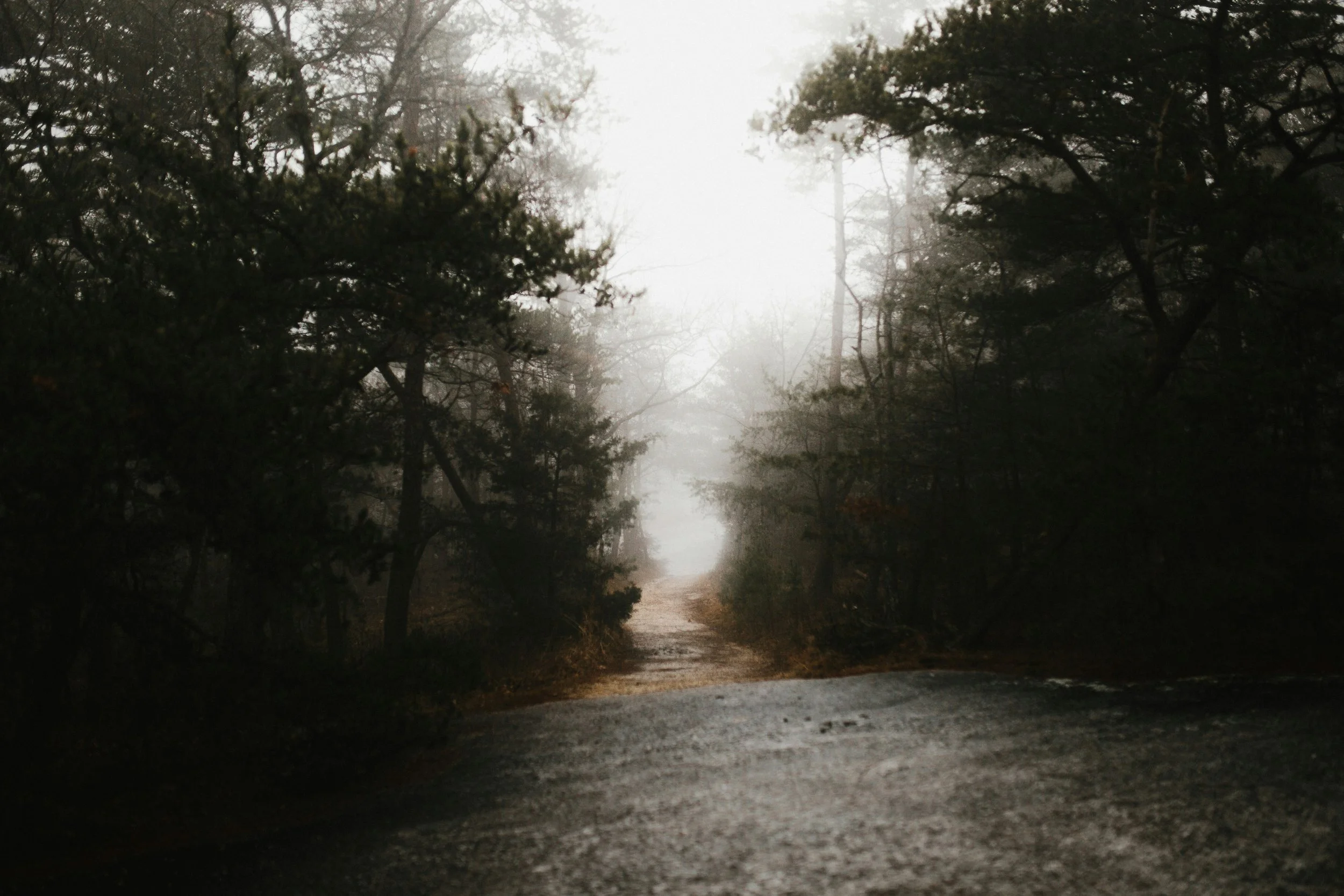
The Trail Behind
She’s not only lost, but being stalked; with the wilderness and darkness growing around her, she’s forced to take shelter in an abandoned cabin. Will Hazel survive the night and make it home, or will the mountain claim her as its next victim?
(Image from Andrew Neel on Unsplash)
Written by Nico Fuhriman
Although I’m pretty athletic, this was one of the steeper trails I’ve hiked—and by far the longest. The Appalachian Trail takes about 5 to 7 months to complete, but I was only doing a short segment in Tennessee, which would add up to 75 miles. I’d only be gone for about a week.
My only problem was that no one wanted to join me. They kept bringing up all the stories about people going missing and the creepy tales surrounding the trail. Honestly, I thought it was all ridiculous. Who even believed in that kind of thing anymore? I was convinced my family and friends were just being paranoid, which made me determined to complete this backpacking trip.
I decided I’d do it on my own.
My parents attempted to talk me out of it: “Hazel, please don’t take this hike. I mean, you'd be so far from home, and we wouldn't be able to reach you for days. What if something happens and we can't get a hold of you?” I knew they were worried, and rightfully so, but I wanted to get out before my youth was whisked away from me. I was an adult and didn’t want to put off the adventures before I settled down. Eventually, my parents soon realized it wasn't worth the strain of continuing to try to talk me out of it. I’ve always been determined to adventure out into the world, not to mention being incredibly stubborn.
After preparing myself physically and mentally for the trip, the date finally arrived. My bags were packed, and I was ready to go. I planned to drive to the trail parking lot and hike in from there since it was a round-trip hike. As I was saying my goodbyes, my parents tried to convince me to reconsider one last time, but I had made up my mind and wouldn't let the preparation I'd done go to waste. I had an itch to explore and get out in the world, and this would numb it. Once I got to the parking lot, the excitement kicked in. I took a deep breath to recollect myself before I entered my trip of solitude. I took one last glance at civilization as I slipped my pack on and stepped onto the trail.
The first few hours of my hike were easy. I had only 10 miles before the first site I had marked on my map. The forecast said it would have a bit of sprinkling, but nothing I would've been too concerned about. I made it to the campsite before sundown and used the last bit of my natural light to set up the tent for the night. The air was cooling and relaxing. That night I slept the way one usually would after such a drive and then the hike afterwards. When I woke up, the air was cold and brisk—it was so peaceful being out in the silent woods, listening to the birds chirping. I packed up my camp, aiming to make twice the progress I had made the day before. By the time I had reached my 8-mile mark, I was nearly out of the water, so I took a small detour to the creek, using my water purification bottle to refill.
Unfortunately for me, this is when my unlucky coincidences started piling up, starting with my map falling out of my pocket as I was putting the water bottle away. By the time I fished it out of the creek, it was soaked so thoroughly it ripped just by me touching it. As of then, I was out of a map and had to rely on the trail signs. After a few more miles of hiking, I came to a split trail, the map still being of no use to me. I had to use the signs. The right arrow was marked with “unmarked trail,” so being logical, I went left to the marked trail. It seemed to be more traveled anyway. I pushed forward, ignoring the lingering sense of something not being right.
The trail started to disappear, and by the time I had fully realized the signs had been flipped, it was dark. I'll admit I felt a panic surge in my chest, but this was the adventure I had been wanting. I set up camp in the flattest area I could find and hoped that I'd be able to find my way back in daylight. But then, as I was setting my tent up, I heard something rustling in the bushes. My heart dropped, and I froze trying to listen for other sounds. It could’ve been a raccoon or a squirrel, but of course, my mind jumped straight to mountain lions. Though it was unlikely for it to be on the trail I’d been on, that trail was no longer to be seen. My stomach churned as I peeked into the underbrush, and I let out a sigh of relief when nothing was there. I was being paranoid.
As soon as I turned my back on the bushes, the scream came.
It was so loud and eerie, almost like a woman's scream—a high-pitched wail that echoed in the trees. My blood went cold as I held my breath. I’d heard stories of mountain lions mimicking screams to lure people out into the wilderness. The only problem was that I was already in the wilderness. I knew I had to get out of there quickly.
I grabbed my gear, ditched my tent, and started walking briskly down the trail. I couldn't tell if it was already hunting me, but I did not want to find out the hard way. After a few miles of walking in the wilderness, it started dumping rain, making the path muddy and almost nonvisible. Just as my luck was running out, I saw what looked like a cabin roof in the distance. Desperation pushed me forward. I needed shelter from the storm and whatever else was out there. The mud was slick underneath my feet, and I slipped multiple times before I finally reached the cabin door—praying it was unlocked. I pushed into the door and to my relief, it creaked open. I slipped inside, drenched and out of breath.
I thought my luck was finally looking up. As I set my pack down, I realized I hadn't fully closed it before leaving. During my slips, my supplies had spilled out of the pack. My stomach sank as I realized they would be ruined by the mud, and I probably wouldn’t be able to find them even when the sun rose again. The weight of the situation I was in started to sink in.
As I tried to dry off, I looked around the cabin; to my luck, I found a box of matches and a lantern, although the lantern didn’t have much fluid left in it. I lit it and lifted it to get a better feeling of my surroundings. The cabin had 2 windows on each side and seemed to not be occupied for ages. As I looked around, I noticed what seemed to be salt on the floor, making a circle with some items in the middle. As I looked up, I noticed weird markings on the wall. They seemed to be drawn on with blood, while some were carved into the wall. I’d never seen anything like this before, but it made the hairs on the back of my neck stand up. Drawing my attention back to the items on the floor, one of them was a newspaper. My curiosity got the better of me, and I picked it up. It was dated back to 1809, saying stuff about weird sightings up in the mountain and warning people not to go up on their own—the same warnings my family had told me.
The cabin probably hadn’t been occupied since then if this was still here. Looking back at the symbols, I tried to decipher what they could mean. Despite my efforts, I didn’t know what any of these symbols were supposed to represent. What I did know was that there was a negative atmosphere surrounding them, seeming to draw me towards it. Any restrictions I had towards this cabin disappeared as if I were in a trance. Before I knew it, I was running my fingers along the symbols, and one of them smudged.
As soon as I noticed it was smudged, the door flew open and the storm outside seemed to grow stronger. I forgot about the symbols and set my mind on securing the door closed. It would no longer stay closed on its own, so I found a crate to put in front of it, hoping that would prevent it from slamming open again. After the struggle to keep the door shut, I sat down on top of the crate to catch my breath. As I took a deep inhale, there was a sudden scratching on the door. It was slow—something was dragging its claws across the wood right behind me. I froze; my whole body stiffened in fear. The scratching came again, this time sharper, like the animal outside was growing more impatient.
I swallowed, trying to steady my breath while keeping quiet. I hoped that it would eventually get bored and go away. Despite my wishes, it continued to grow louder against the door. I could hear it echoing in the empty cabin. Each scrape heightened my nerves. My teeth clenched as my fight or flight was ready to trigger. Suddenly, the scratching stopped. I kept still, afraid it would hear me and come back. After a few moments when I thought it was gone, there was a loud crash against the door. I jumped off the crate onto the cabin door. Whatever was outside wanted in the cabin. It wanted me. I could hear it creating that eerie scream I heard earlier, accompanied by a nauseating smell.
I could hear the animal walking around the cabin; its footsteps were heavy. I knew it was looking for a way to get in. My mind raced, and I remembered the windows in the cabin—it would be able to see me, and from the sounds of it, it could easily break those windows to get in. Unfortunately, I realized too late. I saw its green eyes poking in; it was a feline-looking creature with one too many legs, but it seemed like I was only seeing its shadow peering through the window.
We made eye contact, and its pupils shrank, locking onto me as its prey. It let out its eerie scream once again as it lunged at the window.
Over and Over
Maybe one shouldn’t live forever, especially like this
(Photo from Margarita Zueva on Unsplash)
By MJ Whelan
The room spun around Pome; they had dreaded this inevitable fate of theirs. Yet again, they found themselves falling to the ground. The red seeds of that accursed fruit, the last memory for this cycle.
The cycle that started it all, well, they could hardly remember it. All that existed at that time in memory was slowly fading as more and more cycles commenced. More and more, that was their fate. Why? Anyone who knew was long dead. Except them, forever cursed to live and die, and then do it over again until time ends. Sometimes, they saw flashes of a dark red coat and a basket of spilled pomegranates, some broken with their seeds spilling out or exposed, glistening in the moonlight. But now, that was only in dreams.
They opened their eyes to another cycle, this time a princess of some long-forgotten land. It was better than some of the past ones, they had to admit. At least this time they were able to live comfortably before their inevitable ending. The only question—how long would they live? Years? Decades? It didn’t matter anyway, but that was the only thing that ever changed, other than living conditions.
They were ten now; they had enjoyed the past decade of lavish living and being pampered. But it was getting harder to enjoy the cycles when their death and the start of a new cycle were always hanging over their head—it kept them awake sometimes. Often they wished for some sort of companionship through this all, but they didn’t think they wanted anyone else to suffer this endless cycle of life and death.
Their fifteenth birthday came around, and they lived through it. They had gotten quite good at disguising the constant anxiety about their inevitable demise after all these cycles. No one could even sense their constant unease or they blamed it on something happening in the cycle.
More birthdays passed, and they still lived; rather than comfort them, they gained a deeper feeling of dread. Often, the longer they lived, the worse their death. Unless they lived to old age, then mostly it was passing in sleep.
Little did they know, the kingdom had a deep unrest that the king and queen hid from them. So, on the eve of their twenty-fifth birthday, a revolution struck. The people stormed the castle and started attacking and killing any nobles or royalty they came across. Pome fled into the deep reaches of the castle, to a series of caves underneath, but they still followed. Eventually, they were cornered, and the rebellion caught up to them. They died at the end of the cave system—the exit to the cave guarded by the tree of that loathsome fruit.
They opened their eyes as the middle child of a servant family. It wasn’t anything new to them, they had been in this position before. It was alright; they did as they were told and went through the motions.
As their sixteenth birthday approached, it seemed that this cycle would be a peaceful one. This seemed to be the case as time went on. In this cycle, they got married and had children. They lived until their hair was grey.
They lay in their bed, dying from age and not because someone had deemed them as unworthy of living anymore. This cycle had been nice; it was peaceful and full of time to simply forget about their inevitable fate. Their children and grandchildren were gathered around, so they wouldn’t die alone this time, like they had so many times before. On the bedside table was a basket of fruit, including the one they despised the most.
When had Pome started hating that red fruit? They couldn’t remember, but they could remember that it had been their favorite a long time ago. That’s what this did to one, it made you slowly start to hate that which you once loved and sometimes love what you once hated.
They had a strange flash of memory. They had met someone similar to them once, but they had been cursed never to die, instead of their curse to die and come back in endless cycles. They thought that it didn’t matter how, but it seemed that this endless living wasn’t kind to anyone, no matter how one achieves it. How they longed for one final death, to leave this world and see their loved ones in any possible afterlife. It occurred to them that there may not be an afterlife—even that was better than this, they thought to themselves. Just ceasing to exist was more welcoming than these endless cycles.
Another time they opened their eyes as a beggar boy on the street. It was a hard life, full of nights spent awake wondering if the pain in their belly would kill them. Spending day in and day out asking for spare change or anything a passerby would spare them, it was always a blessing when someone granted them a small kindness. Something they never failed to appreciate, no matter the cycle.
War came to their world when they were sixteen. Two years later they were drafted into the military—a sword forced into one hand and a shield into the other. They didn’t expect much was in store for them, even though in past cycles they had been a great hero who was sung about for generations after.
It went as they expected, where they had been put rarely saw action. It was days spent mostly looking out and trying to keep themselves entertained. The war was mostly fought far away from them. Sometimes they saw smoke from the fires rising high into the sky, then dissipating like everything eventually does. Except for them, the cycles, and a few others they supposed.
A thought that crossed their mind a few times was the possibility of finding the grave of a past cycle. It wasn’t a common thought, but it happened. Or even hearing about a past cycle from a history book or just the tales. That had happened once, someone telling them about this amazing hero that was a past cycle of theirs.
There are too many cycles, too many monotonous tales for them to ever tell. They’re never the same, and yet they are—beautiful and annoying contradictions. They always ended with that terrible fruit as their last memory.
What could anyone do to deserve this? Endlessly living and dying, never having any peace except when fate smiled upon them. Always waiting for Death’s scythe to hit their neck, for as long as they can remember. Never being fully able to enjoy anything because they know it could end right there and then.
In how many cycles did they reach old age? How many did they not even make it past infancy? Why were they cursed like this? To live and die, and never know when it will end, when they will finally die for the last time. How fast will the flashing have to be when they finally die to see all they have lived through and experienced? Will it start hours, maybe even days, maybe even months before they actually died? They wouldn’t be surprised if it was even years before.
How the endless questioning keeps them awake at night! Always asking questions and almost never getting any answers! It’s maddening! And it’s their life, yet there’s a comfort to it as well. These unanswered questions are almost as old as the cycles themselves.
So they keep living and dying over and over and over and over and over over and over and over and over and over over and over and over and over and over over and over and over and over and over over and over and over and over and over over and over and over and over and over over and over and over and over and over…
When will it end?